What is an Assembly Computer?
An assembly computer is a specialized industrial computing system designed for deployment on manufacturing assembly lines and in automated production environments. These computers are engineered to control machinery, manage robotic arms, run quality inspection software, and interface with PLCs (Programmable Logic Controllers) and SCADA (Supervisory Control and Data Acquisition) systems. Unlike standard office PCs, they are built for 24/7 operation, harsh conditions, and deterministic performance critical to industrial automation.
Key Specifications and Technical Details
Industrial assembly computers prioritize reliability, connectivity, and compact form factors. Key specifications include:
-
Rugged Design: Fanless cooling systems eliminate moving parts, preventing dust ingress and reducing failure points. They often feature wide operating temperature ranges and vibration/shock resistance.
-
Industrial-Grade Components: Use of long-lifecycle motherboards and industrial-grade storage (like M.2 SSDs) ensures stability over many years of continuous operation.
-
Rich I/O Connectivity: Multiple Ethernet ports (often with PoE support) for machine networking, serial ports (RS-232/485) for legacy equipment, and abundant USB ports for peripherals like barcode scanners and vision cameras are standard.
-
Deterministic Performance: Processors from Intel's Core i-series or specialized industrial lines provide consistent, low-latency processing for real-time control tasks.
Use Cases and Applications
These computers are integral to modern smart factories and Industry 4.0 initiatives.
-
Robotic Control: Serving as the central controller for robotic assembly arms, coordinating movements and precision tasks.
-
Machine Vision: Running software for automated optical inspection (AOI), identifying defects, verifying assembly, and reading codes.
-
Data Acquisition & HMI: Acting as a Human-Machine Interface (HMI) terminal, displaying production data and allowing operator input while collecting sensor data from the line.
-
Edge Computing: Processing data locally from multiple machines before sending insights to a central server, reducing network latency and bandwidth.
Comparison: Assembly Computers vs. Standard Industrial PCs
| Feature | Assembly Computer | Standard Industrial PC |
|---|---|---|
| Primary Focus | Machine control, real-time automation | General-purpose computing in harsh environments |
| Form Factor | Often compact, panel-mount, DIN-rail | Rack-mount, box PCs, all-in-ones |
| I/O Emphasis | High count of serial, digital I/O, fieldbus | Balanced mix of standard and industrial ports |
| Typical OS | Real-time OS (RTOS), Embedded Linux, Windows IoT | Windows Pro/Linux, sometimes headless |
| Deployment | Integrated directly into machinery/line | Stationary workstations or control rooms |
Thinvent's Assembly Computer Solutions
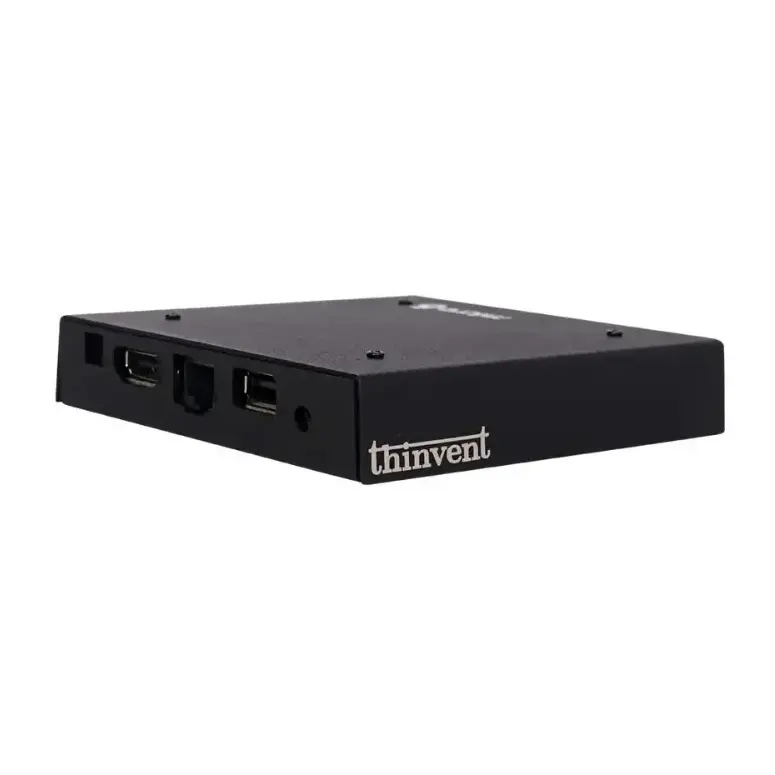
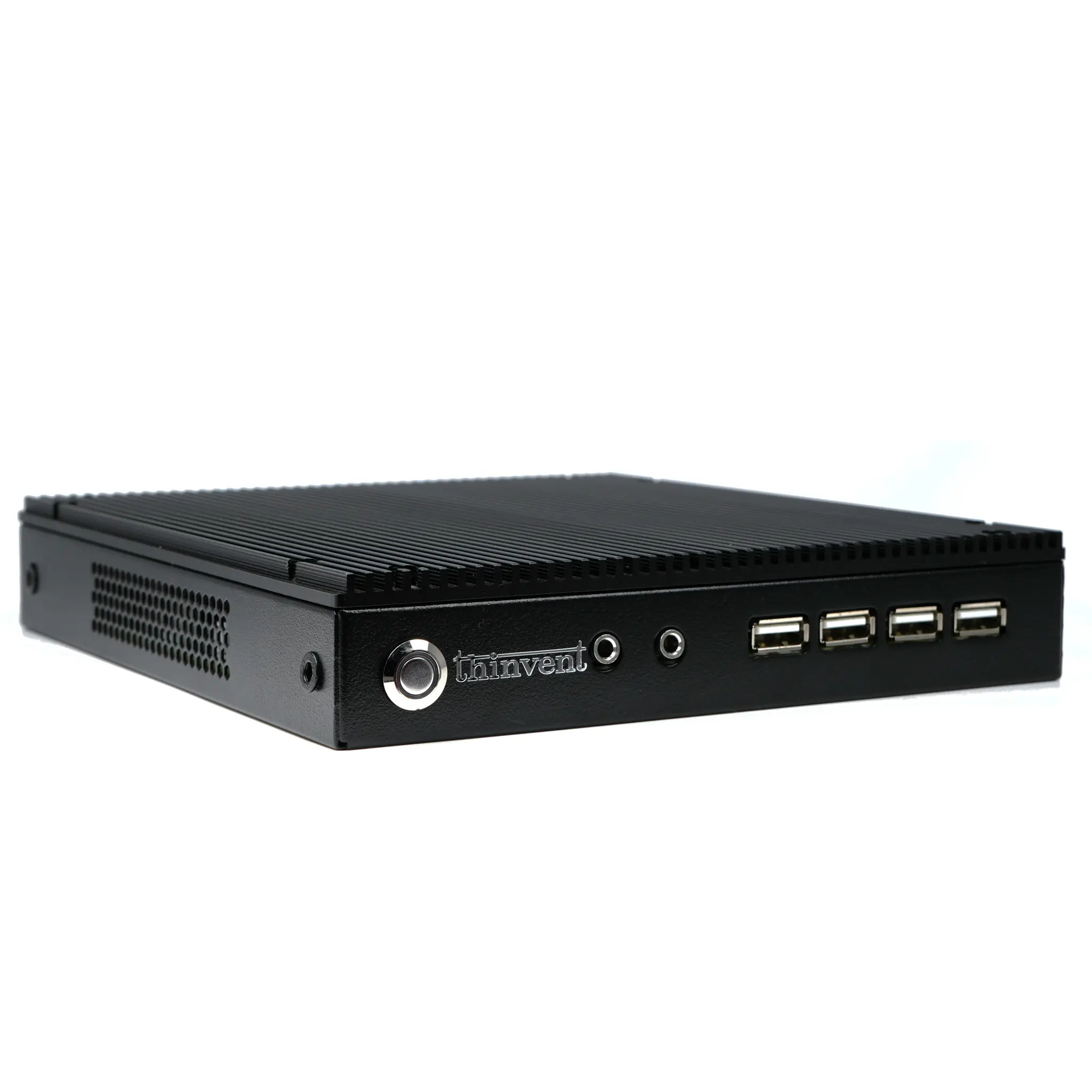
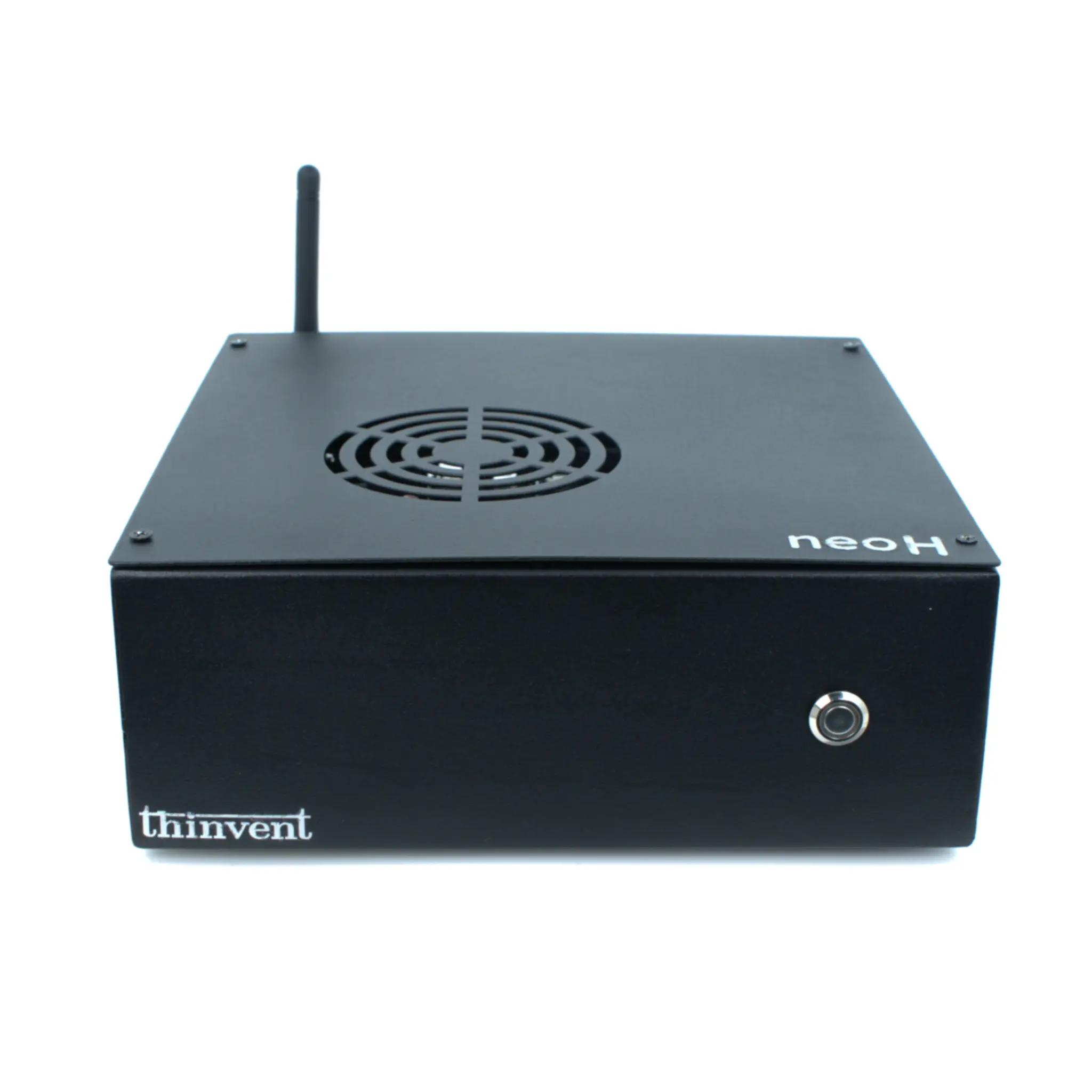
Thinvent offers a robust range of industrial computers perfectly suited for assembly line automation. Our product lines, such as the compact and fanless Aero Mini PC series, are built with the durability and connectivity required for 24/7 manufacturing environments. Featuring reliable Intel processors, wide operating temperature support, and multiple configuration options for memory, storage, and operating systems (including Windows IoT and embedded Linux), Thinvent computers provide a stable and powerful platform for controlling machinery, running vision systems, and managing data at the industrial edge. Our solutions are designed for seamless integration into existing production infrastructure, helping to improve efficiency, accuracy, and overall equipment effectiveness (OEE).