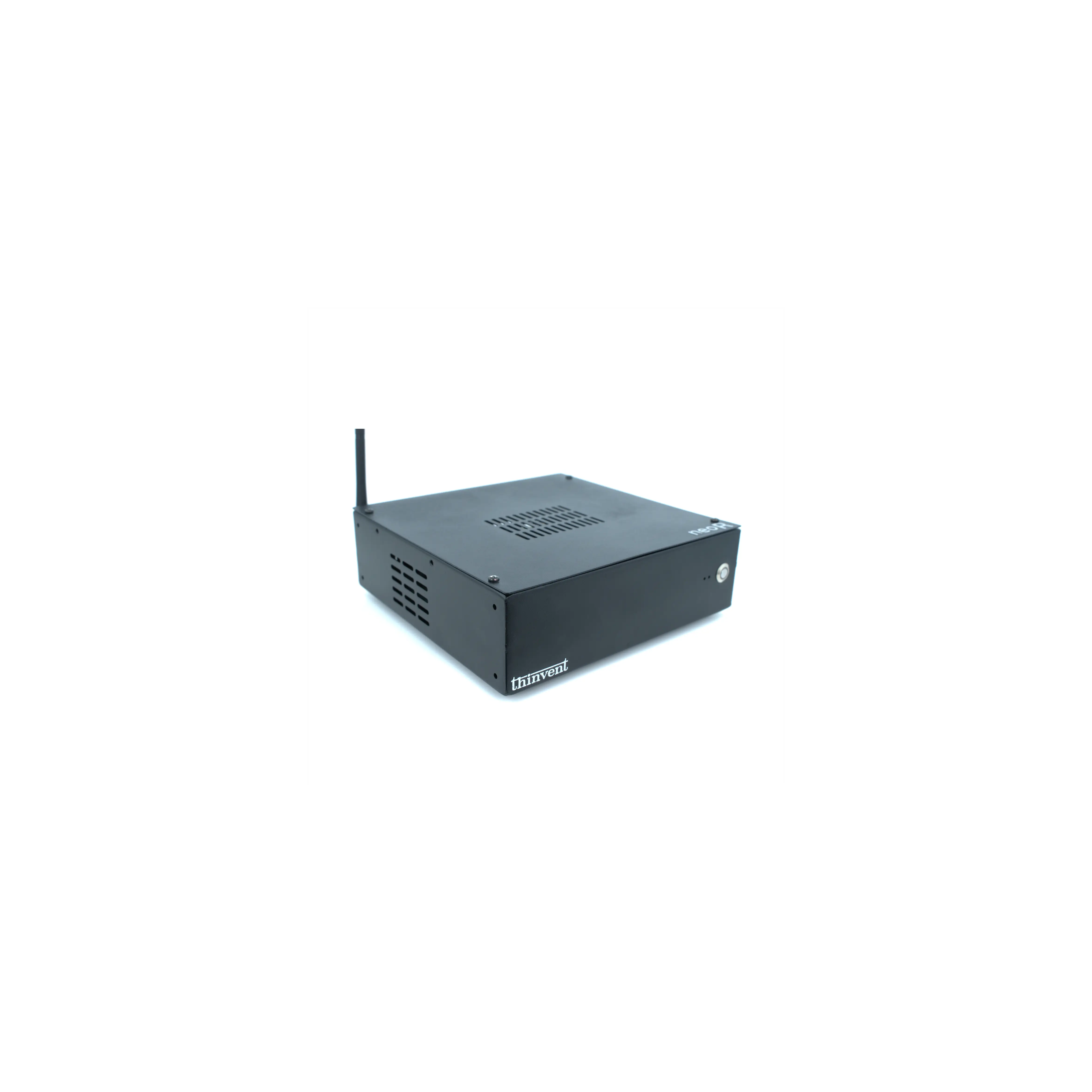
The ASUS Chromebox 5a is a compact mini PC built on 13th Generation Intel Core or Celeron processors, with dual HDMI, DisplayPort and USB-C 3.2 Gen 2 ports for up to four 4K displays and Intel Wi-Fi 6E. For a business or industrial mini PC with a similar Intel Core class and a wider memory range, the closest Thinvent match is the Thinvent Treo Mini PC with Intel Core i5-1335U.
Asus Chromebox 5A vs Thinvent Treo Mini PC
| ASUS Chromebox 5a | Thinvent Treo Mini PC, Intel Core i5-1335U | Thinvent Treo Mini PC, Intel Core i5-1240P | |
|---|---|---|---|
| Processor | Intel Core i5-1335U (13th Gen) or Celeron | Intel Core i5-1335U | Intel Core i5-1240P |
| Cores | Not stated | 10 | 12 |
| RAM | 8 GB DDR4 (base configuration) | Up to 64 GB DDR4 | Up to 64 GB DDR4 |
| Storage | 128 GB NVMe (base configuration) | Up to 2 TB SSD | Up to 2 TB SSD |
| Form Factor | Mini PC | Mini PC | Mini PC |
| Wireless | Intel Wi-Fi 6E | Dual Band WiFi or No WiFi | Dual Band WiFi or No WiFi |
| Display Outputs | Dual HDMI, DisplayPort, USB-C 3.2 Gen 2 (up to four 4K displays) | Not stated | Not stated |
| Operating System | ChromeOS | DOS | DOS |
Key differences
-
Memory: the Thinvent Treo Mini PC supports up to 64 GB DDR4, while the ASUS Chromebox 5a base configuration is listed with 8 GB.
-
Storage: Thinvent Treo Mini PCs offer up to 2 TB SSD, giving more room for data-heavy business and industrial workloads.
-
Processor core count: the Thinvent Treo i5-1240P has 12 cores, compared with the i5-1335U's 10 cores, for demanding multi-tasking.
-
Operating system: the ASUS Chromebox 5a runs ChromeOS, while Thinvent Treo Mini PCs ship with DOS, suited to custom and industrial software stacks.
-
Display support: the ASUS Chromebox 5a offers well-documented support for up to four 4K displays, a point to weigh if your setup depends on multi-screen output.
Which one should you choose?
Choose the ASUS Chromebox 5a if you want a ChromeOS mini PC for cloud-based work with strong multi-display output. Choose a Thinvent Treo Mini PC if you need larger memory and storage options, a choice of processor cores, and a DOS platform for business or industrial software.