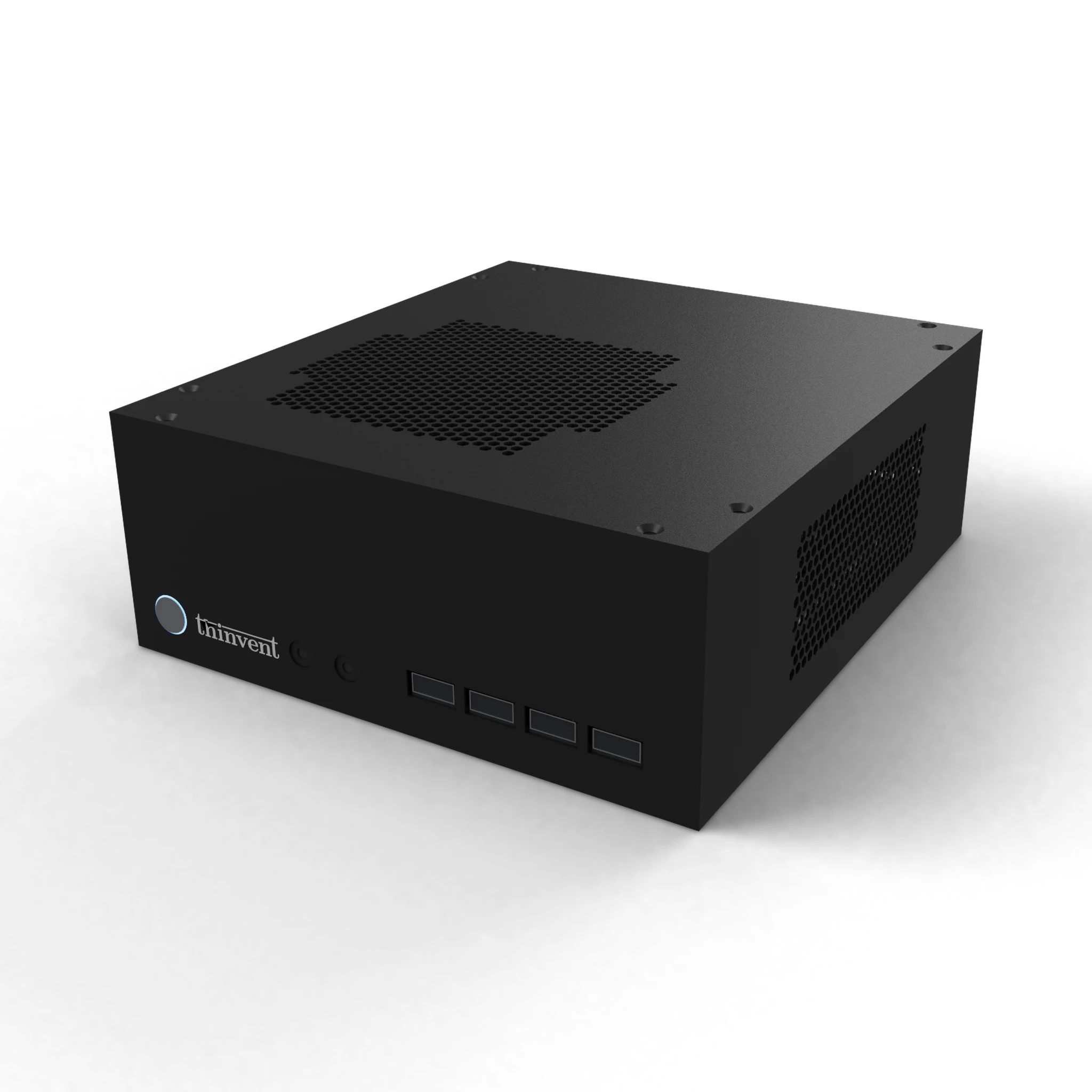
Banana Pi is a family of ARM-based single-board computers, including the BPI-M1, BPI-M2 Zero, BPI-M4 and BPI-M7. The facts available describe the BPI-M1 (Allwinner dual-core SoC at 1 GHz, 1 GB DDR3 RAM), the BPI-M2 Zero (quad-core Cortex-A7 Allwinner H3/H2+, 512 MB RAM) and the BPI-M4 (Allwinner H618, 2 GB DDR4 RAM, 8 GB eMMC) in the Raspberry Pi Zero W form factor. The BPI-M7 16GB uses the Rockchip RK3588 with 16 GB LPDDR4/LPDDR4X. For a bare board with an ARM processor, the closest Thinvent match is the Thinvent Micro 6 Pro Mini PC, and for a small ARM thin client the Thinvent Micro 5R.
Banana Pi vs Thinvent Micro 6 Pro Mini PC and Micro 5R Thin Client
| Feature | Banana Pi BPI-M4 | Thinvent Micro 6 Pro Mini PC | Thinvent Micro 5R Thin Client |
|---|---|---|---|
| Processor | Allwinner H618 | ARM Cortex-A55 | ARM Cortex-A53 |
| Cores | Not stated | 4 | 4 |
| Max Frequency | Not stated | Up to 1.9 GHz | Up to 2.0 GHz |
| Cache | Not stated | 1 MB | Not stated |
| RAM | 2 GB DDR4 | 4 GB | 2 GB |
| Storage | 8 GB eMMC | 32 GB eMMC | 16 GB eMMC |
| Wireless | Not stated | Dual antenna WiFi | WiFi 6 and Bluetooth |
| Operating System | Linux and Android | Thinux Embedded Linux | Thinux Embedded Linux |
| Form Factor | Raspberry Pi Zero W form factor | Mini PC | Thin client |
Key differences
-
The Micro 6 Pro offers 4 GB RAM and 32 GB eMMC, compared with the BPI-M4's 2 GB and 8 GB.
-
The Micro 6 Pro's Cortex-A55 processor runs at up to 1.9 GHz with 1 MB cache, and both Thinvent ARM products are quad-core.
-
The Micro 5R includes WiFi 6 and Bluetooth, and its Cortex-A53 processor runs at up to 2.0 GHz.
-
Both Thinvent products ship with Thinux Embedded Linux, a ready-to-use operating system.
-
The Banana Pi BPI-M4 is a very compact board in the Raspberry Pi Zero W form factor, which suits space-limited builds. The Thinvent products are complete mini PC and thin client units.
Which one should you choose?
Choose a Banana Pi board if you are building a maker or prototype project around a small, bare single-board computer. Choose the Thinvent Micro 6 Pro Mini PC for an ARM mini PC with more memory and storage, or the Thinvent Micro 5R Thin Client for a compact ARM thin client with built-in WiFi 6 and Bluetooth.