Industrial computing demands reliability, longevity, and stable performance in challenging environments. At the heart of every industrial computer are its essential CPU components, which differ from consumer-grade parts in their design for durability and continuous operation. The key components include the Central Processing Unit (CPU) itself, the supporting chipset, system memory (RAM), and non-volatile storage. These core elements work in concert to execute control logic, process sensor data, manage communications, and run human-machine interfaces (HMIs) with deterministic performance.
Key Specifications and Technical Details
The CPU, or processor, is defined by its architecture (x86 or ARM), core count, clock speed, and thermal design power (TDP). Industrial CPUs often feature extended temperature ranges and longer lifecycle availability. The chipset manages data flow between the CPU, memory, and peripherals. System Memory (RAM) provides the working space for applications and the operating system, with industrial systems favoring error-correcting code (ECC) memory for data integrity. Storage, typically solid-state drives (SSD) or embedded MultiMediaCard (eMMC), holds the operating system and application software, with industrial-grade options offering higher endurance and wider temperature tolerance.
Use Cases and Applications
The choice of CPU components directly dictates the system's application suitability. Basic ARM-based systems with eMMC storage are ideal for lightweight, fanless thin clients and digital signage. Mid-range Intel processors like the N-series or Core i3 are perfect for edge gateways, kiosks, and industrial automation controllers. High-performance Intel Core i5 and i7 CPUs with ample RAM and fast SSDs power demanding applications such as machine vision, real-time analytics, and complex HMIs in manufacturing and logistics.
Comparison of Common Industrial CPU Architectures
| Component | ARM-based (e.g., Cortex-A) | Intel x86-based (e.g., N-series, Core) |
|---|---|---|
| Typical Use | Thin clients, embedded displays, simple IoT gateways | General-purpose industrial PCs, automation controllers, edge servers |
| Power & Heat | Very low power, fanless designs | Low to moderate power; fanless or actively cooled |
| Performance | Sufficient for lightweight OS & dedicated apps | Higher computational power for multi-tasking & complex software |
| Software Ecosystem | Often uses lightweight Linux (e.g., Thinux™) | Broad support for Windows, Linux, and real-time OS |
| I/O & Expandability | Limited onboard I/O | Greater support for expansion cards and peripheral interfaces |
Thinvent Industrial Computers with Essential Components
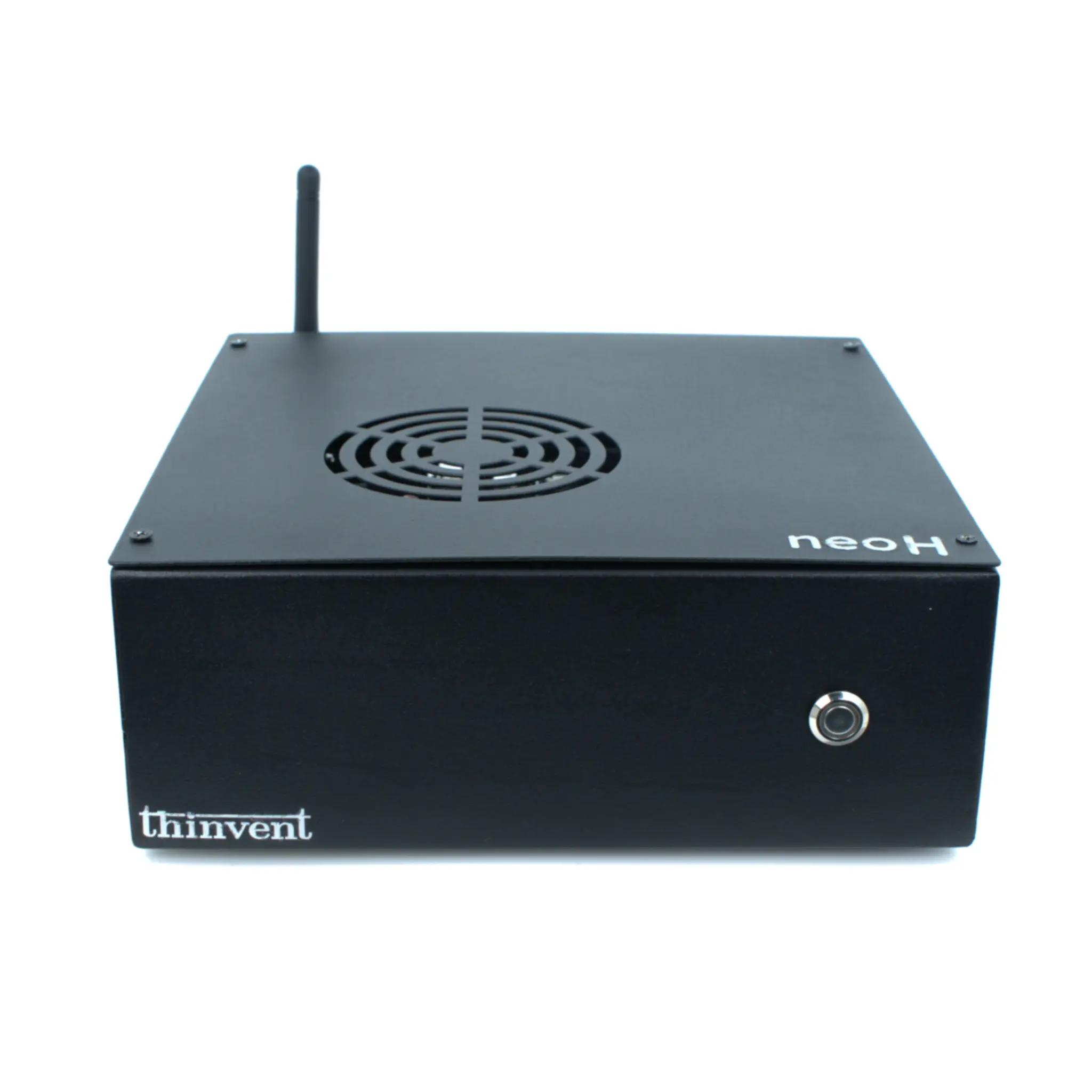
Thinvent's product portfolio embodies the practical application of these essential CPU components across various industrial needs. Our Micro series thin clients utilize efficient ARM Cortex processors with onboard RAM and eMMC for reliable, low-power terminal operations. For versatile industrial computing, the Treo and Aero Mini PCs feature Intel processors like the N100 and Core i3, balancing performance with compact, robust form factors. For the most demanding industrial workloads, our IPC series Industrial PCs are equipped with high-core-count Intel Core i5 and i7 processors, substantial DDR4 RAM, and high-speed SSDs, designed for 24/7 operation in harsh environments. All Thinvent systems are engineered with industrial-grade components to ensure longevity and stability for your critical applications.