What Are Compact Mini PCs?
Compact Mini PCs are small-form-factor computers designed to deliver essential computing power while occupying minimal desk space. They are ideal for environments where a traditional desktop tower is impractical due to size, noise, or power constraints. These devices typically integrate the processor, memory, and storage into a single, sleek chassis, often featuring fanless designs for silent operation. They are versatile solutions for a wide range of computing needs, from basic tasks to more demanding professional applications.
Key Specifications and Technical Details
Modern compact mini PCs come with a variety of hardware configurations to suit different performance requirements. Common specifications include:
-
Processors: Ranging from energy-efficient ARM-based CPUs (like the ARM Cortex A53/A55) for lightweight tasks to powerful Intel Core processors (such as the i3, i5, and N-series) for more intensive workloads.
-
Memory (RAM): Typically from 2GB to 16GB, with higher RAM enabling better multitasking.
-
Storage: Options include eMMC storage (16GB-64GB) for basic systems and faster SSDs (128GB-512GB) for improved performance and capacity.
-
Connectivity: Standard features include HDMI outputs for display, USB ports, and often dual-band Wi-Fi for wireless networking.
-
Power: They operate on low-voltage adapters (e.g., 5V-12V), making them highly energy-efficient.
Ideal Use Cases and Applications
The compact size and versatile performance of these mini PCs make them suitable for numerous scenarios:
-
Home Use: Perfect as a media center for streaming, a compact workstation for web browsing, online learning, and light productivity tasks.
-
Office Environments: Ideal for general office work, digital signage, point-of-sale (POS) systems, and as thin clients for virtual desktop infrastructure (VDI).
-
Light Industrial & Digital Signage: Their fanless, rugged designs (in industrial models) allow for reliable operation in kiosks, control panels, and information displays.
-
Space-Constrained Setups: An excellent choice for hot-desking, reception areas, or any location where saving space is a priority.
Comparison of Common Mini PC Configurations
| Feature | Entry-Level (ARM) | Balanced Performance (Intel N-Series) | High Performance (Intel Core) |
|---|---|---|---|
| Typical Processor | ARM Cortex A53/A55 (4-core) | Intel Processor N100 (4-core) | Intel Core i3/i5 (6-12 cores) |
| Typical RAM | 2GB - 4GB | 4GB - 8GB | 8GB - 16GB |
| Typical Storage | 16GB - 64GB eMMC | 128GB SSD | 256GB - 512GB SSD |
| Best For | Basic computing, thin client, digital signage | Everyday office tasks, HD media, light multitasking | Demanding office apps, multitasking, light content creation |
| Power Efficiency | Very High | High | Moderate to High |
Thinvent's Range of Compact Mini PCs
Thinvent offers a comprehensive portfolio of compact mini PCs engineered for reliability and diverse use cases. Our lineup includes:
-
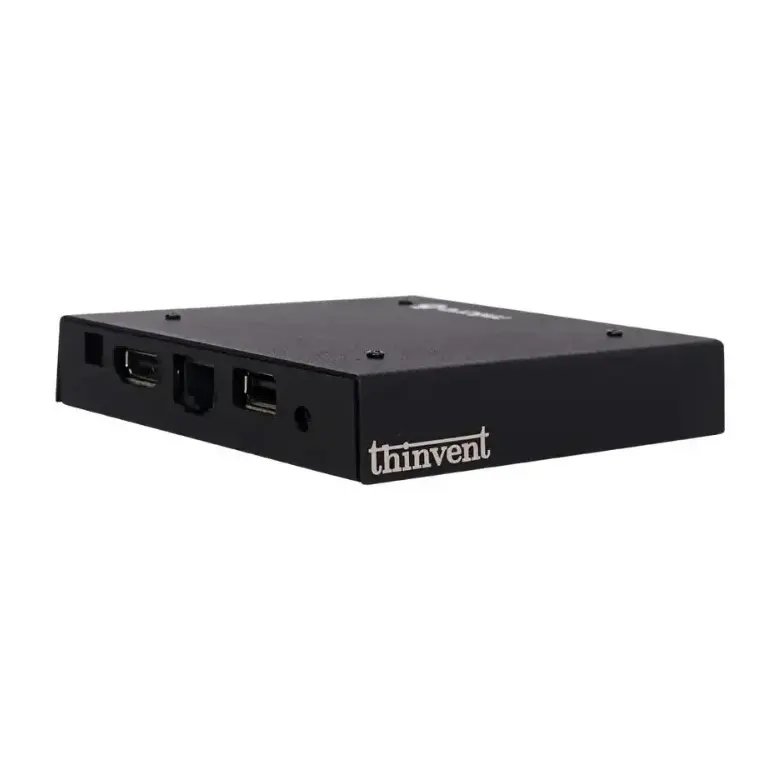
Thinvent Micro Series: Ultra-compact and energy-efficient devices powered by ARM processors, perfect for lightweight computing, digital signage, and as thin clients. Models like the Micro 5 Wifi and Micro 6 Pro come with onboard RAM and storage, running on our Thinux™ Embedded Linux for a streamlined experience.
-
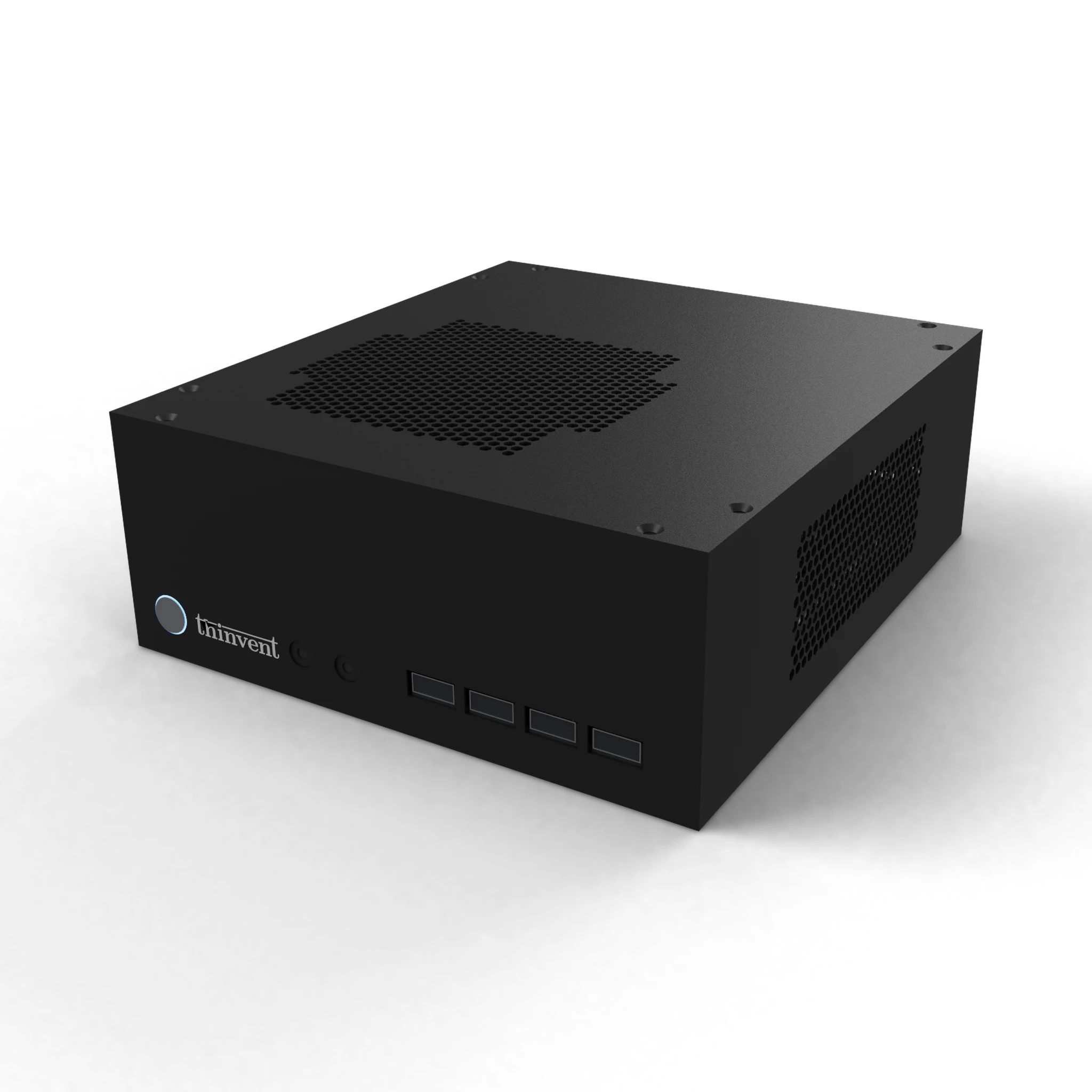
Thinvent Treo & IPC Series: Featuring efficient Intel processors like the N100, these mini PCs, such as the Treo Mini PC and IPC1, offer a great balance of performance and power savings for everyday office tasks and light industrial applications, available with Ubuntu Linux or Thinux™.
-
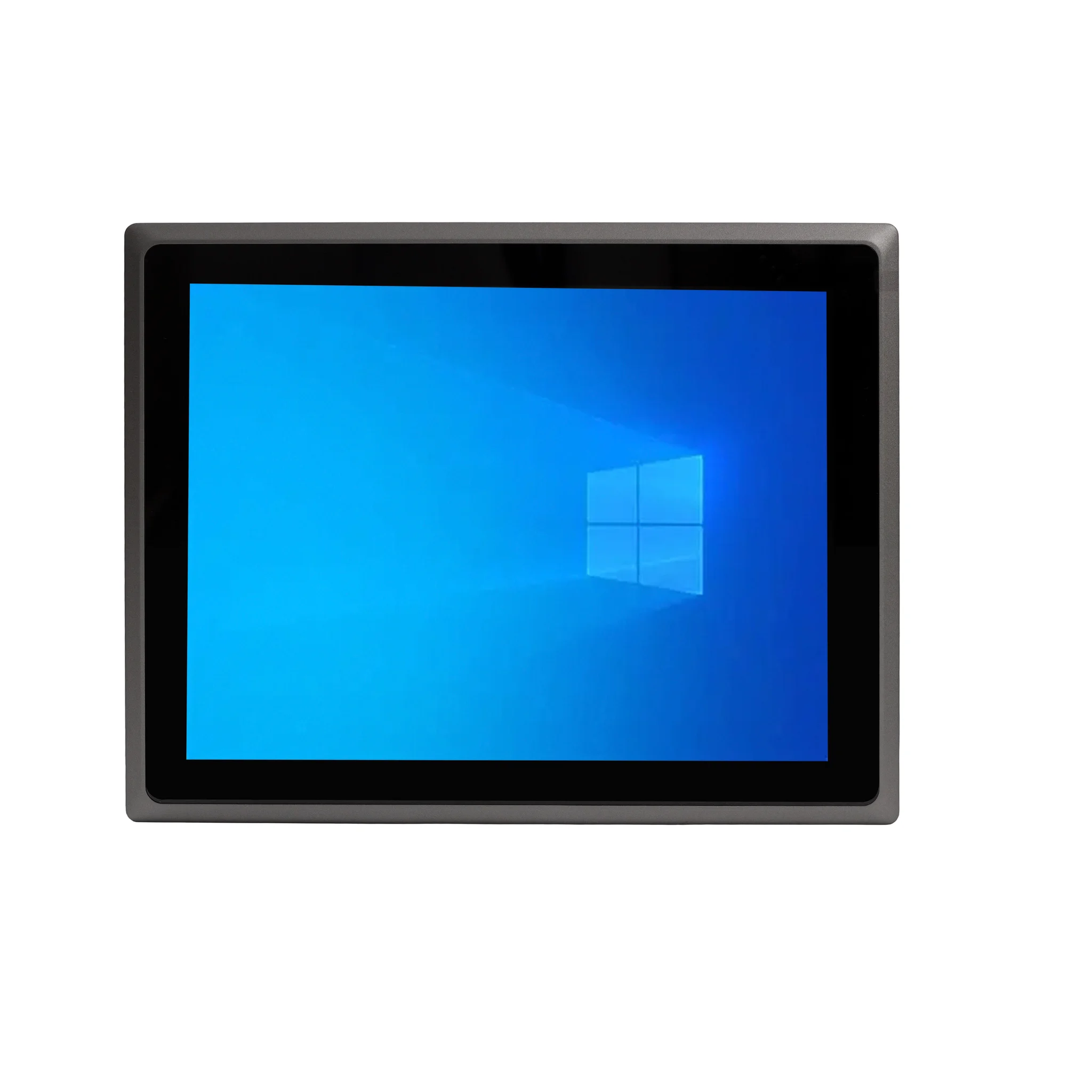
Thinvent Aero & Industrial PC Series: For users requiring robust performance, our Aero Mini PC and IPC3/IPC5 models are equipped with Intel Core i3, i5, and 12th/14th Gen processors. With higher RAM, faster SSD storage, and options for Windows 11 Pro or IoT, they are built to handle demanding professional workloads in office and industrial environments seamlessly.