What Defines the Best CPU for Industrial Computing?
The "best" CPU for an industrial computer, mini PC, or thin client is not a single model, but the optimal processor for a specific set of requirements. Key factors include performance needs, power efficiency, thermal design, and long-term reliability. For demanding applications like digital signage, edge computing, or industrial automation, a high-core-count Intel Core i5 or i7 processor offers superior multitasking and processing power. For lightweight tasks such as kiosks, thin clients, or basic control systems, energy-efficient Intel N-series or ARM processors provide excellent performance-per-watt in fanless, compact designs.
Key Specifications to Consider
When evaluating CPUs for embedded and industrial use, look beyond just clock speed. Modern processors are defined by their architecture (generation), core/thread count, thermal design power (TDP), and integrated graphics. For example, 12th and 14th Generation Intel Core processors (e.g., i5-1250P, Core 5 120U) offer a hybrid architecture with Performance and Efficient cores, balancing high-speed tasks with background operations. Important specifications include:
-
Cores/Threads: Determines parallel task capability (e.g., 4-core for basic tasks, 12-core for intensive workloads).
-
Cache Size: Larger cache (e.g., 12MB) improves data access speed for repetitive tasks.
-
Max Turbo Frequency: Higher GHz (e.g., 5.0 GHz) benefits single-threaded applications.
-
Integrated Graphics: Intel UHD or Iris Xe graphics support multiple 4K displays for visual applications.
Ideal Use Cases by Processor Tier
-
High-Performance (Intel Core i5/i7, 12th/14th Gen): Ideal for machine vision, AI inference at the edge, complex automation, and high-resolution multi-display digital signage. These systems handle data-intensive processes and require robust cooling solutions.
-
Balanced Performance (Intel Core i3, Intel N-series): Perfect for interactive kiosks, point-of-sale systems, thin client hosts, and light industrial gateways. They offer a great mix of capability and energy efficiency for 24/7 operation.
-
Ultra-Efficient (ARM Cortex, Intel Atom): Best for dedicated thin clients, simple digital signage players, and IoT gateways where ultra-low power consumption, fanless operation, and minimal heat output are critical.
Comparison of Common Industrial CPU Types
| Processor Type | Example Model | Cores/Threads | Max Frequency | Typical TDP | Best For |
|---|---|---|---|---|---|
| High-Performance Core | Intel Core i5-1250P | 12 Cores / 16 Threads | Up to 4.4 GHz | 28W | Edge servers, heavy multitasking |
| Efficient Core | Intel Core 5 120U | 10 Cores / 12 Threads | Up to 5.0 GHz | 15W | Compact workstations, AIO PCs |
| Entry-Level Core | Intel Core i3-1215U | 6 Cores / 8 Threads | Up to 4.4 GHz | 15W | General-purpose industrial PCs |
| Efficiency Series | Intel Processor N100 | 4 Cores / 4 Threads | Up to 3.4 GHz | 6W | Fanless mini PCs, kiosks, thin clients |
| ARM Architecture | ARM Cortex A55 | 4 Cores | Up to 1.9 GHz | <5W | Ultra-thin clients, basic embedded tasks |
Thinvent's Range of High-Performance Computing Solutions
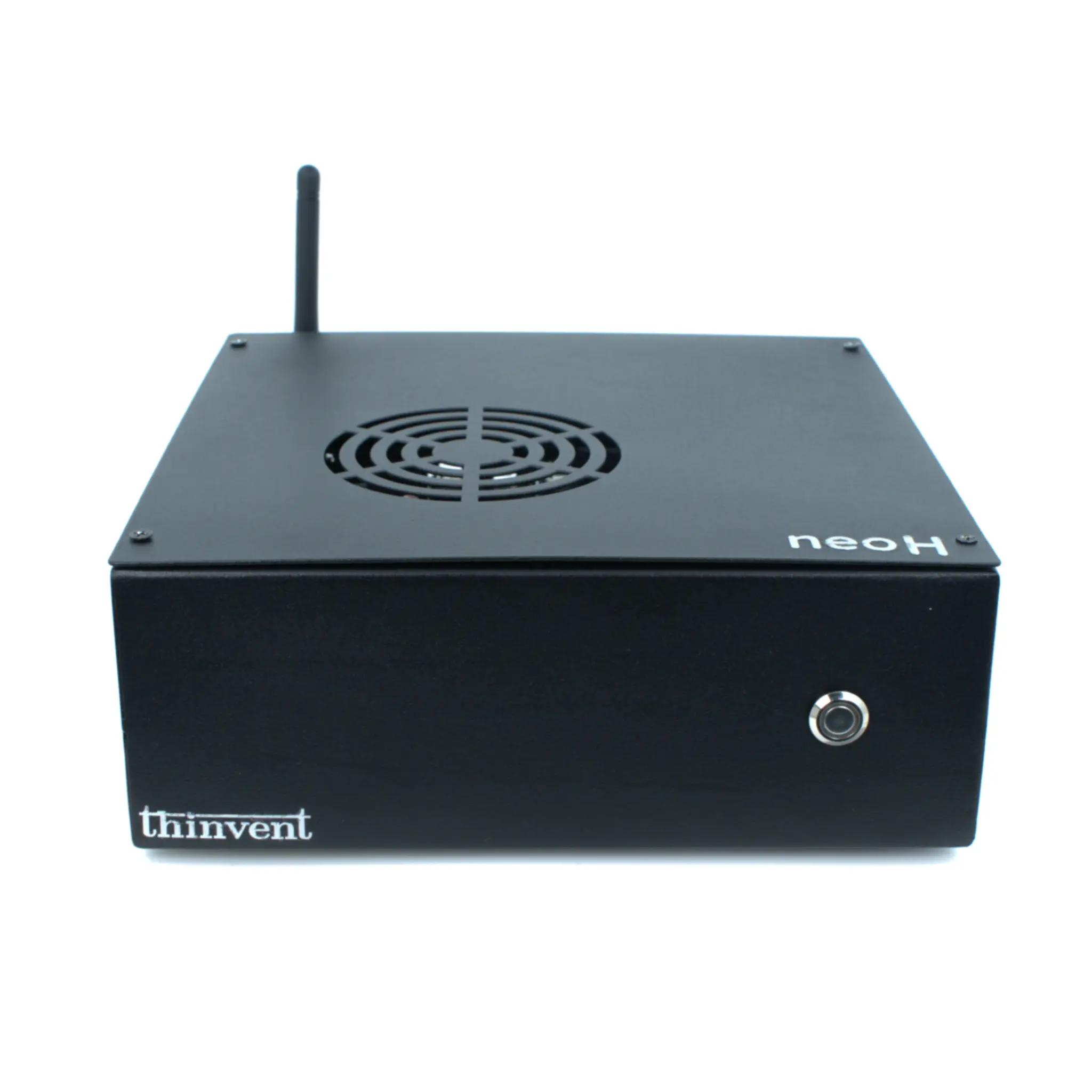
Thinvent offers a comprehensive portfolio of industrial computing solutions equipped with the latest CPU technology to match any application demand. Our Aero Mini PC series features 14th Generation Intel Core processors, like the Core 5 120U, delivering desktop-level performance in a miniaturized, reliable form factor. For the most demanding environments, the Industrial PC (IPC) series utilizes processors such as the Intel Core i5-1250P, providing exceptional multi-threaded performance for automation and control. For cost-effective and efficient deployment, our Treo and Micro series leverage Intel N-series and ARM processors, ensuring reliable operation for digital signage, thin client, and kiosk applications with minimal power draw and silent, fanless designs.