What Makes a Great Video Editing Computer?
A professional video editing computer requires a powerful combination of CPU performance, ample RAM, fast storage, and reliable graphics processing. Unlike standard office PCs, editing workstations must handle high-resolution footage, complex effects, and real-time rendering without lag. The core components—processor speed and core count, memory capacity, and SSD storage speed—are critical for a smooth workflow, especially when working with 4K, 8K, or multi-cam projects.
Key Specifications for Editing Workstations
For professional-grade editing, focus on these technical specifications:
-
Processor (CPU): High core counts (6+) and high clock speeds (over 3.0 GHz) are essential. Intel Core i5, i7, and i9 series or AMD Ryzen equivalents provide the necessary horsepower for encoding and decoding.
-
Memory (RAM): 16GB is the recommended minimum for 4K editing, with 32GB or more being ideal for heavy effects, color grading, and multitasking.
-
Storage (SSD): A fast NVMe SSD (512GB or larger) is non-negotiable for storing the operating system, applications, and active project files to ensure fast read/write speeds.
-
Graphics: While a dedicated GPU is highly beneficial, modern Intel Core processors with integrated Iris Xe graphics can efficiently handle many editing tasks, including hardware acceleration for popular codecs.
Use Cases and Applications
These high-performance systems are designed for demanding creative professionals. Primary applications include:
-
Professional Video Editing: Seamless editing and rendering in software like Adobe Premiere Pro, DaVinci Resolve, and Final Cut Pro.
-
Motion Graphics & VFX: Handling complex animations and visual effects in After Effects or Blender.
-
Color Correction & Grading: Processing high-bit-depth footage for precise color work.
-
Content Creation & Streaming: Managing live production, encoding, and multi-stream outputs.
Comparison of Editing PC Tiers
| Use Case | Recommended CPU (Cores/Speed) | Recommended RAM | Recommended Storage | Ideal For |
|---|---|---|---|---|
| Entry-Level / 1080p Editing | Intel Core i3 / Intel N100 (4 Cores, ~3.4GHz) | 8GB - 16GB | 256GB - 512GB SSD | Beginners, simple projects, proxy workflow. |
| Mainstream 4K Editing | Intel Core i5 / i7 (6-12 Cores, >4.0GHz) | 16GB - 32GB | 512GB+ NVMe SSD | Professional editors, YouTubers, corporate video. |
| High-End 4K/8K & Effects | Intel Core i7 / i9 (12+ Cores, >4.5GHz) | 32GB+ | 1TB+ NVMe SSD | Feature films, broadcast, heavy VFX and grading. |
Thinvent's High-Performance Editing Solutions
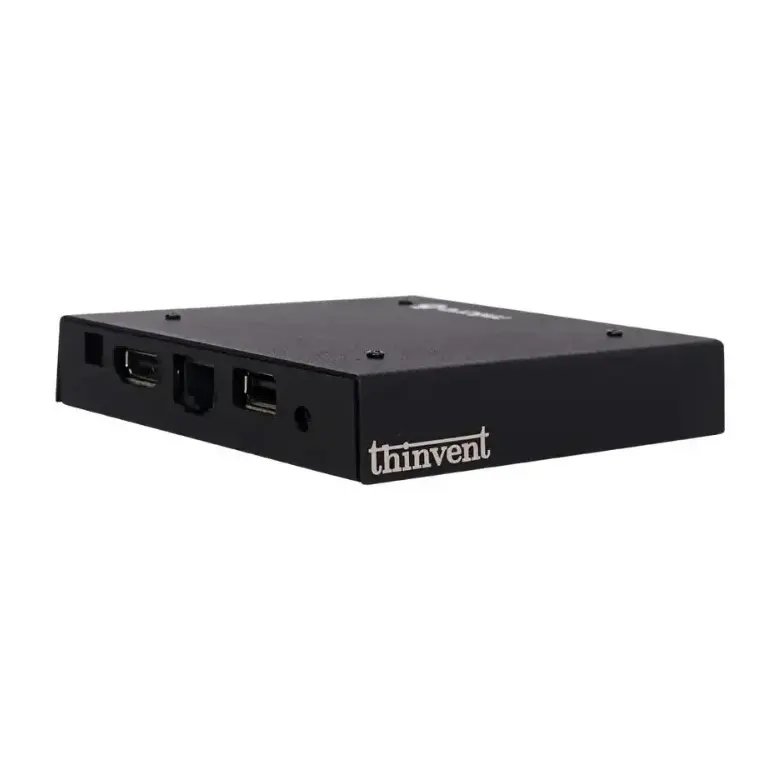
Thinvent offers a robust range of industrial and mini PCs engineered to meet the rigorous demands of professional video editing. Our lineup scales from compact, efficient units for everyday editing to powerful industrial workstations for the most demanding projects.
-
For Mainstream 4K Workflows: The Thinvent Aero Mini PC with Intel Core 5 120U (10 cores, up to 5.0 GHz) and 16GB RAM, paired with a 512GB SSD, provides exceptional performance in a small form factor, perfect for content creators and professional editors.
-
For Intensive Professional Editing: The Thinvent Industrial PC IPC5 stands out with an Intel Core i5-1250P processor (12 cores, up to 4.4 GHz), 16GB of RAM, and a large 512GB SSD. This combination delivers desktop-class power and reliability for rendering, color grading, and handling complex timelines.
-
For Cost-Effective & Reliable Editing: Models like the Thinvent Treo Mini PC and IPC series with Intel N100 or Core i3 processors offer a solid foundation for 1080p editing, light 4K work, and educational environments, ensuring value without compromising on build quality.
All Thinvent systems are built for 24/7 reliability, often featuring fanless or advanced cooling designs for silent operation—a critical factor in editing suites. We provide flexible OS options, including Windows 11 Pro and Ubuntu Linux, to fit seamlessly into any professional workflow.