What Defines a High-Quality PC?
A "best quality" PC is defined by its reliability, performance, durability, and suitability for its intended environment. For industrial and commercial applications, this goes beyond raw speed to include factors like robust construction, stable operation over long periods, and resistance to challenging conditions like dust, vibration, and wide temperature ranges. Key components that contribute to quality include a modern, efficient processor, sufficient RAM for multitasking, fast and reliable storage, and stable connectivity options.
Key Specifications for a Quality Industrial PC
When evaluating quality, focus on these technical aspects:
-
Processor: Modern Intel Core i-series (i3, i5) or efficient N-series processors (like the N100) offer a balance of performance and power efficiency. Higher core counts and newer generations (12th, 13th, 14th) provide better multitasking and application support.
-
Memory (RAM): 8GB is a baseline for general use, while 16GB or 32GB ensures smooth operation for more demanding software, virtualization, or data processing tasks.
-
Storage: Solid State Drives (SSDs) are essential for quality, offering faster boot times, quicker application loading, and greater reliability than traditional hard drives. Capacities of 256GB or 512GB are common starting points.
-
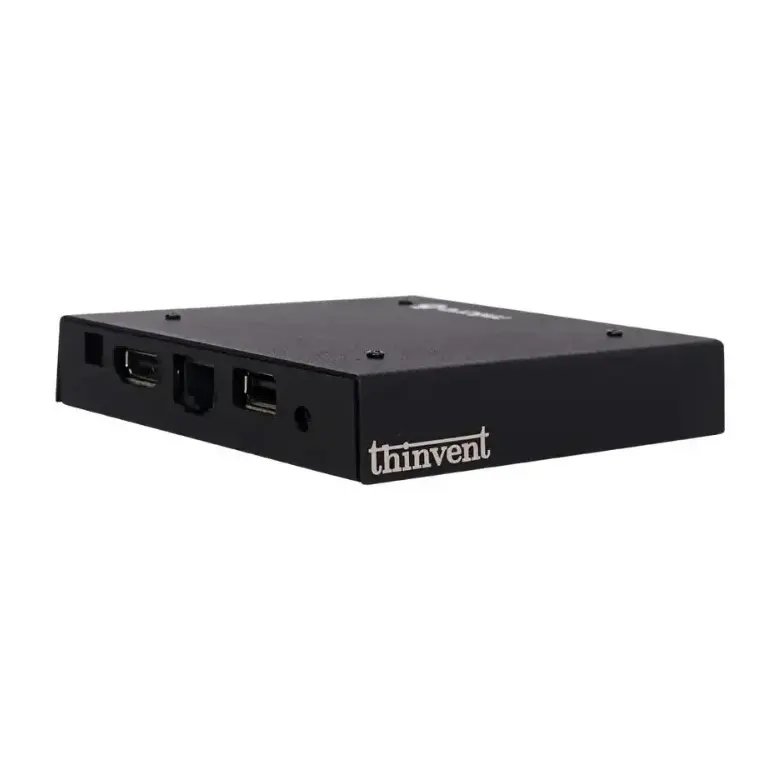
Build & Design: Fanless, sealed designs prevent dust ingress and eliminate mechanical failure points, crucial for 24/7 operation in industrial settings. Robust metal casings aid in heat dissipation and physical protection.
-
Connectivity: Multiple high-speed USB ports (including USB 3.2 and USB-C), dual HDMI outputs for multi-display setups, and reliable Gigabit Ethernet are standard requirements for professional integration.
Applications for Reliable Computing
High-quality industrial PCs are deployed in environments where failure is not an option:
-
Digital Signage & Kiosks: Powering displays in retail, hospitality, and public transport with stable, unattended operation.
-
Factory Automation: Acting as control units for machinery, PLCs, and production line monitoring systems.
-
Thin Client & VDI: Providing secure, consistent endpoints for accessing virtualized desktop environments in offices and call centers.
-
Edge Computing: Processing data locally in IoT networks, retail analytics, and smart city infrastructure.
Comparison of Common Processor Tiers
| Processor Series | Typical Use Case | Key Strengths | Ideal For |
|---|---|---|---|
| Intel N-Series (e.g., N100) | Lightweight Computing | Excellent power efficiency, fanless operation, low heat | Digital signage, basic kiosks, thin clients, edge nodes |
| Intel Core i3 | Mainstream Office & Commercial | Balanced performance, good multitasking | Point-of-sale systems, office workstations, interactive displays |
| Intel Core i5 | Performance Workstation | High processing power, multi-core performance | Design stations, data analysis, advanced automation control |
Thinvent's Range of High-Quality Industrial PCs
Thinvent specializes in manufacturing robust computing solutions built for reliability. Our product lines incorporate the principles of quality engineering, featuring fanless cooling for silent and maintenance-free operation, industrial-grade components for extended lifespan, and versatile form factors like Mini PCs and All-in-Ones. We offer configurations based on the latest Intel processors, from the efficient N-series for space-constrained deployments to powerful Core i5 models for demanding computational tasks. Each system is designed to deliver consistent performance in commercial and light-industrial environments worldwide.