What is a Big Desktop Computer?
A "big desktop computer" typically refers to a full-sized, high-performance desktop PC designed for demanding workloads that require substantial processing power, extensive memory, and large storage capacity. Unlike compact or mini PCs, these systems are built into larger chassis, allowing for superior thermal management, greater expansion capabilities, and the integration of high-end components like powerful discrete graphics cards, multiple storage drives, and advanced cooling solutions. They are the workhorses for professional and industrial environments where reliability and raw performance are non-negotiable.
Key Specifications and Technical Details
High-performance desktop computers are characterized by their robust specifications. They often feature the latest multi-core processors from Intel's Core i5, i7, or i9 series (e.g., 13th or 14th Generation), providing high clock speeds and efficient multitasking. System memory (RAM) typically starts at 16GB and can scale to 64GB or more to handle large datasets and complex applications. Storage is a combination of fast NVMe SSDs (512GB to 2TB+) for the operating system and applications, paired with high-capacity HDDs for archival data. Key technical features include multiple PCIe slots for expansion cards, numerous USB ports (including USB 3.2 Gen 2 and Type-C), dual or triple monitor support via HDMI/DisplayPort, and reliable Gigabit Ethernet for network connectivity.
Use Cases and Applications
These powerful desktops are engineered for mission-critical applications across various industries. In digital signage and control rooms, they drive multiple high-resolution displays reliably. For engineering and design, they run complex CAD, CAM, and simulation software. In industrial automation, they serve as robust controllers for manufacturing lines and PLC systems. They are also ideal for data analysis stations, video editing workstations, and as servers for small-scale network applications, where their expandability and sustained performance under load are crucial advantages.
Comparison: Big Desktop vs. Compact Form Factors
| Feature | Big Desktop Computer | Compact/Mini PC |
|---|---|---|
| Performance | High to Extreme (desktop CPUs, discrete GPUs) | Moderate (mobile/low-power CPUs, integrated graphics) |
| Expandability | Excellent (multiple PCIe slots, drive bays) | Limited (often soldered components) |
| Cooling | Superior (large fans, liquid cooling options) | Basic (passive or small active fans) |
| Footprint | Large (mid/full tower) | Very Small (fits anywhere) |
| Primary Use | Workstations, Servers, Gaming, Heavy-duty Tasks | Digital Signage, Kiosks, Thin Clients, Light Office Work |
Thinvent's High-Performance Desktop Solutions
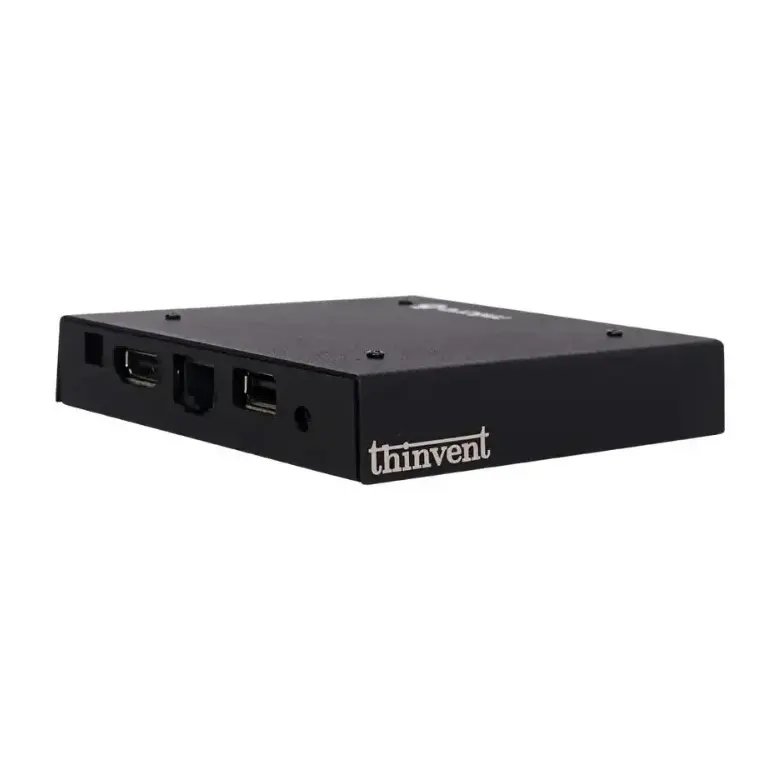
While Thinvent is renowned for its compact and fanless industrial computers, our product philosophy of reliability and performance extends to larger form factors. We engineer robust desktop solutions that leverage the same commitment to quality, using industrial-grade components for enhanced durability in challenging environments. Our systems are configured to meet specific industrial demands, offering the processing power, connectivity, and expansion necessary for the most demanding professional applications, backed by our global support and expertise in industrial computing.