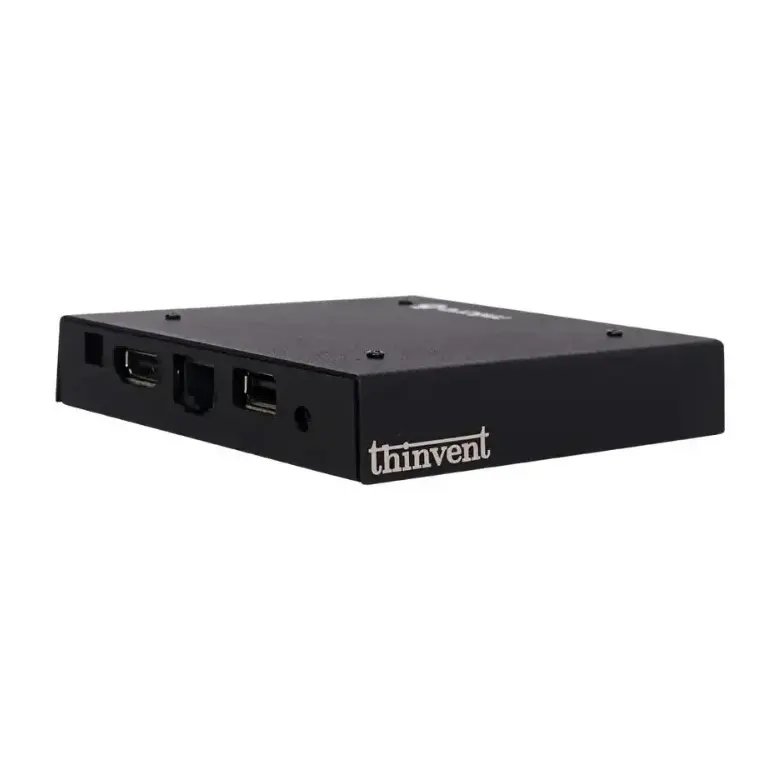
What Are Compact Fanless Mini PCs?
Compact fanless mini PCs are specialized, small-form-factor computers designed for industrial environments where reliability, space constraints, and harsh conditions are primary concerns. By eliminating moving parts like fans, these systems achieve silent operation, reduced mechanical failure points, and enhanced resistance to dust, debris, and contaminants. Their compact size allows for flexible deployment in control cabinets, kiosks, digital signage mounts, and machinery.
Key Specifications & Technical Advantages
The core advantage of fanless design is its robustness. These PCs leverage efficient, low-power processors from both ARM and Intel architectures that generate minimal heat, enabling passive cooling through heatsinks and chassis design. Key specifications vary to match application demands:
-
ARM-based Systems: Such as those with Cortex A53/A55 processors, offer exceptional power efficiency (often running on 5V adapters), integrated RAM and eMMC storage, and are ideal for lightweight, dedicated tasks running embedded Linux.
-
Intel-based Systems: Featuring processors from the Intel N-series up to Core i5, deliver higher computational performance for more demanding applications. They support standard DDR4 RAM and SSDs, with TDPs managed to remain within fanless thermal limits.
This design ensures wide operating temperature ranges, minimal maintenance, and long-term stability in 24/7 operations.
Primary Industrial Applications & Use Cases
The reliability of fanless mini PCs makes them indispensable across numerous sectors:
-
Factory Automation & HMI: Serving as Human-Machine Interface (HMI) panels or PLC supervisors on the shop floor.
-
Digital Signage & Kiosks: Powering advertisements, information displays, and interactive terminals in public spaces.
-
Thin Client & VDI: Acting as endpoints for virtual desktop infrastructure in offices, call centers, and secure environments.
-
Edge Computing & IoT Gateways: Collecting, processing, and transmitting data from sensors and equipment at the network edge.
-
Transportation & Logistics: Used in fleet management, vehicle-mounted systems, and warehouse automation due to vibration resistance.
Comparison of Common Configurations
| Feature | ARM-Based (Efficiency) | Intel N-Series (Balanced) | Intel Core Series (Performance) |
|---|---|---|---|
| Typical Use | Thin client, digital signage, basic IoT gateway | Industrial PC, kiosk, medium-duty edge computing | Advanced HMI, machine vision, data processing |
| Power Draw | Very Low (5V-12V) | Low to Moderate (12V) | Moderate (12V) |
| Thermal Output | Minimal | Low | Managed, higher |
| OS Support | Embedded Linux (Thinux) | Linux, Windows IoT/Pro | Windows Pro, Linux |
| I/O & Expandability | Basic ports (HDMI, USB) | Standard ports, sometimes more storage | More RAM/Storage options, potential for more I/O |
Thinvent's Range of Industrial Fanless Mini PCs
Thinvent offers a comprehensive portfolio of compact fanless computers engineered for industrial durability. Our Micro series (like Micro 5 Wifi and Micro 6 Pro) provides ultra-efficient, ARM-based solutions perfect for lightweight, always-on tasks. For more general-purpose industrial computing, the Treo and IPC series feature Intel N100 and Core processors, balancing performance with fanless reliability. For demanding applications requiring higher compute power, the Aero and high-end IPC models incorporate Intel Core i3, i5, and newer generation processors while maintaining a robust fanless design. All Thinvent systems are built for global deployment, supporting various operating systems and designed for easy integration into diverse industrial ecosystems.