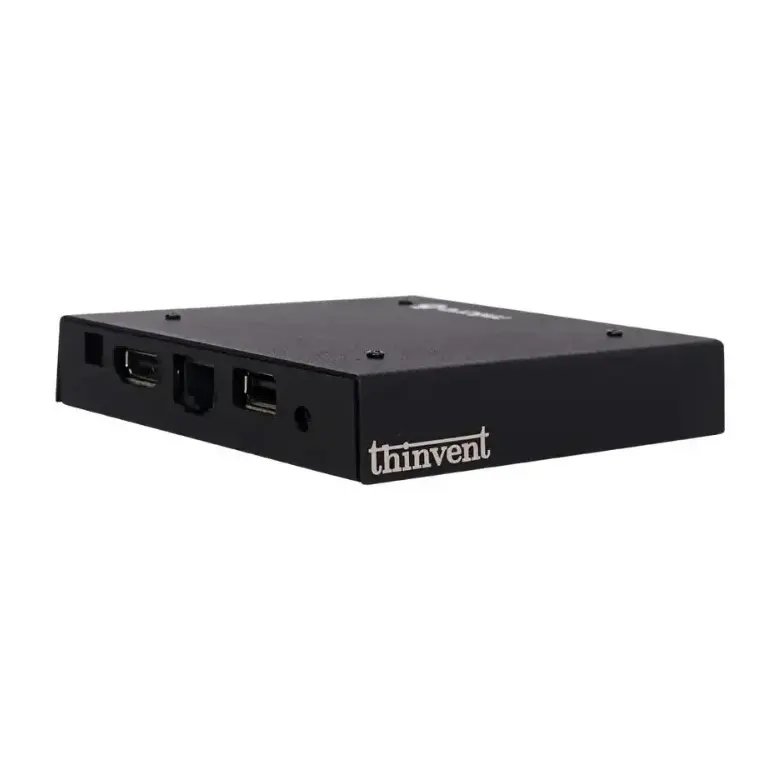
What Are Compact Fanless Industrial Computers?
Compact fanless industrial computers are specialized computing devices designed for integration into larger systems or machinery. Their defining characteristics are a small physical footprint and the absence of moving cooling parts like fans. This fanless design is achieved through passive cooling techniques, such as heatsinks integrated into the chassis, which dissipate heat. These computers are built to operate reliably in demanding environments where space is limited, dust and debris are present, or continuous, silent operation is required. They are the cornerstone of modern embedded systems, providing the processing power for dedicated applications without the bulk or failure points of traditional desktop PCs.
Key Specifications and Technical Advantages
The core strength of these systems lies in their robust and efficient design. Based on the sample products, they typically feature modern, low-power processors like the Intel N100. This 12th Gen CPU offers 4 cores, efficient performance up to 3.4 GHz, and a 6 MB cache, balancing capability with minimal thermal output—ideal for fanless operation. Standard configurations include substantial 16GB DDR4 RAM and fast 128GB SSDs for responsive operation. They operate on low DC power (e.g., 12V), simplifying integration into industrial power setups. The absence of a fan eliminates a common point of mechanical failure, drastically reduces dust ingress, and allows for completely silent operation, which is critical in noise-sensitive environments like medical facilities or digital signage.
Primary Use Cases and Applications
These computers are engineered for always-on, embedded applications across diverse industries. Common use cases include:
-
Industrial Automation & Control: Acting as a PLC (Programmable Logic Controller) or HMI (Human-Machine Interface) controller on the factory floor.
-
Digital Signage & Kiosks: Powering interactive displays, menu boards, and information points in retail, hospitality, and public spaces.
-
IoT Gateways & Edge Computing: Collecting, processing, and transmitting data from sensors and equipment at the network edge.
-
Thin Client & VDI Terminals: Providing secure, centralized desktop access in corporate and educational settings.
-
Medical and Laboratory Equipment: Where silent, reliable operation and easy sterilization of enclosures are paramount.
-
Transportation and In-Vehicle Systems: Withstanding vibrations and temperature fluctuations in fleet management or passenger infotainment.
Operating System Flexibility for Embedded Projects
A significant advantage for developers and integrators is the wide range of supported operating systems, allowing the hardware to be tailored precisely to the software environment of the embedded project. As seen in the samples, a single hardware platform can be configured with: | Operating System | Ideal For | | :--- | :--- | | Windows 11 IoT / Pro | Applications requiring full Windows compatibility, .NET framework, or specific commercial software. | | Thinux™ Embedded Linux | Custom, lightweight, and secure deployments where system resources and long-term stability are prioritized. | | Ubuntu Linux | Development environments, open-source software stacks, and server-like applications at the edge. | | DOS | Legacy industrial applications or highly customized, bare-metal software environments. |
This flexibility ensures that whether the project demands a commercial OS, an open-source platform, or a proprietary embedded system, there is a compatible configuration available.
Thinvent's Compact Fanless Industrial Solutions
Thinvent offers a robust lineup of compact fanless industrial computers perfectly suited for embedded systems, exemplified by the Aero Mini PC series. These systems are built around the efficient Intel N100 processor, providing a reliable compute foundation in a silent, fanless chassis. Thinvent understands the needs of global integrators, which is why their Aero Mini PC is available with multiple OS options—including Windows 11 IoT, Windows 11 Pro, Ubuntu Linux, Thinux™ Embedded Linux, and DOS—to match any project requirement. With standard high-performance components like 16GB RAM and SSD storage, these ready-to-deploy computers reduce development time and offer the reliability needed for critical 24/7 operations in automation, digital signage, IoT, and beyond.