What is a Computer Center?
A computer center, in an industrial and commercial context, refers to a centralized hub of computing power. It is not a single device but a concept where multiple compact, reliable, and efficient computers are deployed to manage core business operations, data processing, and application hosting. These systems are designed for 24/7 operation in controlled environments, prioritizing stability, connectivity, and low maintenance over raw consumer-grade performance.
Key Specifications for Centralized Computing Hubs
Computers for a centralized setup require specific technical attributes to ensure seamless operation. Critical specifications include:
-
Form Factor: Compact and space-saving designs like Mini PCs or Thin Clients are ideal for dense deployments in server racks or confined spaces.
-
Processor: Modern, efficient processors (e.g., Intel's N-series) provide ample performance for business applications, virtualization, and light server duties while minimizing heat and power draw.
-
Memory & Storage: Adequate RAM (8GB to 32GB) ensures smooth multitasking, while fast SSD storage (128GB to 1TB) provides quick boot times and responsive application loading.
-
Reliability Features: Fanless cooling is paramount, eliminating moving parts that can fail and preventing dust ingress. Wide-range power input (12V/19V DC) and industrial-grade components ensure longevity.
-
Connectivity: Multiple Ethernet ports (Gigabit), USB 3.2, and HDMI/DisplayPort outputs are essential for network integration and multi-monitor setups common in control rooms and data centers.
Applications and Use Cases
Industrial computer centers power a vast array of business and operational technology:
-
Digital Signage & Kiosk Management: Centralized control of media playback across multiple displays in retail, hospitality, or transportation hubs.
-
Thin Client & VDI Infrastructure: Hosting virtual desktop environments for secure, manageable, and cost-effective workforce computing.
-
Edge Computing & IoT Gateways: Processing data locally from sensors and devices in manufacturing, logistics, and smart building applications before sending it to the cloud.
-
Network Appliances: Serving as firewalls, routers, or network-attached storage (NAS) devices in small to medium businesses.
Comparison of Common Centralized Computing Form Factors
| Feature | Industrial Mini PC | Thin Client | All-in-One PC |
|---|---|---|---|
| Best For | Dense deployment, customization, dedicated server apps | Virtual Desktop Infrastructure (VDI), secure task workers | Space-constrained offices, reception, point-of-sale |
| Performance | High (configurable CPU/RAM) | Low to Moderate (depends on server) | Moderate (integrated design) |
| Deployment | Rack-mount or discreet placement | Desktop | All-in-one unit |
| Typical Use | Edge server, gateway, signage server | Office tasks, call centers, healthcare terminals | Retail POS, information displays, administrative work |
Thinvent Solutions for Your Computer Center
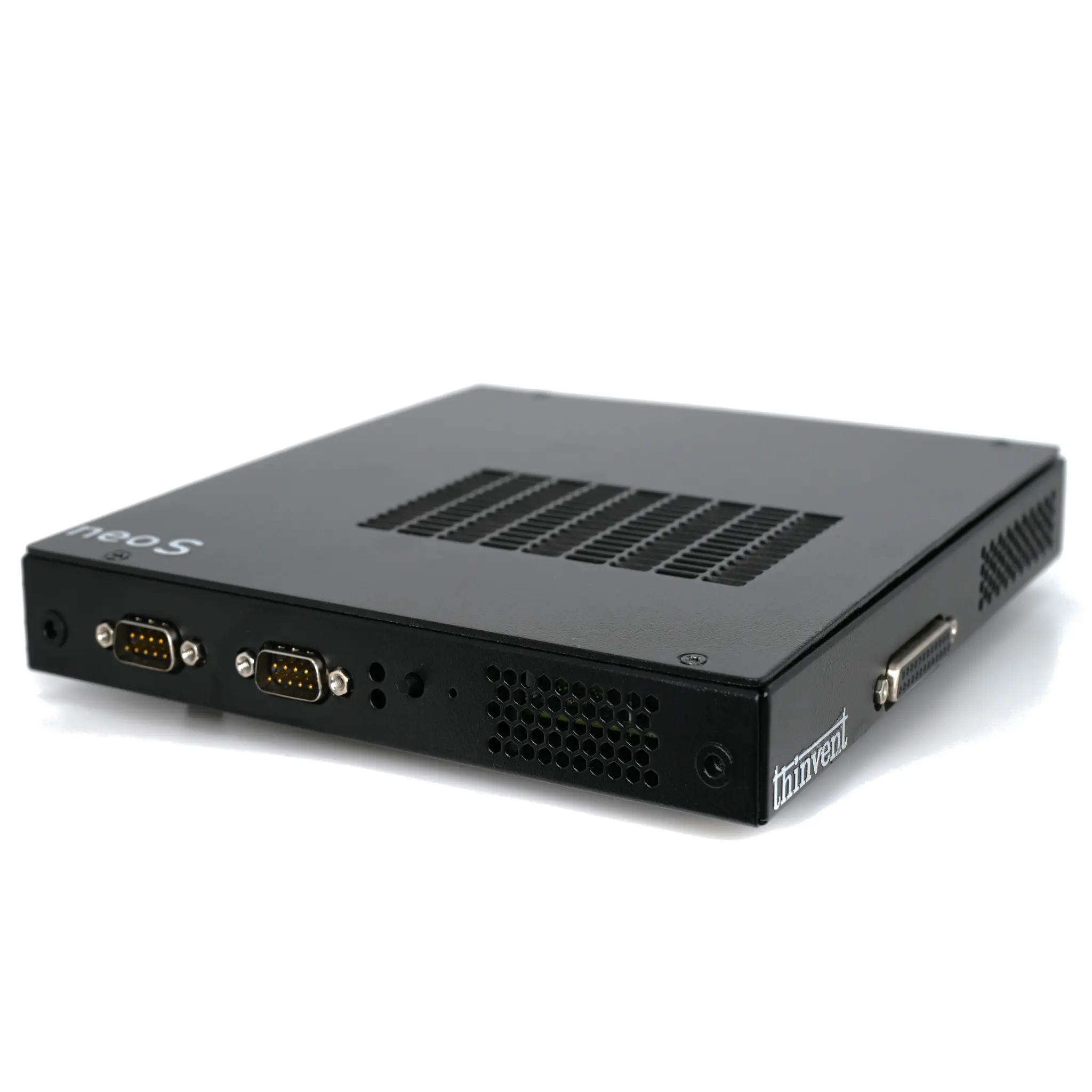
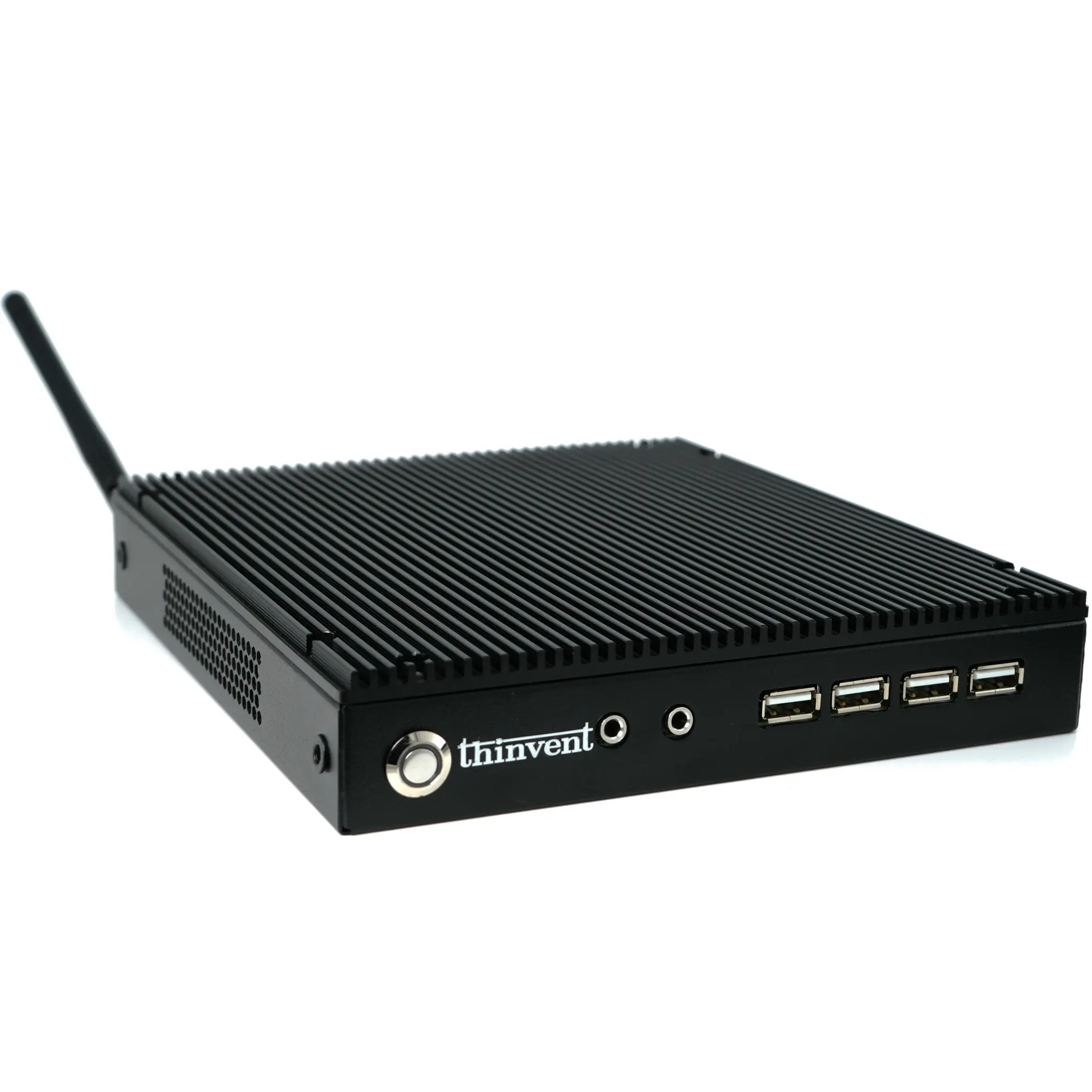
Thinvent specializes in robust, fanless computing solutions perfectly suited for building reliable computer centers. Our product range includes:
-
Aero Series Mini PCs: Featuring efficient Intel processors like the N100, these compact units offer excellent performance-per-watt in a completely silent, fanless chassis. They are ideal for 24/7 operation as digital signage players, thin clients, or light-duty servers.
-
Industrial Panel PCs & All-in-Ones: For environments where an integrated display is needed, our solutions provide computing power and a touchscreen in a single, ruggedized unit.
-
Custom Configurations: We offer flexibility in operating systems (Windows, Linux, FreeDOS), memory, storage, and connectivity to tailor systems precisely to your centralized computing needs, ensuring optimal reliability and performance for your specific application.