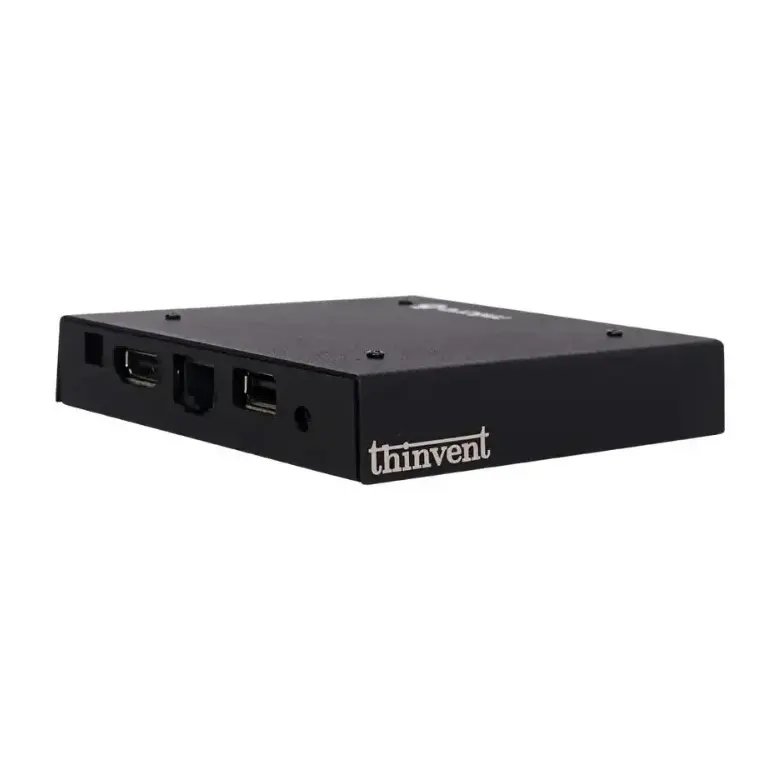
What is an Industrial Desktop Computer?
An industrial desktop computer is a robust, purpose-built computing system designed for reliability and longevity in demanding environments. Unlike standard consumer desktops, these machines are engineered to withstand extended operational hours, temperature fluctuations, dust, vibration, and other harsh conditions common in factories, warehouses, and commercial settings. They prioritize stability, connectivity, and maintenance-free operation, often featuring fanless cooling for silent, dust-resistant performance.
Key Specifications and Technical Details
Industrial desktops are defined by their durable components and specialized features. Common specifications include efficient, low-power processors from Intel's Celeron, N-series, or Core i-series families, which balance performance with thermal efficiency for fanless designs. They typically support a wide range of operating voltages (e.g., 9-36V DC) for direct integration with industrial power systems. Standard features include multiple Gigabit Ethernet ports for network redundancy, abundant USB and serial ports (RS-232/485) for legacy and modern peripherals, and support for multiple displays via HDMI, DisplayPort, or VGA. Storage is often solid-state (SSD or mSATA) for shock resistance, and memory is soldered or uses industrial-grade SODIMMs for reliability.
Use Cases and Applications
These computers are the backbone of numerous industrial and commercial operations. Key applications include:
-
Factory Automation & Process Control: Running SCADA/HMI software to monitor and control machinery on the production floor.
-
Digital Signage & Kiosks: Powering interactive displays, wayfinding systems, and menu boards in retail, hospitality, and public spaces.
-
Thin Client & VDI: Serving as endpoints for virtual desktop infrastructure in offices, call centers, and healthcare.
-
Edge Computing & IoT Gateways: Collecting, processing, and transmitting data from sensors and equipment at the network edge.
-
Surveillance & Security: Acting as a central hub for network video recording (NVR) systems and access control.
Comparison: Industrial vs. Consumer Desktop
| Feature | Industrial Desktop Computer | Standard Consumer Desktop |
|---|---|---|
| Design Life | 5-10+ years | 3-5 years |
| Operating Temperature | Wide range (e.g., -20°C to 70°C) | Narrow range (typically 5°C to 35°C) |
| Cooling | Often fanless (passive) for silence and dust immunity | Active fans required for cooling |
| Power Input | Wide-range DC (e.g., 9-36V) for industrial power rails | Standard AC (110-240V) |
| Connectivity | Multiple LAN, serial (COM) ports, expansion slots | Limited I/O, focused on consumer peripherals |
| Durability | Resistant to shock, vibration, dust, and humidity | Not designed for harsh environments |
Thinvent Industrial Desktop Solutions
Thinvent offers a comprehensive range of industrial-grade desktop computers engineered for demanding applications. Our product lines include compact Mini PCs and Thin Clients for space-constrained deployments, powerful Industrial PCs for heavy computational tasks, and integrated All-in-One displays for streamlined kiosk and control panel setups. Featuring the latest Intel processors, fanless designs for silent operation, and a wide selection of operating systems (including Windows, Linux, and FreeDOS), Thinvent desktops provide the reliability, performance, and connectivity required for 24/7 industrial and commercial operations worldwide.