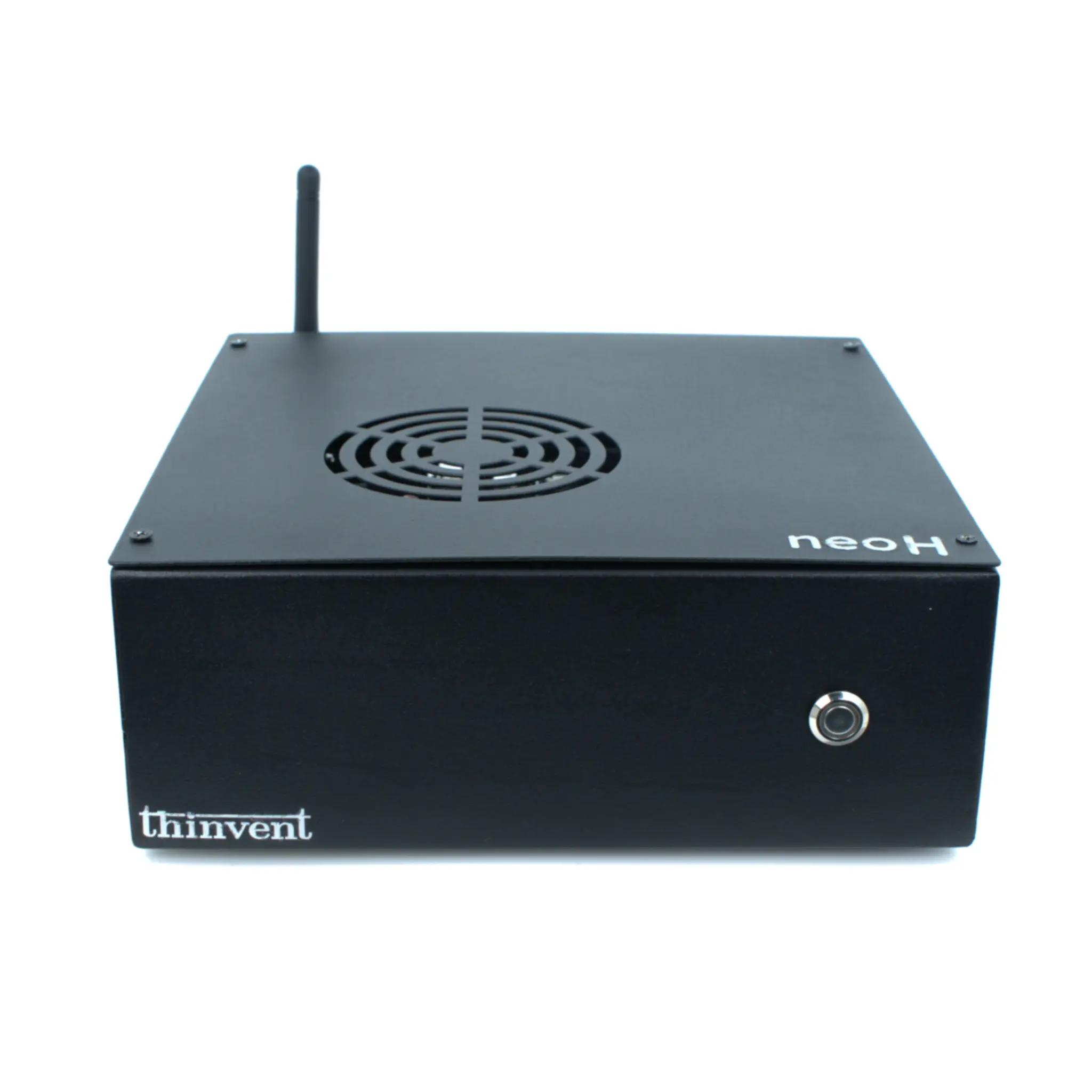
What Are Industrial Computers?
Industrial computers are specialized computing systems designed to operate reliably in demanding environments where standard commercial PCs would fail. They are engineered for durability, long-term availability, and consistent performance under conditions involving extreme temperatures, dust, moisture, vibration, and continuous 24/7 operation. Unlike consumer-grade hardware, these systems prioritize stability, connectivity for industrial protocols, and extended product lifecycles to support critical infrastructure and manufacturing processes.
Key Specifications and Technical Features
Industrial PCs (IPCs) are defined by several critical specifications that ensure their robustness. A core feature is fanless cooling, which uses passive heatsinks to eliminate moving parts, preventing dust ingress and reducing points of failure. They are built with industrial-grade components rated for wider operating temperature ranges (often from -20°C to 60°C or beyond). Shock and vibration resistance is achieved through solid-state drives (SSDs), secure mounting, and reinforced casings. For connectivity, they offer multiple Gigabit Ethernet ports, serial ports (RS-232/485), and expansion slots for PCIe or other industrial I/O cards. Power supplies are typically wide-range (e.g., 9-36V DC) to handle voltage fluctuations common in industrial settings.
Applications and Use Cases
These computers are the backbone of modern industrial automation and control. Common applications include:
-
Factory Automation & PLCs: Controlling assembly lines, robotic arms, and CNC machines.
-
Machine Vision & Inspection: Running image processing software for quality control.
-
Digital Signage & Kiosks: Powering displays in public spaces, retail, and transportation hubs.
-
Edge Computing & IoT Gateways: Collecting and processing data from sensors on the factory floor.
-
Process Control: Managing systems in oil & gas, water treatment, and energy distribution.
-
Transportation: Used in railway, maritime, and vehicle telematics systems.
Comparison: Industrial vs. Commercial Computers
| Feature | Industrial Computer | Commercial/Office Computer |
|---|---|---|
| Operating Temperature | Wide range (e.g., -20°C to 60°C) | Narrow range (typically 5°C to 35°C) |
| Cooling System | Fanless, passive cooling | Active fans |
| Durability | High shock/vibration resistance | Standard, for stable office use |
| Component Lifespan | 5-10+ year lifecycle, long-term availability | 1-3 years, frequent model changes |
| Power Input | Wide-range DC (e.g., 9-36V) | Standard AC power |
| I/O & Expansion | Multiple LAN, serial ports, PCIe slots | Standard USB, HDMI, limited expansion |
| Operating System | Often supports embedded or real-time OS | Consumer Windows/macOS |
Thinvent Industrial Computing Solutions
Thinvent offers a comprehensive range of industrial-grade computing hardware designed for reliability and performance. Our product portfolio includes robust Industrial PCs built for control cabinets and harsh environments, compact Fanless Mini PCs ideal for space-constrained and dusty applications, efficient Thin Clients for virtualized and secure workspaces, and sleek All-in-One Panel PCs with integrated displays for human-machine interface (HMI) stations. Engineered with industrial components and subjected to rigorous testing, Thinvent systems provide the stability and longevity required for critical industrial deployments worldwide.