What is a CNC Industrial Computer?
A Computer Numerical Control (CNC) industrial computer is a specialized computing system designed to operate and manage CNC machinery, such as mills, lathes, routers, and plasma cutters. These computers execute pre-programmed sequences of machine control commands (G-code) to automate complex manufacturing processes with high precision. Unlike standard office PCs, CNC computers are built for harsh industrial environments, featuring rugged construction, fanless cooling for dust resistance, wide operating temperature ranges, and reliable I/O connectivity for machine interfacing.
Key Specifications for CNC Applications
Selecting the right industrial PC for CNC requires careful consideration of core specifications that impact performance and reliability. A robust processor, such as an Intel Core i5 or i3 from recent generations, ensures smooth execution of CAD/CAM software and real-time path calculations. Adequate RAM (typically 8GB minimum, 16GB recommended) allows for efficient multitasking with design software and machine control. For storage, a fast SSD (256GB or larger) provides quick boot times and rapid access to toolpath files. Critical connectivity includes multiple Ethernet ports for network integration, USB ports for program transfer, and often legacy serial ports (RS-232/422) for direct communication with older CNC controllers. Fanless operation is a key advantage, eliminating moving parts that can fail due to airborne contaminants like metal dust and coolant mist.
Use Cases and Industrial Applications
CNC industrial computers are deployed across the manufacturing sector. In metalworking shops, they control machining centers for producing precision components. Woodworking facilities use them to operate CNC routers for cutting, carving, and engraving. In the aerospace and automotive industries, they manage multi-axis machines for creating complex, high-tolerance parts. Beyond primary machine control, these PCs often function as shop floor HMIs (Human-Machine Interfaces), displaying real-time operational data, and as data hubs for connecting to Manufacturing Execution Systems (MES) or the Industrial Internet of Things (IIoT). Their rugged design makes them suitable for installation directly on or near the machine tool, enduring constant vibration and temperature fluctuations.
Comparison of Common CNC Computer Form Factors
| Form Factor | Key Advantages | Typical CNC Use Case |
|---|---|---|
| Industrial Panel PC | Integrated display, sealed front panel (IP65), saves space. | Ideal as a direct HMI mounted on the machine enclosure. |
| Rackmount Industrial PC | High expandability with PCIe slots, centralized control. | Controlling multiple machines or for integration into a control cabinet. |
| Fanless Mini PC | Compact, completely silent, resistant to dust/debris. | Embedded control within existing machine panels or for space-constrained upgrades. |
| Box PC | Rugged metal enclosure, versatile mounting, good I/O selection. | A flexible solution for retrofit applications or as a standalone control unit. |
Thinvent Industrial PCs for CNC Control
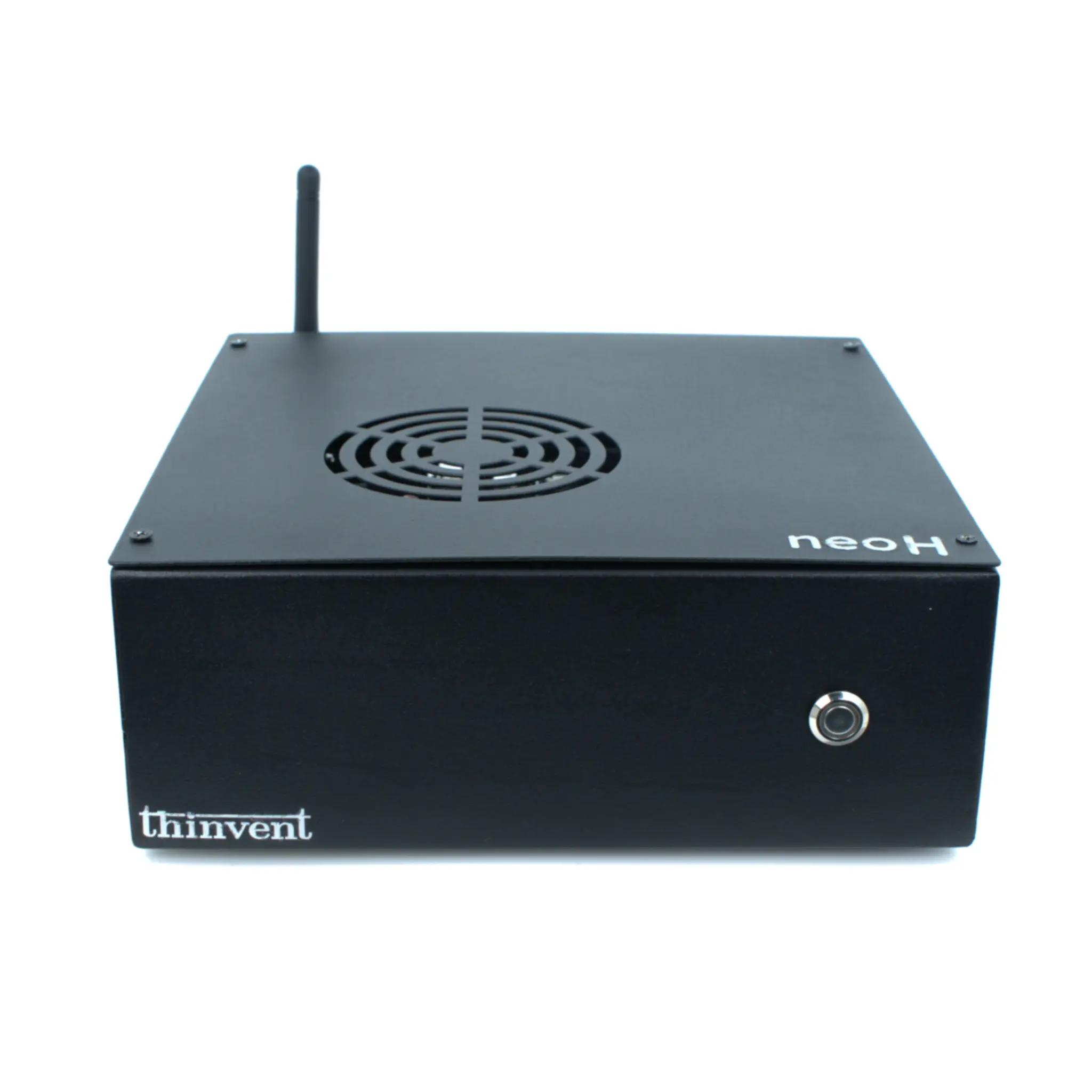
Thinvent manufactures a range of robust industrial computing solutions engineered for CNC environments. Our fanless Mini PCs and Box PCs, built with Intel processors, offer the reliable, maintenance-free operation critical for machine shops. They feature wide voltage input ranges to handle power fluctuations, extended temperature tolerance for non-climate-controlled spaces, and multiple display outputs for monitoring. With options for various operating systems, including Windows IoT and Linux, Thinvent computers provide a stable platform for industry-standard CNC software, legacy applications, and modern IIoT connectivity, ensuring your manufacturing operations run with precision and uptime.