Understanding Industrial CPU Cost and Performance
Selecting the right CPU for an industrial computer is a critical balance between performance requirements and total cost of ownership (TCO). Unlike consumer PCs, industrial systems prioritize long-term reliability, stable operation in harsh environments, and support for specialized I/O. The CPU is the heart of this system, and its cost is influenced by core count, clock speed, architecture generation, and integrated features like graphics and security. A higher-performing CPU typically commands a higher price, but the optimal choice minimizes upfront cost while meeting the application's demands for years, avoiding costly upgrades or downtime.
Key Specifications for Industrial CPUs
When comparing CPUs, focus on these core specifications:
-
Processor Brand & Architecture: Intel and ARM are the primary architectures. Intel Core and Celeron/N-series processors offer high performance and broad software compatibility for demanding tasks. ARM-based CPUs, like Cortex-A series, provide exceptional power efficiency and low heat output for lightweight, always-on applications.
-
Cores & Threads: More cores allow for better multitasking and parallel processing. A 4-core CPU (e.g., Intel N100) is sufficient for digital signage or basic HMIs, while a 12-core CPU (e.g., Intel i5-1240P) is needed for machine vision or complex data logging.
-
Clock Speed (GHz): Higher speeds benefit single-threaded applications. A balance of high turbo frequency and multiple cores is ideal for mixed workloads.
-
Thermal Design Power (TDP): Lower TDP CPUs (e.g., 6W-15W) enable fanless, sealed designs crucial for dusty or volatile environments, reducing maintenance. Higher TDP CPUs require active cooling but deliver more power.
-
Integrated Graphics: For applications involving multiple displays or basic graphical processing, the CPU's integrated GPU (like Intel UHD Graphics) is a key cost and performance factor.
Matching CPU to Industrial Use Cases
| Application | Recommended CPU Tier | Key Performance Needs | Typical Cost Consideration |
|---|---|---|---|
| Digital Signage / Kiosks | Entry-Level (ARM, Intel N-series) | Reliable 24/7 operation, basic media playback | Low upfront cost, low power consumption |
| Thin Clients / VDI | Entry-Level to Mid (ARM, Intel N-series, Celeron) | Efficient network connectivity, low latency | Total cost scaled for large deployments |
| PLC/HMI Interfaces | Mid-Range (Intel i3, i5) | Responsive real-time visualization, multi-tasking | Reliability to prevent production downtime |
| Machine Vision / Edge AI | High-Performance (Intel i5, i7) | High core/thread count, strong single-thread performance | Justifying cost with improved accuracy & speed |
| Industrial Automation Controllers | Ruggedized Low-Power (ARM, Intel Atom) | Wide temperature tolerance, deterministic operation | Long-term reliability in harsh conditions |
Thinvent Industrial Computers: Engineered for Value
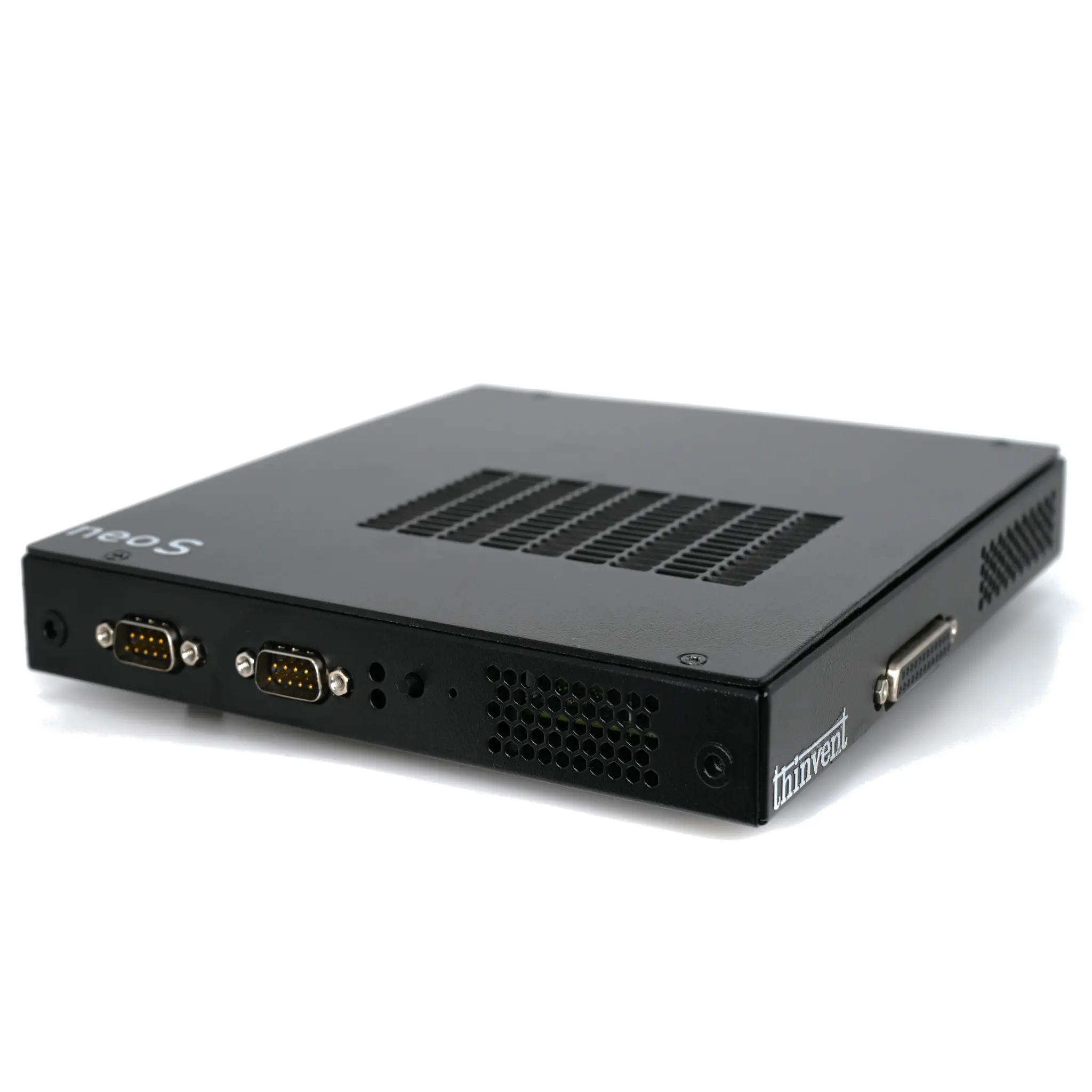
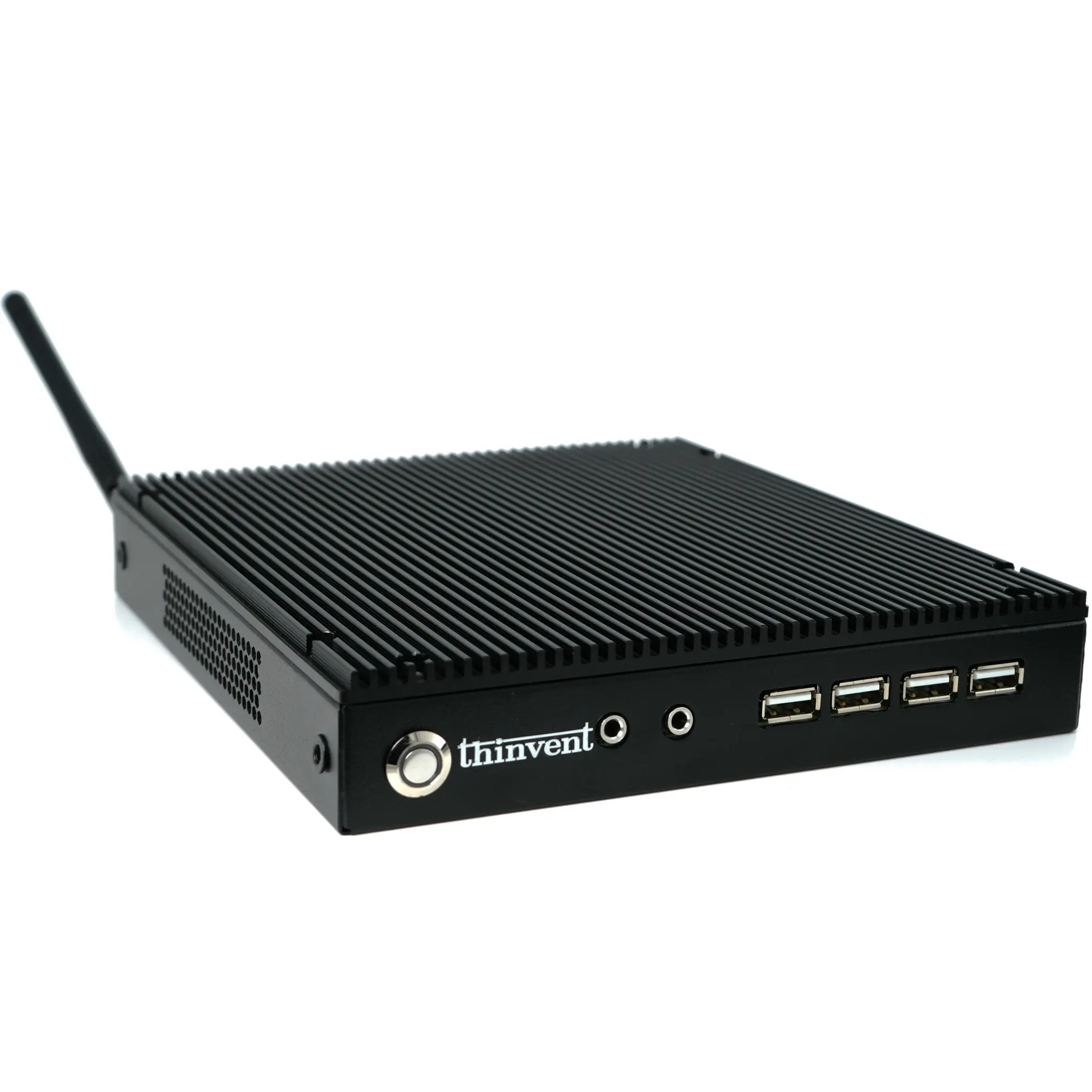
Thinvent offers a comprehensive range of industrial computing solutions designed to provide the optimal cost-to-performance ratio for any application. Our product lines span from ultra-efficient ARM-based thin clients and mini PCs for cost-sensitive, high-volume deployments to powerful Intel Core-based industrial PCs capable of handling intensive workloads at the edge.
For example, our Thinvent Treo and IPC1 lines utilize the Intel N100 processor, delivering excellent efficiency and capable performance for mainstream industrial tasks. For more demanding applications, the Thinvent Aero and IPC series feature up to Intel's 14th Gen Core processors, such as the Core 5 120U, offering high core counts and clock speeds for advanced computing. All Thinvent systems are built with industrial-grade components, support wide operating temperatures, and offer flexible I/O configurations, ensuring you get a reliable system that matches your precise performance needs and budget.