CPU Basic: Entry-Level Processors for Essential Tasks
Entry-level processors are the foundation of computing for basic, everyday tasks. These CPUs are designed to deliver sufficient performance for operations like web browsing, document editing, media playback, and running simple applications, all while maintaining excellent energy efficiency, low heat output, and cost-effectiveness. They are the ideal choice for systems where raw power is secondary to reliability, quiet operation (often fanless), and a low total cost of ownership.
Key Specifications and Technical Details
Entry-level processors typically feature fewer cores (often 2 to 4 cores in ARM designs and 4 to 6 in modern Intel architectures) and lower base clock speeds compared to their high-performance counterparts. They prioritize power efficiency, which allows for compact, fanless designs that are silent and durable. Common features include integrated graphics sufficient for display output, support for modern connectivity standards, and compatibility with lightweight operating systems like embedded Linux. Memory and storage configurations are usually modest (e.g., 2GB-8GB RAM, 16GB-256GB storage), perfectly matched to their intended workloads.
Ideal Use Cases and Applications
These processors are perfectly suited for a wide range of specialized and general-purpose applications. They are the engine behind digital signage, kiosks, and thin clients in enterprise environments. Their reliability makes them excellent for industrial automation, IoT gateways, and edge computing devices. In office settings, they power basic desktop computing, point-of-sale (POS) systems, and conference room displays. Their low power consumption and small form factor also make them ideal for home entertainment centers or lightweight desktop replacements.
Comparing Entry-Level Processor Families
The landscape primarily features two architectures: efficient ARM-based systems and versatile x86-based Intel processors.
| Feature | ARM-Based Processors (e.g., Cortex A53/A55) | Intel Entry-Level (e.g., N100, i3-1215U) |
|---|---|---|
| Primary Strength | Ultra-low power, fanless design, cost-effective | Broader software/OS compatibility, higher single-thread performance |
| Typical Cores | 4 Cores | 4 to 6 Cores (E-cores + P-cores in newer models) |
| Power Profile | Very Low (5W-10W TDP) | Low to Moderate (6W-15W TDP) |
| Best For | Thin clients, embedded systems, dedicated kiosks | General-purpose mini PCs, light office work, industrial PCs with Windows |
| Example OS | Thinux™ Embedded Linux, Android | Windows 11 IoT/Pro, Ubuntu Linux |
Thinvent Products Featuring Entry-Level Processors
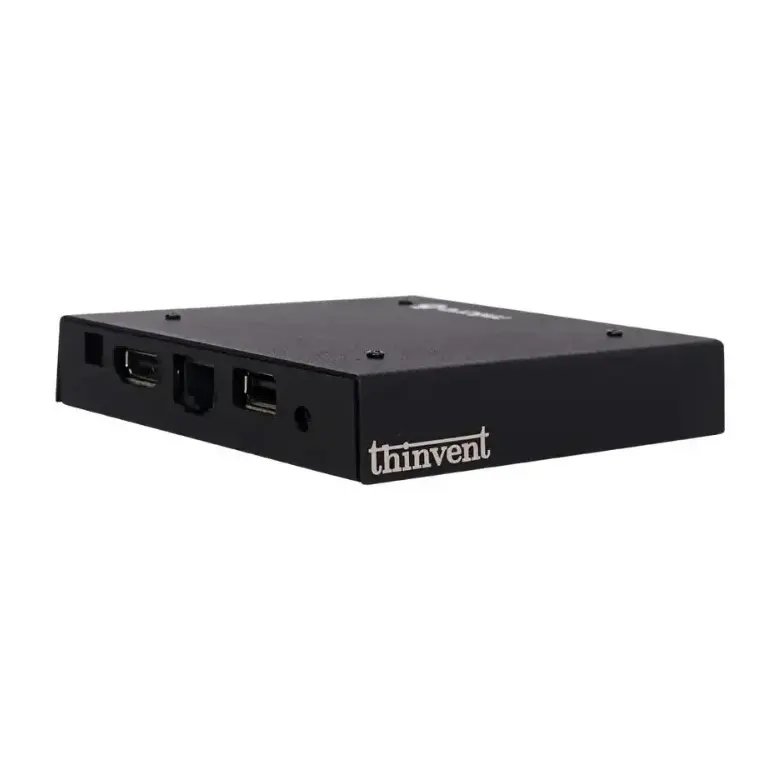
Thinvent leverages these efficient processors across its diverse product portfolio to deliver reliable, purpose-built computing solutions. Our Micro Series thin clients utilize ARM Cortex processors for exceptional energy efficiency in virtual desktop and digital signage roles. The Treo Mini PC and IPC1 industrial PC harness the Intel N100 processor, offering a balance of x86 compatibility and low power draw for general computing and light industrial tasks. For more demanding basic applications, the IPC3 with an Intel Core i3 processor provides enhanced performance for office automation and industrial environments. Finally, our Aero Mini PC series with Intel Core i3 and Core 5 processors offers a premium entry-level experience with robust performance for professional office settings, all within a compact form factor. Each product is engineered for durability, silent operation, and seamless integration into your specific workflow.