Intel vs. ARM Processors for Industrial PCs
Industrial PCs require processors that balance performance, power efficiency, reliability, and thermal management. The two primary CPU architectures in this space are Intel x86 and ARM. Intel processors, ranging from efficient N-series to powerful Core i-series, offer high single-thread performance, extensive software compatibility (especially with Windows and x86-based Linux), and robust features for demanding computational tasks. ARM processors, such as the Cortex-A series, are renowned for exceptional power efficiency, fanless operation, and low heat generation, making them ideal for always-on, embedded applications in space-constrained or harsh environments.
Key Specifications and Architectural Differences
The core difference lies in the Instruction Set Architecture (ISA). Intel's x86 architecture is complex and powerful, supporting a vast ecosystem of industrial software. ARM's RISC (Reduced Instruction Set Computer) architecture is simpler, allowing for more efficient power use and less complex cooling solutions. Key specification comparisons from typical industrial units include:
| Feature | Intel (e.g., N100, Core i5) | ARM (e.g., Cortex A55) |
|---|---|---|
| Core Philosophy | High Performance, Broad Compatibility | Extreme Power Efficiency, Low Heat |
| Typical Clock Speed | 3.4 GHz to 5.0 GHz | 1.5 GHz to 2.0 GHz |
| Cache Memory | Larger (6MB - 12MB) | Smaller (~1MB) |
| Thermal Design | Often requires active cooling for higher tiers | Designed for passive, fanless cooling |
| Power Draw | Higher (12V-19V adapters common) | Very Low (5V adapters common) |
| Software Ecosystem | Windows, Full x86 Linux Distributions | Embedded Linux (e.g., Thinux™), Android |
Ideal Use Cases and Applications
The choice between Intel and ARM dictates the optimal application.
-
ARM-based Industrial PCs: Perfect for digital signage, thin clients, kiosks, IoT gateways, and lightweight edge computing nodes. Their fanless, compact design ensures silent operation and reliability in dusty or volatile environments. They excel at running a single, dedicated application efficiently.
-
Intel-based Industrial PCs: Suited for more demanding tasks like machine vision, industrial automation control, data acquisition systems, and ruggedized workstations. They handle multiple applications, complex algorithms, and legacy Windows-based industrial software with ease. Models with Core i5/i3 processors are workhorses for mid-range automation, while efficient N-series chips bridge the gap towards ARM-like efficiency with x86 power.
Thinvent's Range of Intel and ARM Industrial Solutions
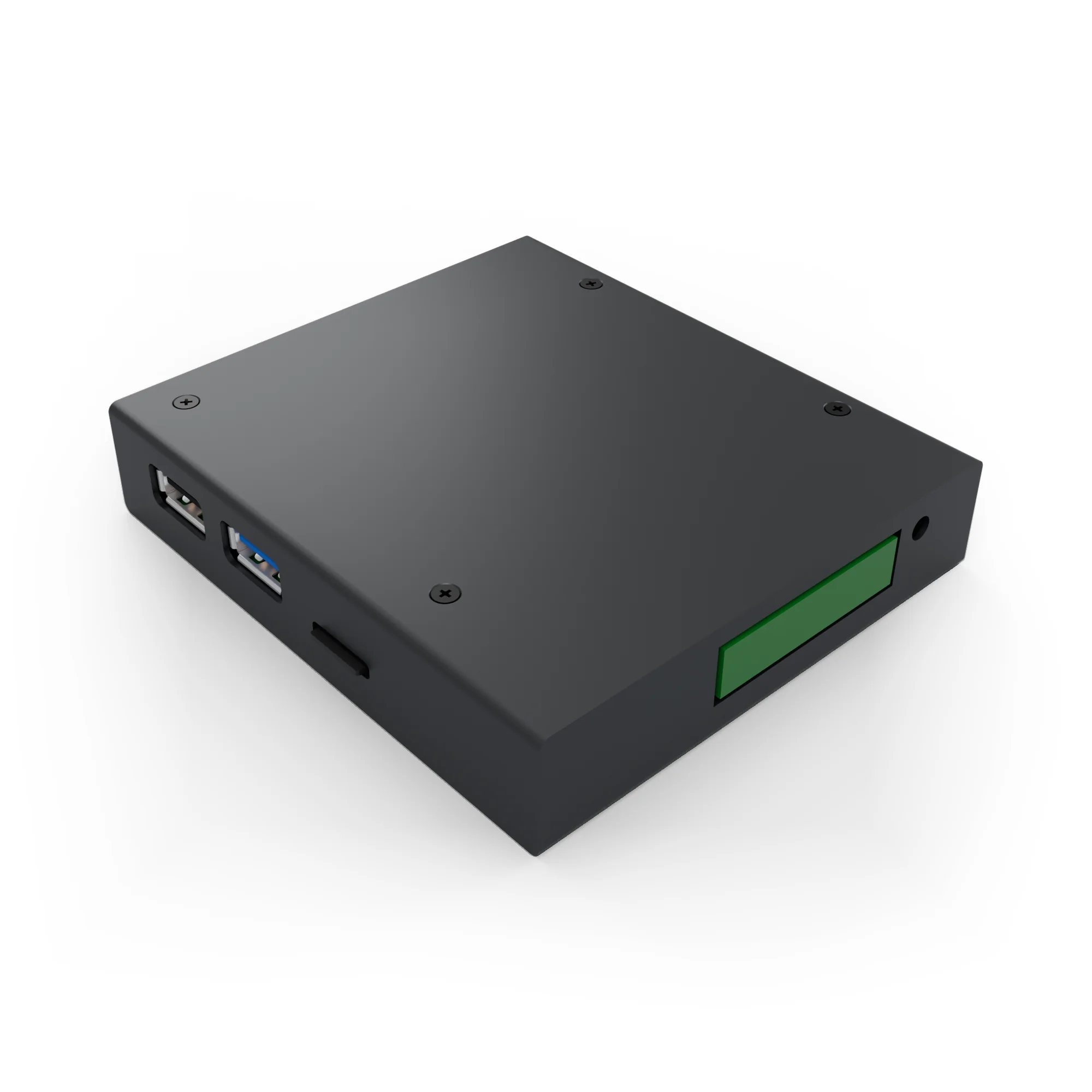
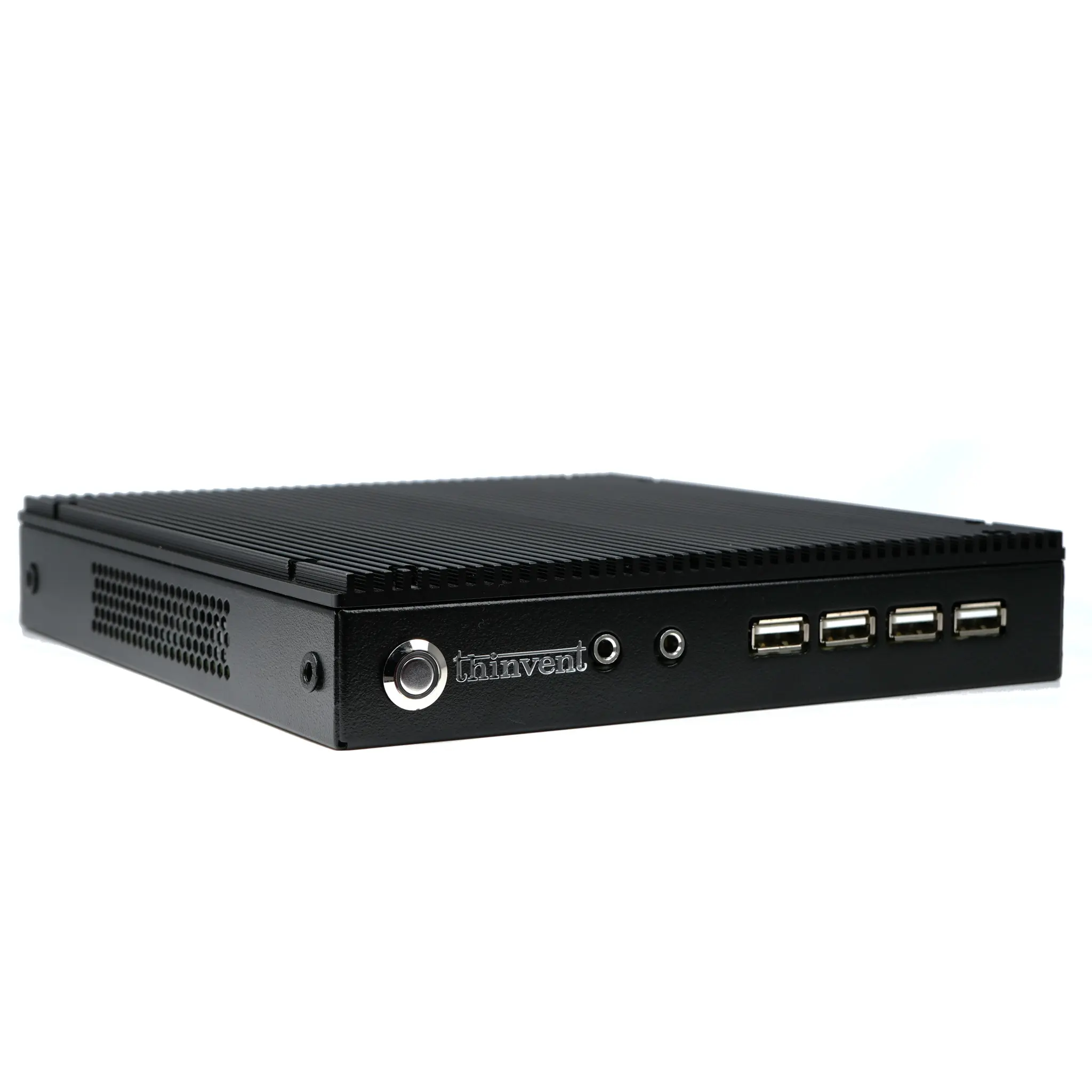
Thinvent offers a comprehensive portfolio leveraging both architectures to meet diverse industrial needs. Our ARM-based line, including the Micro 5 Wifi Thin Client and Micro 6 Pro Mini PC, delivers ultra-efficient, fanless operation with Thinux™ Embedded Linux for secure, dedicated applications. For performance-critical tasks, our Intel-based solutions span from the efficient Treo Mini PC with an Intel N100 processor to the powerful Industrial PC IPC5 with a 12-core Intel Core i5-1240P, and up to the high-performance Aero Mini PC featuring 14th Gen Intel Core processors. This range ensures we have a reliable, fanless or actively cooled industrial computer, thin client, or mini PC optimized for your specific operational requirements, from the edge to the control room.