What CPU is Best for Live Streaming?
For live streaming, you need a CPU that excels at multi-tasking, video encoding, and maintaining consistent performance. The ideal processor has multiple cores and threads to handle running the game or application, encoding the video stream, managing overlays/alerts, and running chat software simultaneously. Modern Intel processors with integrated graphics that support hardware encoding (like Intel Quick Sync Video) are highly efficient for this workload, reducing strain on the CPU and delivering smooth, high-quality streams.
Key Specifications for Streaming CPUs
When selecting a CPU for a streaming PC, prioritize these technical aspects:
-
Core Count: A minimum of 4 physical cores is essential, but 6 or more cores (e.g., i5, i7) is recommended for professional-grade streaming, especially when gaming on the same machine.
-
Clock Speed & Boost: High single-core performance (measured in GHz) is crucial for gaming FPS, while sustained multi-core performance handles encoding. Look for processors with high base and turbo frequencies.
-
Integrated Graphics: Intel's UHD or Iris Xe graphics include Quick Sync Video, a dedicated media engine that performs H.264/HEVC encoding with minimal CPU overhead, freeing up cores for other tasks.
-
Cache: A larger CPU cache (e.g., 12MB or more) improves performance by storing frequently accessed data close to the processor cores, beneficial for real-time applications like streaming.
-
Thermal Design Power (TDP): A higher TDP often indicates a more powerful processor capable of sustaining heavy loads, but requires adequate cooling, which is a hallmark of well-designed industrial PCs.
Use Cases and Applications
A dedicated streaming CPU is vital for several scenarios:
-
Gaming Live Streams: Encoding high-frame-rate gameplay (1080p/60fps or 1440p) while running the game itself demands significant CPU resources.
-
Professional Broadcasts: Streaming for business, education, or teleconferencing requires stable, high-quality video encoding and the ability to run presentation software, cameras, and production tools.
-
Content Creation & Restreaming: Managing multiple video sources, overlays, and streaming to multiple platforms (Twitch, YouTube, Facebook) simultaneously is highly CPU-intensive.
-
Compact Streaming Setups: Fanless industrial mini PCs with capable CPUs are perfect for silent, reliable streaming environments where noise from cooling fans is undesirable.
Recommended CPU Comparison for Streaming
| Use Case | Recommended Series | Min. Core Count | Key Feature | Ideal For |
|---|---|---|---|---|
| Entry-Level / Dedicated Encoder | Intel Celeron / N-Series | 4 | Low Power, Quick Sync | 720p/1080p streaming, secondary encoding PC. |
| Mainstream Gaming & Streaming | Intel Core i5 | 6-10 (with E-cores) | High Clock Speed, Efficient Hybrid Architecture | Streaming 1080p while gaming on a single PC. |
| High-Performance Professional | Intel Core i7/i9 | 12+ (with E-cores) | Max Turbo Frequency, Large Cache | 1440p/4K streaming, multi-source production, heavy multitasking. |
Thinvent Industrial PCs for Live Streaming
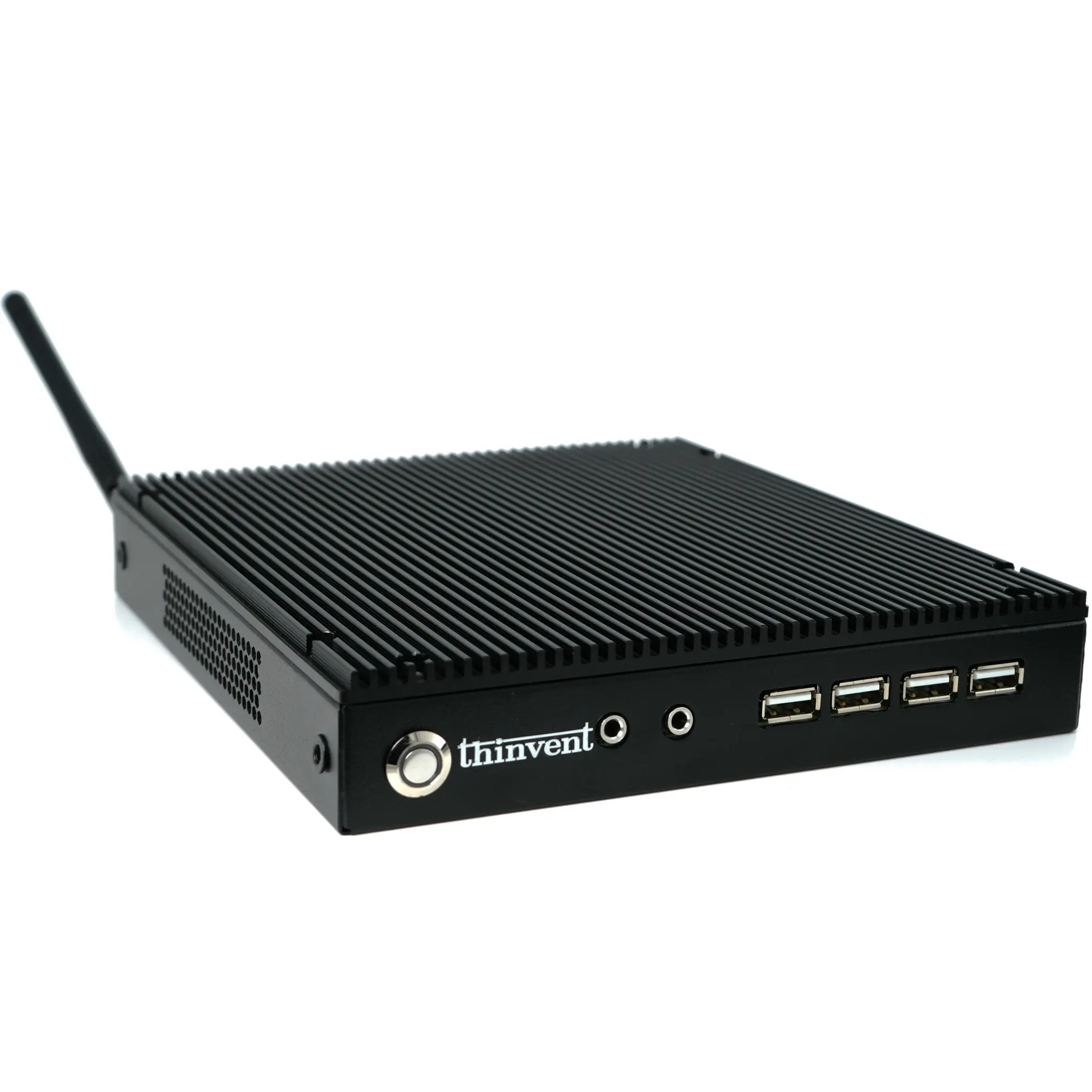
Thinvent offers a range of robust, fanless industrial computers equipped with the precise CPUs needed for reliable live streaming. Our systems are built for 24/7 operation, featuring efficient cooling that eliminates fan noise—a critical advantage for audio-sensitive streaming setups. From compact Aero Mini PCs with efficient Intel N-Series processors for dedicated encoding to more powerful industrial workstations with Intel Core i5 and i7 CPUs for all-in-one gaming and streaming rigs, our products provide the stable, high-performance foundation required for professional broadcasts. Explore our catalog to find a streaming-optimized PC that matches your performance, form factor, and connectivity requirements.