Industrial PC Processors: The Engine for Reliable Computing
The central processing unit (CPU) is the core component of any industrial PC, dictating its performance, power efficiency, and overall reliability for demanding operational environments. Unlike consumer-grade processors, CPUs selected for industrial applications are chosen for their long-term availability, robust thermal management (often fanless designs), and ability to operate reliably 24/7 under varying temperatures and conditions. Key specifications to evaluate include core count, clock speed (frequency), cache size, and thermal design power (TDP), which together determine the system's capability for tasks ranging from simple digital signage to complex machine vision and data acquisition.
Key Specifications and Architecture Choices
Industrial PCs utilize a range of processor architectures, primarily from Intel and ARM, each suited to different performance and power profiles. Intel processors, such as the efficient N-series (e.g., N100) and powerful Core i-series (e.g., i3-1215U, i5-1240P), offer high single-thread performance, larger cache sizes, and support for a wide range of x86 software and operating systems like Windows and Linux. ARM-based processors, like the Cortex-A53 and A55, are renowned for exceptional power efficiency, generating minimal heat, which enables completely fanless, silent operation—ideal for space-constrained or noise-sensitive environments. The choice between them hinges on the required balance of computational power, energy consumption, and software ecosystem.
Applications and Use Cases
The right industrial CPU enables a vast array of applications. Low-power ARM processors are perfect for thin clients, kiosks, digital signage, and basic IoT gateways where consistent, low-heat operation is paramount. Mid-range Intel processors like the N100 or Core i3 are excellent for edge computing, industrial automation, POS systems, and light-duty control panels. High-performance Intel Core i5 and i7 processors handle demanding workloads such as factory floor data analytics, advanced HMI (Human-Machine Interface), vision inspection systems, and compact servers. Reliability across these use cases is ensured through stable, long-lifecycle component support and ruggedized designs.
Processor Comparison for Industrial PCs
| Feature | ARM Processors (e.g., Cortex A55) | Intel Efficiency (e.g., N100) | Intel Performance (e.g., Core i5-1240P) |
|---|---|---|---|
| Core Architecture | ARM, 4 cores | x86, 4 cores | x86, 12 cores (4P+8E) |
| Typical Max Frequency | Up to 2.0 GHz | Up to 3.4 GHz | Up to 4.4 GHz |
| Cache | 1 MB | 6 MB | 12 MB |
| Power & Thermal Profile | Very Low, Fanless | Low, Often Fanless | Higher, Active/Fanless Cooling |
| Ideal For | Thin Clients, Basic Kiosks, IoT | Edge Automation, Digital Signage, POS | Data-Intensive HMI, Machine Vision, Analytics |
| Software Ecosystem | Linux, Android | Windows, Linux | Windows, Linux, Industrial OS |
Thinvent's Range of Industrial PCs
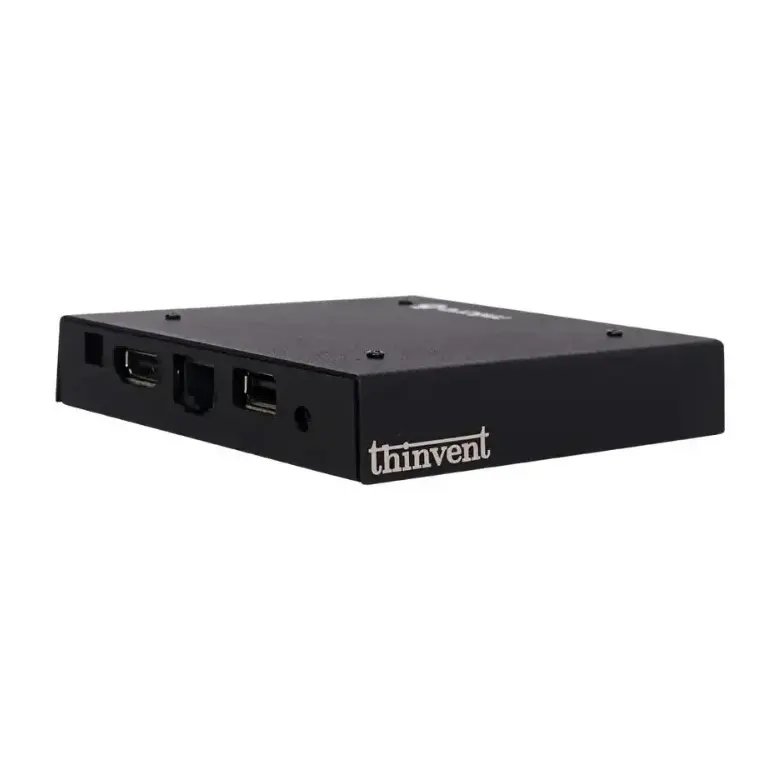
Thinvent offers a comprehensive portfolio of industrial computing solutions powered by the precise CPUs discussed. Our product line scales from ultra-efficient Thinvent Micro series thin clients with ARM processors for lightweight, fanless operation, to the versatile Thinvent Treo and IPC series featuring Intel N100 and Core processors for balanced performance. For high-demand industrial applications, the Thinvent Aero and high-end IPC models are equipped with Intel Core i3, i5, and i7 processors, delivering desktop-level performance in rugged, compact form factors. Every Thinvent system is engineered for reliability, with options for fanless cooling, wide operating temperature ranges, and robust I/O connectivity to meet the stringent demands of global industrial deployments.