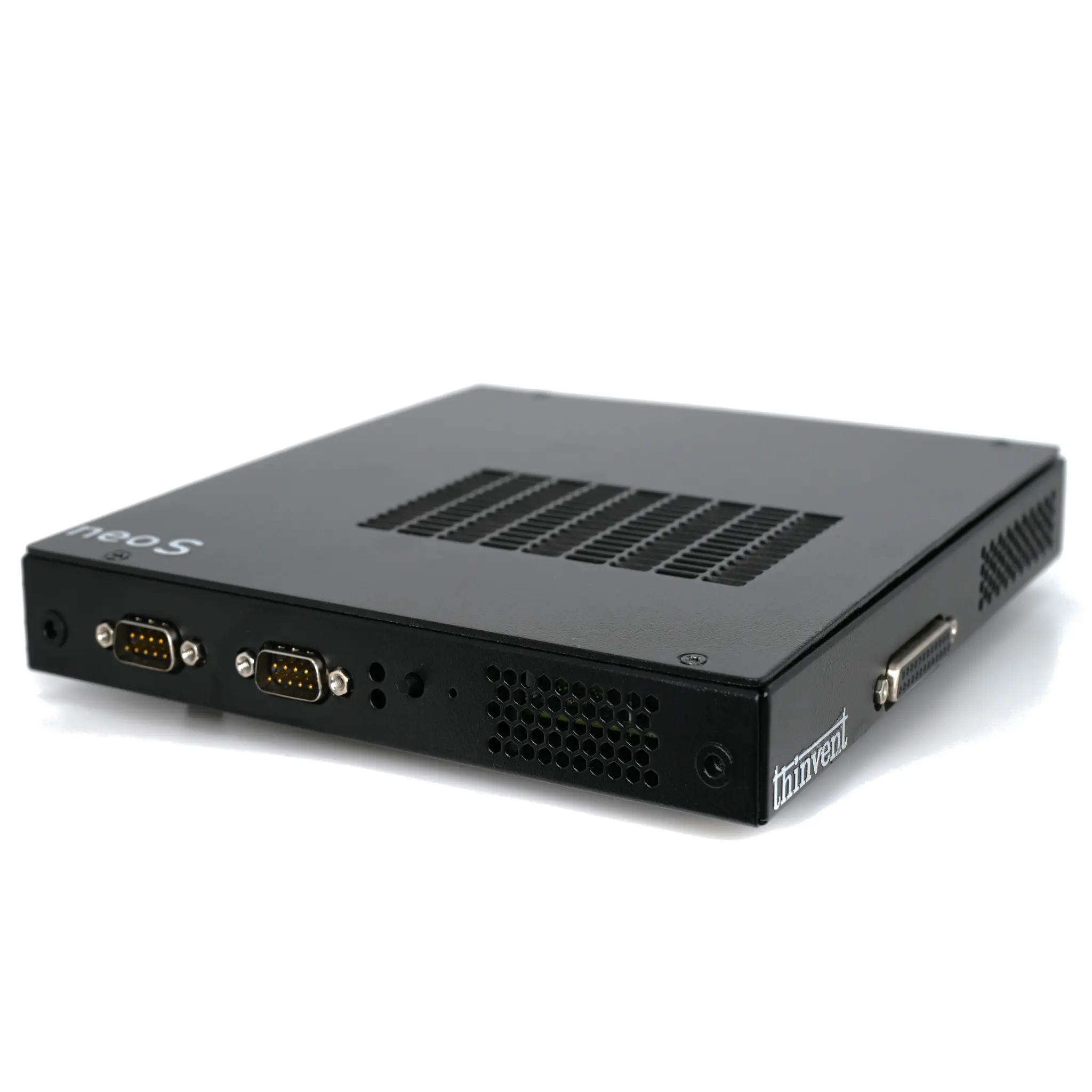
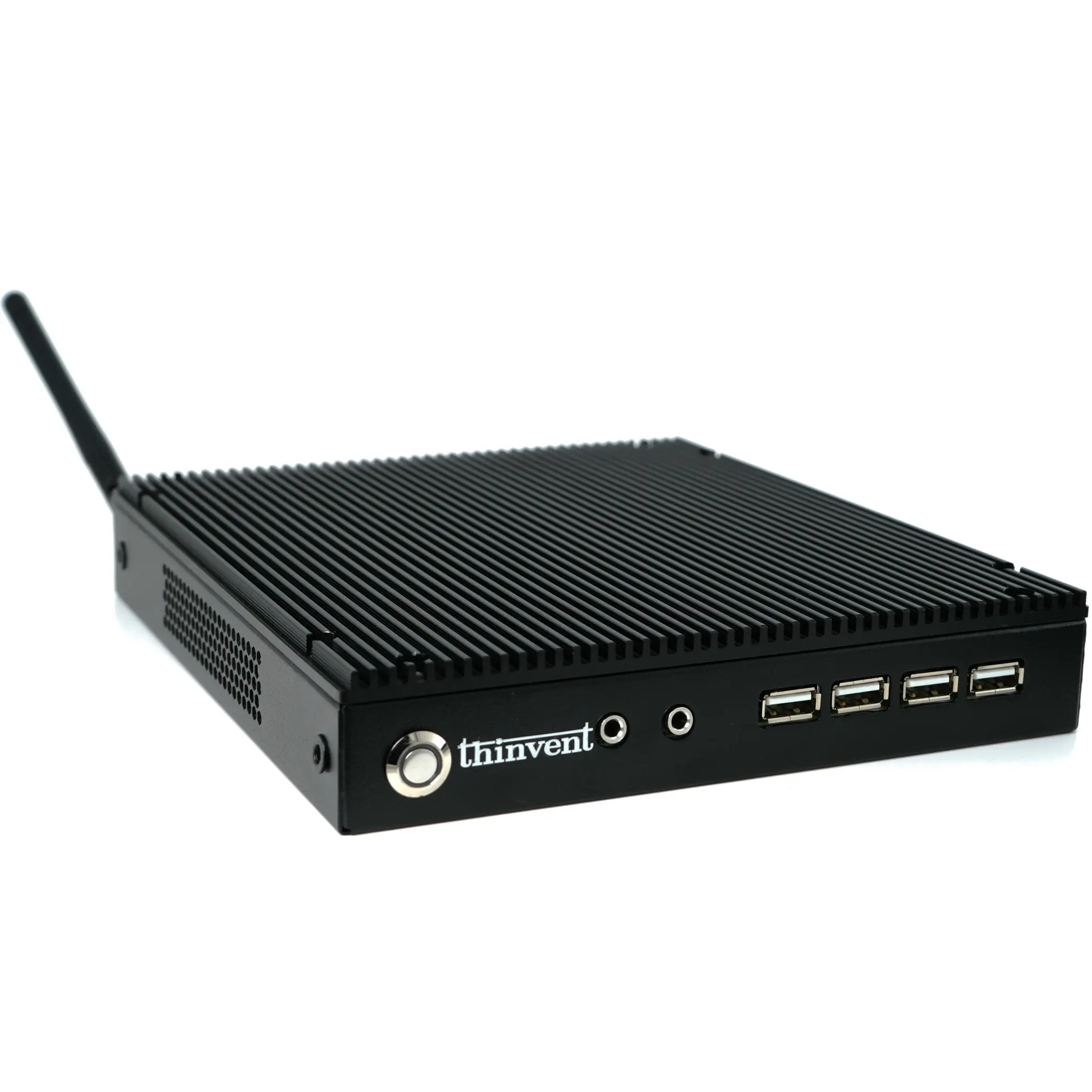
High-speed industrial computers are engineered to deliver exceptional processing power and reliability for the most demanding applications. These systems are built around powerful, modern processors with high clock speeds, multiple cores, and substantial cache memory to handle intensive computational workloads, real-time data processing, and complex automation tasks without lag or failure. Unlike standard commercial PCs, they are designed with industrial-grade components for 24/7 operation in challenging environments, featuring robust construction, wide operating temperature ranges, and often fanless cooling for silent, dust-resistant performance.
Key Specifications for High-Speed Performance
The core of a high-speed industrial computer is its CPU. Key metrics to evaluate include:
-
Processor Generation & Series: Modern Intel Core i5 and i7 processors from the 12th, 13th, and 14th generations offer significant performance gains with hybrid core architectures (Performance-cores and Efficient-cores).
-
Clock Speed (GHz): High single-core turbo frequencies (e.g., 4.4 GHz to 5.0 GHz+) are critical for tasks requiring fast, sequential processing.
-
Core & Thread Count: A higher number of cores (e.g., 10, 12, or more) enables superior multitasking and parallel processing for applications like machine vision, simulation, and data analytics.
-
Cache Memory (MB): Larger CPU cache (e.g., 12MB+) reduces latency by storing frequently accessed data close to the processor.
-
Supporting Hardware: This raw CPU power must be matched with sufficient DDR4/DDR5 RAM (16GB to 64GB+) and fast NVMe SSD storage (512GB to 1TB+) to prevent bottlenecks.
Applications and Use Cases
These powerful systems are indispensable where failure is not an option and latency must be minimized.
-
Industrial Automation & Control: Real-time processing for PLCs, SCADA systems, and robotic control.
-
Machine Vision & AI Inference: High-speed image analysis for quality inspection, defect detection, and guided robotics.
-
Edge Computing & IoT Gateways: Aggregating and processing massive data streams from sensors and equipment at the network edge.
-
Digital Signage & Interactive Kiosks: Driving multiple 4K displays with complex, dynamic content.
-
Research & Simulation: Computational modeling, data science, and engineering simulations.
Comparison of High-Speed Processor Options
| Feature | Intel Core i3 (e.g., 1215U) | Intel Core i5 (e.g., 1240P/1335U) | Intel Core 5 (e.g., 120U) |
|---|---|---|---|
| Typical Cores/Threads | 6 Cores / 8 Threads | 10-12 Cores / 12-16 Threads | 10 Cores / 12 Threads |
| Max Turbo Frequency | Up to 4.4 GHz | Up to 4.4 - 4.6 GHz | Up to 5.0 GHz+ |
| Cache | 10 MB | 12 MB | 12 MB |
| Best For | Entry-level automation, HMIs, basic computing | Mainstream industrial apps, multi-tasking, edge servers | Maximum single-thread speed, latency-sensitive tasks |
Thinvent High-Speed Industrial Computing Solutions
Thinvent offers a comprehensive range of industrial computers equipped with the latest high-speed Intel processors to meet rigorous application demands. Our product lines include compact Industrial PCs (IPC series) built for harsh environments, versatile Aero Mini PCs offering desktop-level performance in a small form factor, and sleek All-in-One PCs that integrate a high-resolution display with powerful computing. Whether your need is for a fanless system for dusty factory floors, a multi-core workstation for data analysis, or a compact edge server with high I/O, Thinvent provides reliable, high-performance computing solutions engineered for continuous operation worldwide.