What Makes an Industrial Desktop CPU Different?
Industrial desktop CPUs are engineered specifically for demanding environments where standard consumer processors would fail. Unlike typical office PCs, rugged industrial computers require processors that can operate reliably in extreme temperatures (often -20°C to 70°C), withstand high levels of vibration and shock, and run continuously for years without failure. The key differentiator is the processor's ability to maintain stable performance under thermal stress while offering long-term availability—industrial-grade CPUs are often supported for 5-10 years, ensuring consistent supply for mission-critical deployments.
Key Specifications for Rugged CPU Performance
When selecting an industrial desktop CPU, several technical specifications matter most. Core count and clock speed determine multitasking capability, with options ranging from energy-efficient 4-core processors (like Intel N100) to high-performance 12-core chips (like Intel Core i5-1240P). Cache size (6MB to 12MB) impacts data access speed, while TDP (thermal design power) is critical—lower TDP processors (6W-15W) are ideal for fanless designs, while higher TDP chips (28W+) suit actively cooled systems. For industrial applications, processors with Intel's vPro technology or ARM's big.LITTLE architecture offer enhanced security and power management features essential for 24/7 operation.
Common Use Cases and Applications
Industrial desktop CPUs power a wide range of applications across manufacturing, logistics, and automation. In factory automation, these processors handle real-time control systems, PLC communication, and HMI interfaces. For edge computing deployments, they process IoT sensor data locally with minimal latency. Other key applications include digital signage (requiring reliable 24/7 operation), medical imaging systems (needing consistent processing power), and transportation infrastructure (where vibration resistance is paramount). The choice between Intel and ARM processors often depends on software compatibility—x86 architecture supports legacy Windows applications, while ARM excels in power-constrained IoT deployments.
Comparison: Intel vs ARM for Industrial Computing
| Feature | Intel Core i5-1240P | ARM Cortex A55 |
|---|---|---|
| Cores/Threads | 12 cores / 16 threads | 4 cores / 4 threads |
| Max Frequency | 4.4 GHz | 1.9 GHz |
| Cache | 12 MB | 1 MB |
| TDP | 28W | ~5W |
| OS Support | Windows, Linux | Embedded Linux, Android |
| Best For | High-performance automation | Low-power IoT edge devices |
Thinvent's Industrial CPU Solutions
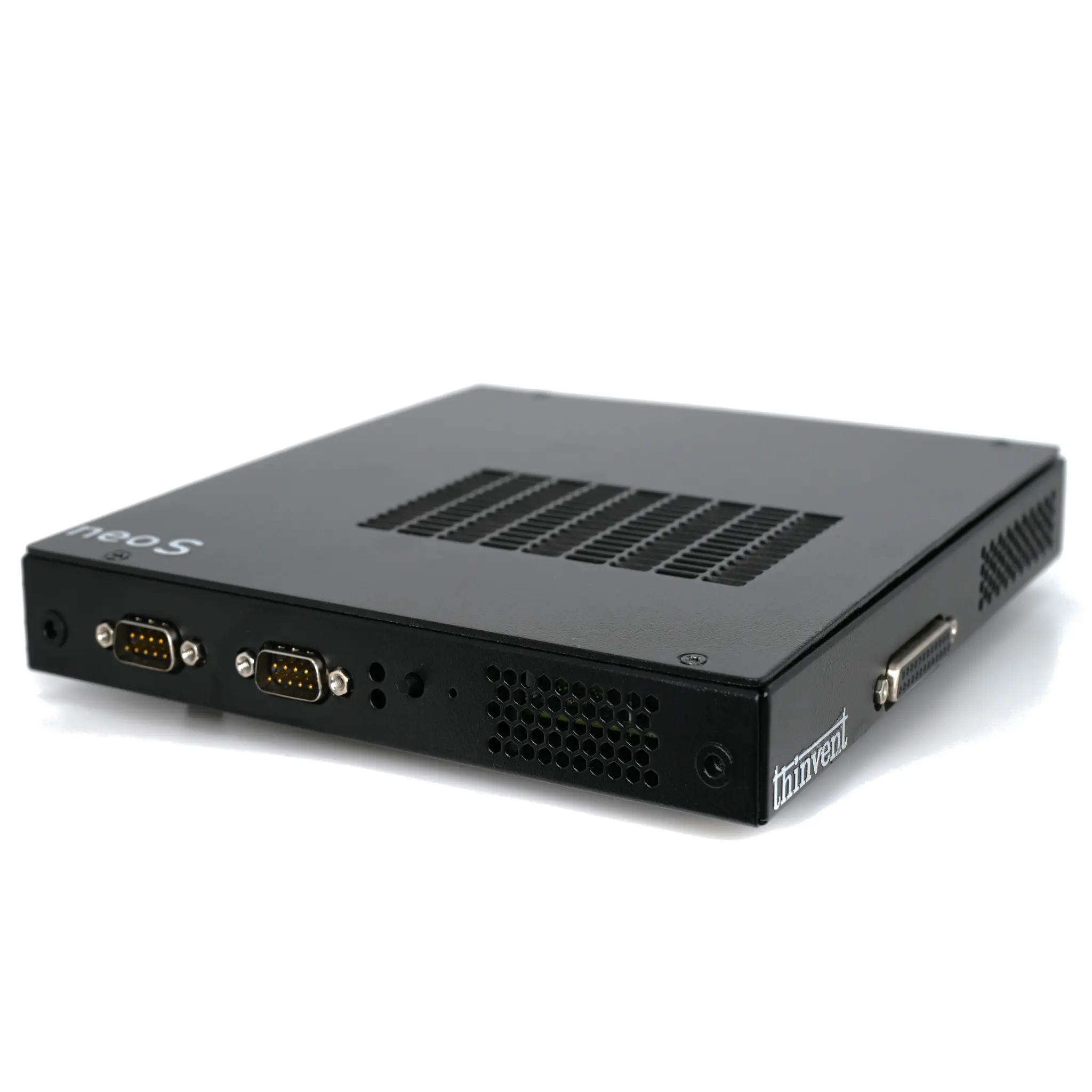
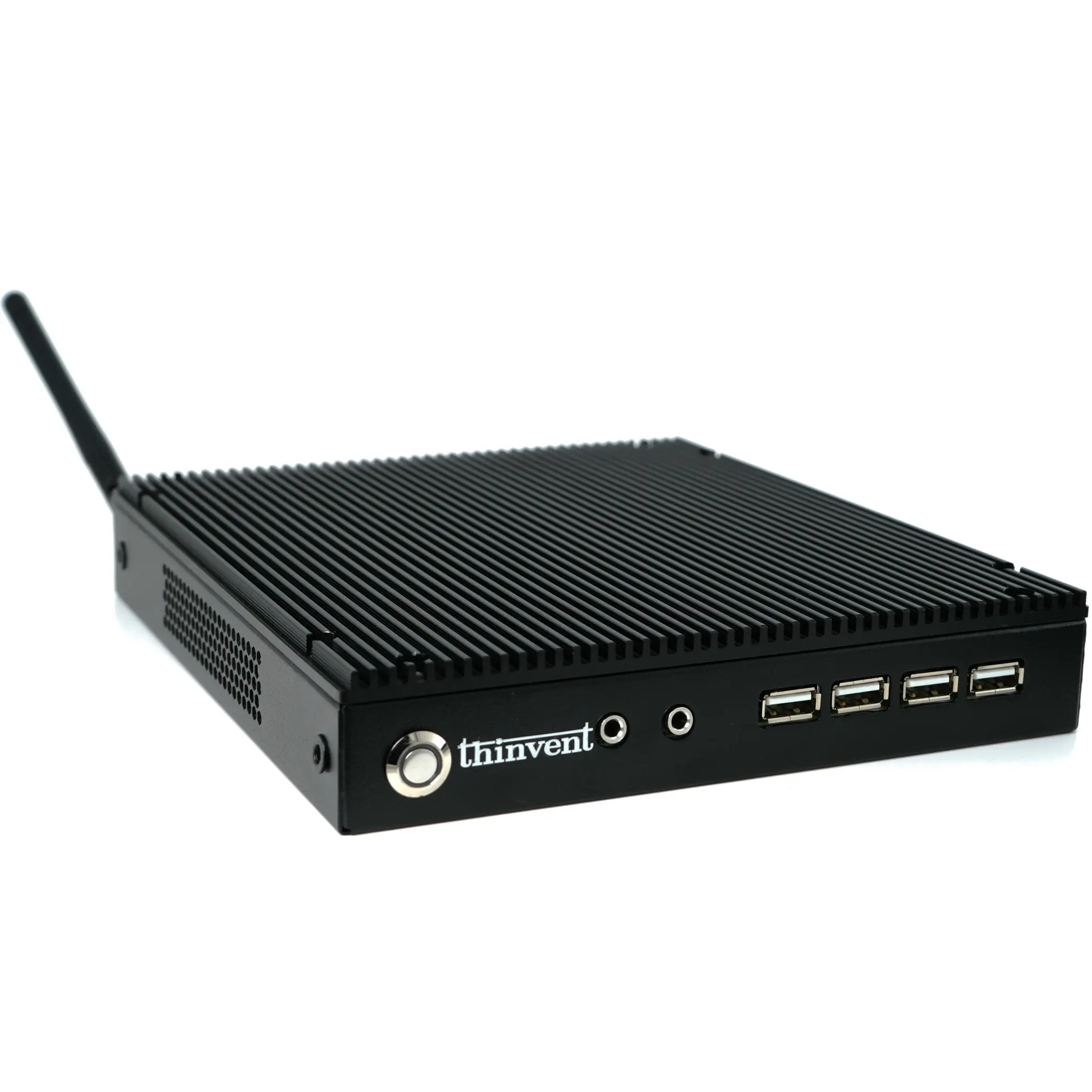
Thinvent offers a comprehensive range of industrial desktop computers featuring both Intel and ARM processors tailored for rugged environments. Our IPC-series systems (IPC1, IPC3, IPC5) utilize Intel processors from the efficient N100 to the powerful Core i5-1240P, all housed in fanless, dust-resistant chassis designed for -20°C to 60°C operation. For ultra-low-power applications, our ARM-based Micro series delivers reliable performance with just 5W power consumption. Every Thinvent industrial PC undergoes rigorous vibration and shock testing to ensure deployment-ready reliability in manufacturing floors, transportation hubs, and outdoor installations.