What Makes a CPU "Good" for Industrial Use?
The question "CPU konsa acha hota hai" (Which CPU is good?) has no single answer, as the best processor depends entirely on your specific workload and application requirements. For industrial computing, key factors include performance per watt, thermal design, reliability, and long-term availability. A "good" CPU balances raw processing power with energy efficiency and stability for 24/7 operation in demanding environments.
Key Specifications to Compare
When evaluating CPUs, focus on these technical details:
-
Cores & Threads: More cores allow for better multitasking and parallel processing. For basic digital signage or kiosks, a 4-core CPU like the Intel N100 is sufficient. For complex automation or data processing, 6, 10, or 12-core processors (e.g., Intel i5) are better.
-
Clock Speed (GHz): Higher speeds mean faster execution of single-threaded tasks. Look for base and turbo frequencies.
-
Cache Memory (MB): A larger cache (e.g., 6MB, 12MB) allows the CPU to access frequently used data faster, improving overall responsiveness.
-
Thermal Design Power (TDP): Lower TDP (e.g., 6W-15W) is critical for fanless, compact systems as it generates less heat, ensuring silent and reliable operation.
-
Generation: Newer generations (e.g., 12th, 13th, 14th Gen Intel) offer significant improvements in efficiency and integrated graphics performance over older ones (e.g., 7th Gen).
Matching CPU to Application
Selecting the right CPU is about matching performance to your use case:
-
Entry-Level / Basic Computing: For digital signage, thin clients, and simple HMIs, Intel Celeron or N-series processors (N95, N100) provide ample power with excellent energy efficiency.
-
Mid-Range / General Purpose: For industrial workstations, edge gateways, and advanced kiosks, Intel Core i3 and i5 processors (e.g., 1215U, 1335U) offer a strong balance of multi-core performance and graphics capabilities.
-
High Performance: For machine vision, AI inference at the edge, and complex data analytics, higher-core-count processors like the Intel i5 1250P (12 cores) deliver the necessary computational power.
Comparison of Common Industrial CPU Tiers
| Use Case Tier | Example Series | Typical Cores | Ideal For |
|---|---|---|---|
| Entry-Level & Efficient | Intel N-series (N100, N150) | 4 | Digital Signage, Thin Clients, Basic Kiosks |
| Mainstream & Balanced | Intel Core i3 (1215U, 1315U) | 6-8 | Industrial Workstations, Edge Computing, POS Systems |
| High Performance | Intel Core i5 (1250P, 1335U) | 10-12 | Machine Vision, Advanced Analytics, Rugged Servers |
Thinvent Industrial Computers with Optimized CPUs
Thinvent designs its industrial computers around carefully selected CPUs to ensure reliability and performance. Our product range includes:
-
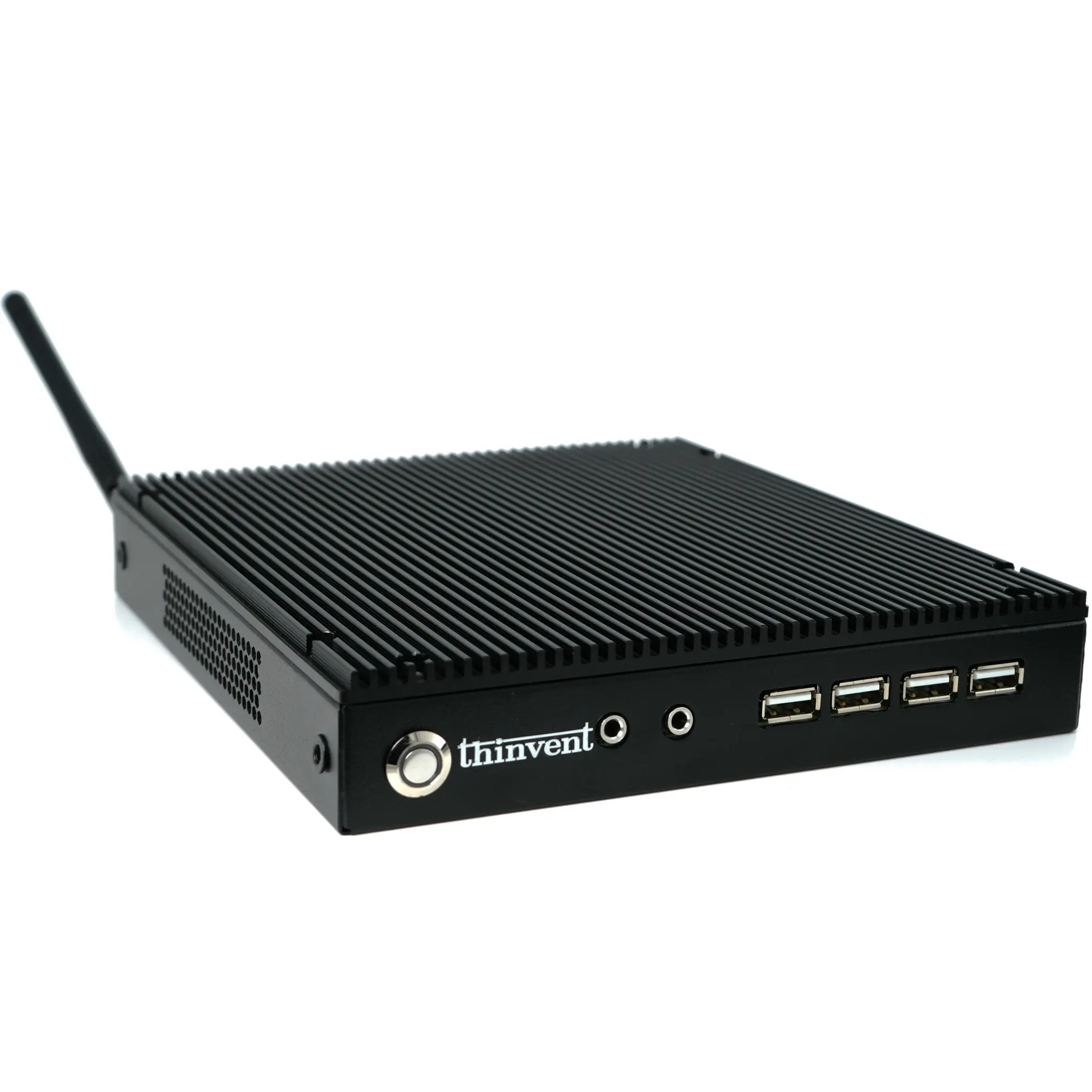
Aero Mini PCs: Featuring ultra-efficient Intel N-series processors like the N100, perfect for space-constrained, fanless applications requiring silent operation.
-
Industrial Panel PCs & All-in-Ones: Often equipped with Intel Core i3/i5 processors to handle the graphical and processing demands of interactive HMIs and control panels.
-
Rugged Industrial PCs: Built with higher TDP Intel Core processors for demanding environments where computational throughput for tasks like data aggregation and real-time processing is critical. By offering a spectrum of processors from the Intel N-series to Core i5, Thinvent ensures you can find a system with the right "good" CPU for your specific industrial challenge.