What Are Business Desktop Computers?
Business desktop computers are systems designed for office productivity, data entry, customer service, and enterprise deployments where reliability, manageability, and long service life matter more than raw gaming performance. Unlike consumer desktops, business-class machines prioritize stable thermals, consistent supply of spare units, standard mounting options, and operating system images that IT teams can deploy across hundreds of seats at once.
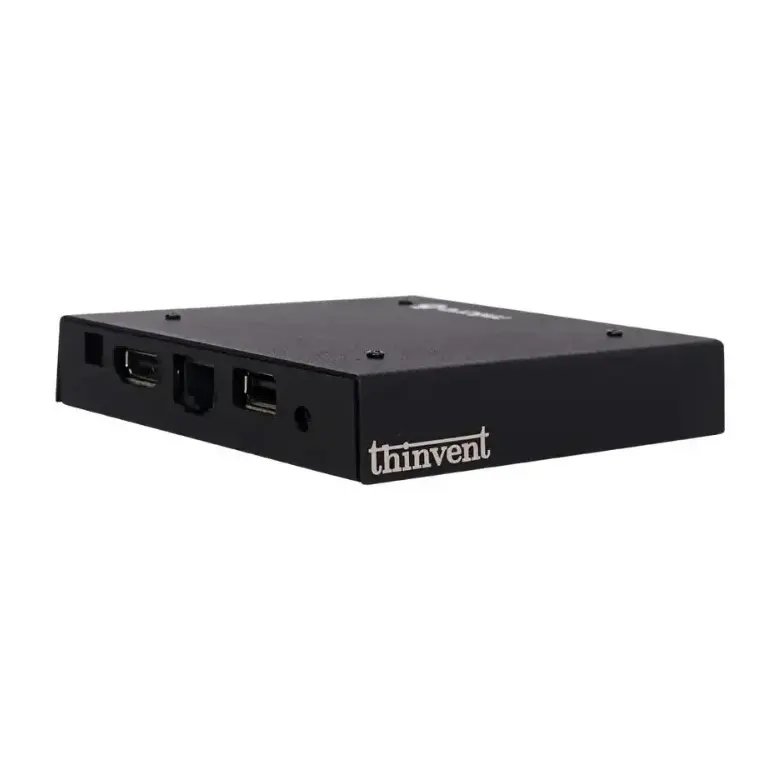
Modern business desktops have also shrunk dramatically. Instead of a tower under every desk, many organisations now standardise on mini PCs and thin clients that mount behind a monitor, draw very little power, and run quietly or completely fanless. This reduces desk clutter, cuts electricity costs across large fleets, and simplifies maintenance because there are fewer moving parts to fail.
Key Specifications to Look For
When evaluating a business desktop, the specification list matters less than how those specifications support your workload. A typical office or ERP user needs a modest processor, sufficient memory for browser tabs and line-of-business applications, and fast storage for quick boot and login times.
| Specification | Typical Business Requirement | Notes |
|---|---|---|
| Processor | Intel Celeron / N-series, Core i3 or i5 | N-series and Celeron suit kiosks, POS and data entry; i3/i5 for multitasking and heavier applications |
| Cores | 4 to 12 | More cores help with virtual desktops and multitasking |
| Memory | 8 GB to 16 GB DDR4/DDR5 | 16 GB recommended for Windows 11 with multiple applications |
| Storage | 128 GB to 512 GB SSD | SSD is essential for fast boot and application launch |
| Graphics | Integrated Intel UHD/Iris | Adequate for office, dual-display and signage use |
| Networking | Gigabit Ethernet, optional dual ports | Dual Ethernet useful for network segmentation |
| Operating System | Windows 11 Pro, Ubuntu Linux, or without OS | Pro editions enable domain join and remote management |
| Mounting | VESA behind monitor | Saves desk space in dense office layouts |
Common Use Cases
Business desktops serve a wide range of roles. Front-office and back-office workstations handle email, documents, spreadsheets and web-based ERP or CRM systems. Thin client deployments connect to VDI or remote desktop infrastructure, keeping data centralised and endpoints simple to replace. Point-of-sale and kiosk terminals need small, dust-tolerant, low-power hardware that can run unattended for long periods. Industrial and shop-floor stations benefit from fanless designs that tolerate dust, vibration and wide temperature ranges.
Mini PCs and Thin Clients vs Traditional Towers
For most office environments, a mini PC or thin client offers clear advantages over a full tower: lower power draw, silent or fanless operation, easier fleet replacement, and the ability to mount out of sight. Towers still make sense where internal expansion cards, large storage arrays, or high-end discrete graphics are required, but these are increasingly niche requirements in general business computing.
Thinvent's Business Desktop Range
Thinvent manufactures industrial computers, mini PCs, thin clients and all-in-one PCs built for long-term business and industrial deployment. Our mini PC and thin client families pair Intel processors with fanless or low-noise cooling, VESA mounting, gigabit networking and a choice of Windows 11 Pro, Ubuntu Linux, embedded Linux or no operating system, so IT teams can standardise on an image that fits their environment. For organisations evaluating business desktop computers, Thinvent offers a dependable, serviceable alternative with consistent supply and support for multi-year rollouts.