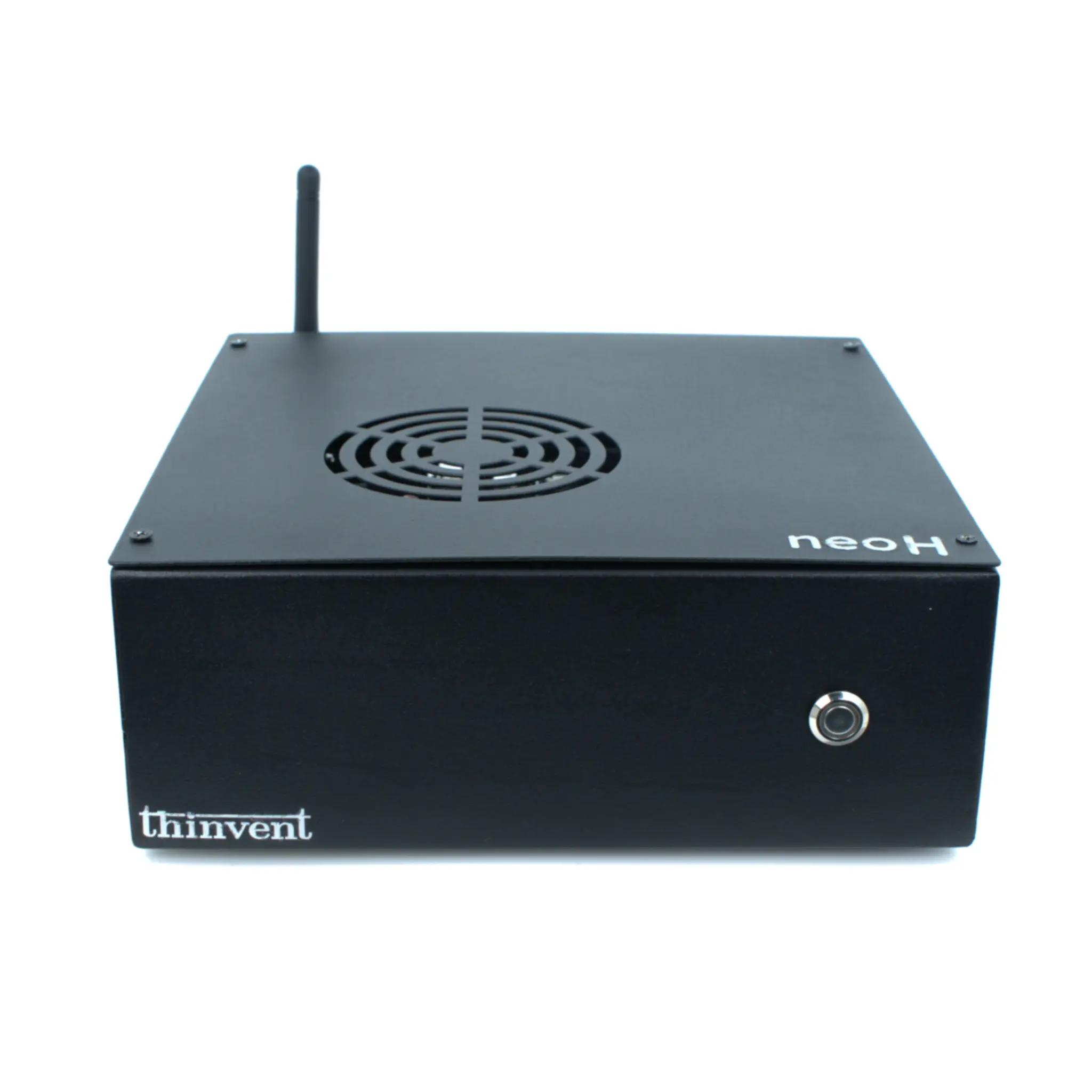
What Are Compact Mini PCs?
Compact Mini PCs, often referred to as micro PCs or small form factor (SFF) computers, are powerful computing devices engineered into an exceptionally small footprint. They deliver the essential performance of a traditional desktop PC while occupying minimal space, making them ideal for environments where desk real estate is limited or a clean, cable-free setup is desired. These systems typically feature modern, energy-efficient processors, solid-state storage, and sufficient memory to handle everyday computing tasks, digital signage, kiosk operations, and light office workloads with remarkable efficiency.
Key Specifications and Technical Details
The core of a modern compact mini PC is its efficient system-on-a-chip (SoC) or low-power processor. A prime example is the Intel® processor N100, a 12th Generation chip with 4 cores capable of reaching up to 3.4 GHz. This processor is designed for excellent performance-per-watt, generating minimal heat, which often allows for completely fanless, silent operation. Standard configurations in this category often include 16GB of DDR4 RAM for smooth multitasking and a 128GB SSD for fast boot times and responsive application loading. Connectivity is provided through multiple USB ports (including USB 3.0/3.2), HDMI/DisplayPort outputs for dual monitor support, and options for wired Ethernet, with WiFi available as a configurable feature.
Ideal Use Cases and Applications
The versatility of compact mini PCs makes them suitable for a wide array of applications. In commercial and industrial settings, they are perfect for powering digital signage, interactive kiosks, point-of-sale (POS) systems, and thin client setups. Their small size and low power consumption make them excellent for embedded applications in healthcare, manufacturing, and retail. For home and office use, they serve as discreet media centers, compact workstations for general productivity, or secondary computers in space-constrained areas. Their reliability and silent operation enhance user experience in noise-sensitive environments like libraries, studios, and reception desks.
Comparison: Compact Mini PC vs. Traditional Desktop
| Feature | Compact Mini PC | Traditional Desktop Tower |
|---|---|---|
| Form Factor | Extremely small (often palm-sized) | Large, requires significant desk/floor space |
| Power Consumption | Very low (typically 10W-30W) | Moderate to High (65W+ for CPU alone) |
| Noise Level | Often fanless and completely silent | Usually has active cooling fans |
| Portability | Highly portable, easy to mount or hide | Not portable, fixed installation |
| Performance Scope | Optimized for efficiency & everyday tasks | Designed for high-performance & expandability |
| Typical Use Case | Digital signage, kiosks, office work, media | Gaming, video editing, intensive workloads |
Thinvent's Compact Mini PC Solutions
Thinvent offers robust and reliable compact mini PCs designed for demanding commercial and industrial environments. Our Thinvent® Aero Mini PC series exemplifies this category, featuring the efficient Intel® N100 processor. These systems are built with durability in mind, offering configurations with 16GB RAM and 128GB SSD to ensure responsive performance. Understanding diverse software needs, Thinvent provides flexible operating system options including Windows 11 IoT/Pro for seamless enterprise integration, Ubuntu Linux for open-source projects, our proprietary Thinux™ Embedded Linux for secure, dedicated applications, or a bare DOS system for complete customization. Many bundles also include a Thinvent® Keyboard and Mouse set for a complete out-of-the-box solution. Thinvent's mini PCs are engineered for 24/7 reliability, making them a trusted choice for global deployments in retail, digital signage, office automation, and embedded computing projects.