What Are Xeon Processors?
Intel Xeon processors are a family of high-performance CPUs designed for servers, workstations, and demanding industrial computing environments. Unlike consumer-grade processors, Xeon chips are engineered for reliability, scalability, and sustained performance under heavy loads. They support advanced features like Error-Correcting Code (ECC) memory, which is critical for data integrity in mission-critical applications, and offer higher core counts and larger cache sizes to handle complex computational tasks, virtualization, and large datasets.
Key Specifications and Technical Advantages
Xeon processors are distinguished by several key technical features. They support multi-socket configurations, allowing for systems with two or more CPUs for extreme parallel processing. ECC memory support prevents data corruption by automatically correcting single-bit memory errors, a vital feature for financial modeling, scientific computing, and database management. These processors also offer higher maximum RAM capacities, advanced security features like Intel® Software Guard Extensions (SGX), and robust platform reliability for 24/7 operation. Their architecture is optimized for stability and throughput rather than peak single-threaded speed.
Primary Use Cases and Applications
Systems powered by Xeon processors are ideal for environments where uptime, data accuracy, and computational power are non-negotiable. Common applications include:
-
Data Centers & Servers: For web hosting, virtualization, and cloud infrastructure.
-
Engineering Workstations: For computer-aided design (CAD), simulation, and 3D rendering.
-
Scientific Research: For computational analysis, modeling, and big data processing.
-
Industrial Automation: As a robust controller for complex manufacturing lines and process control.
-
Digital Signage & Surveillance: Powering large-scale, multi-display video walls and network video recorder (NVR) systems.
Comparing Processor Families for Industrial Use
While Xeon processors excel in high-end applications, other Intel families offer compelling value for different tiers of industrial computing needs.
| Feature | Xeon Processors | Core i5/i3 Processors | Celeron/N-Series Processors |
|---|---|---|---|
| Primary Use | Servers, Heavy Workloads | General Workstations, Kiosks | Thin Clients, Basic IoT, Digital Signage |
| ECC Memory Support | Yes | No | No |
| Multi-Socket Support | Yes | No | No |
| Typical Core Count | High (8+) | Moderate (4-10) | Low (4) |
| Power & Thermal Design | Higher TDP | Balanced TDP | Low Power, Fanless |
| Ideal For | Data Centers, CAD, AI | POS, Interactive Kiosks, Office | Edge Computing, Light Display |
Thinvent's Robust Computing Solutions
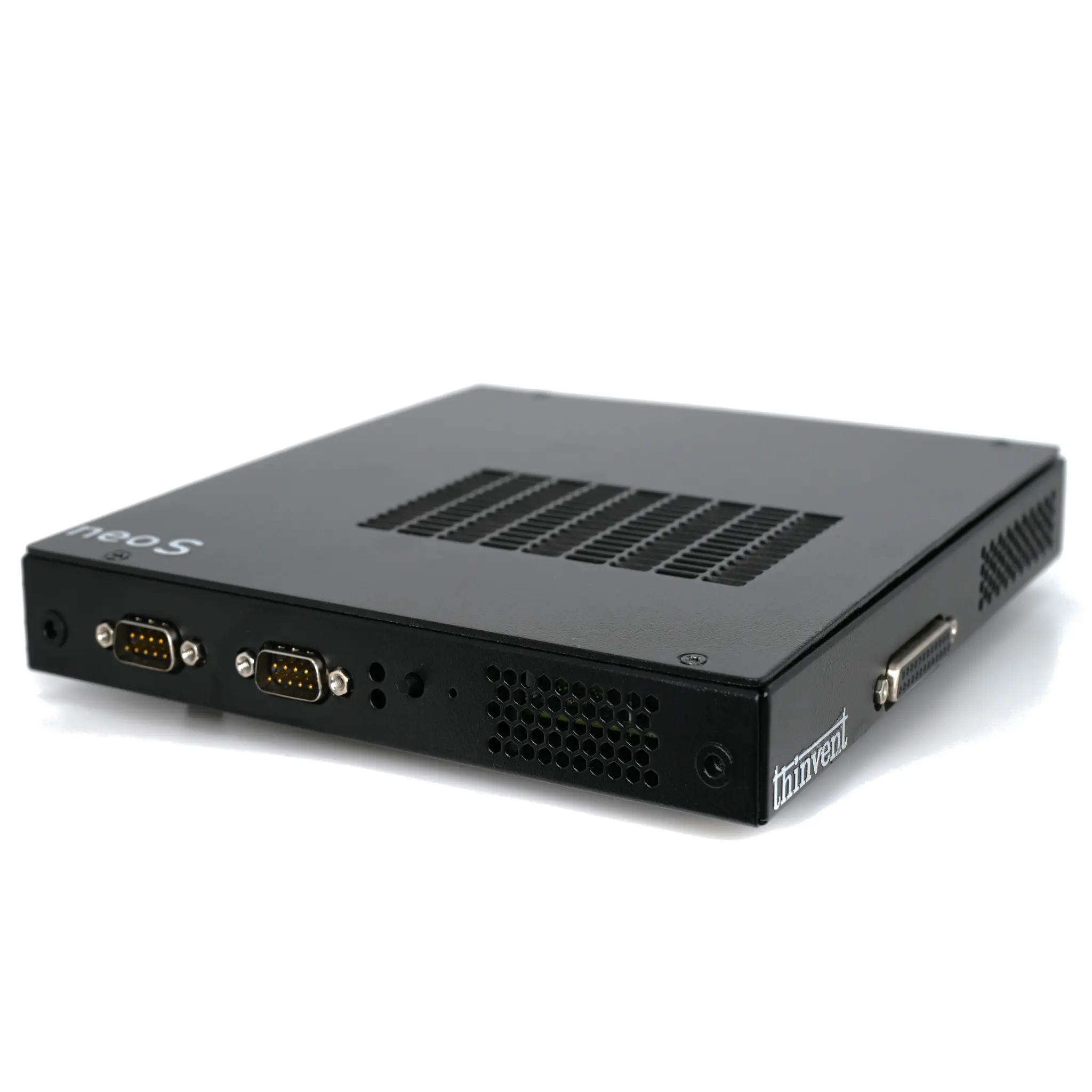
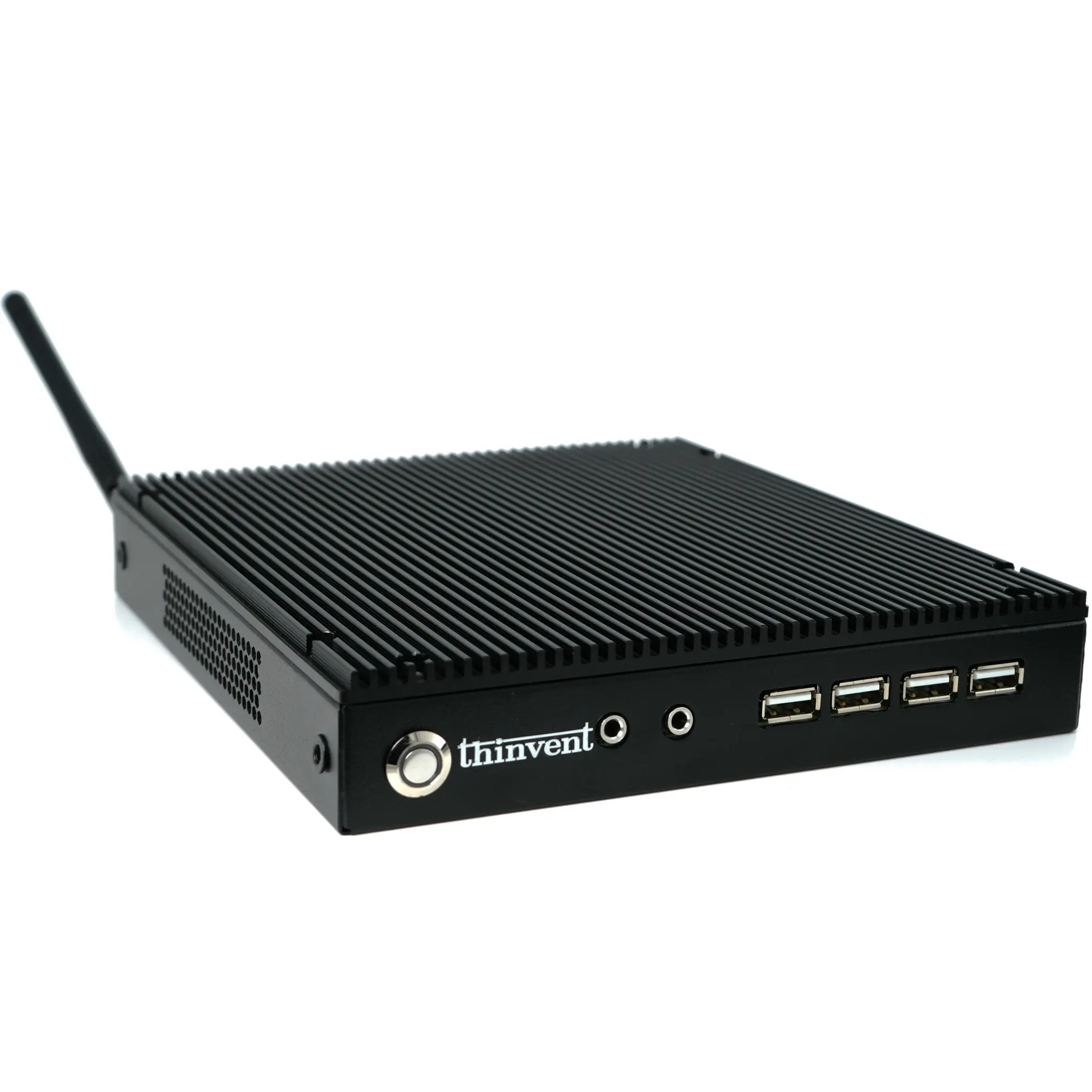
While Thinvent's current product portfolio focuses on highly efficient, fanless industrial computers powered by Intel's latest Core and Celeron processors—ideal for space-constrained and harsh environments—we understand the requirements for scalable, high-performance computing. Our engineering expertise allows us to develop solutions tailored for demanding applications that require the reliability and power associated with server-grade components. For projects requiring exceptional computational throughput, data integrity, and 24/7 reliability, we recommend consulting with our technical team to explore custom-configured systems that can meet the specific demands of your Xeon-level application.