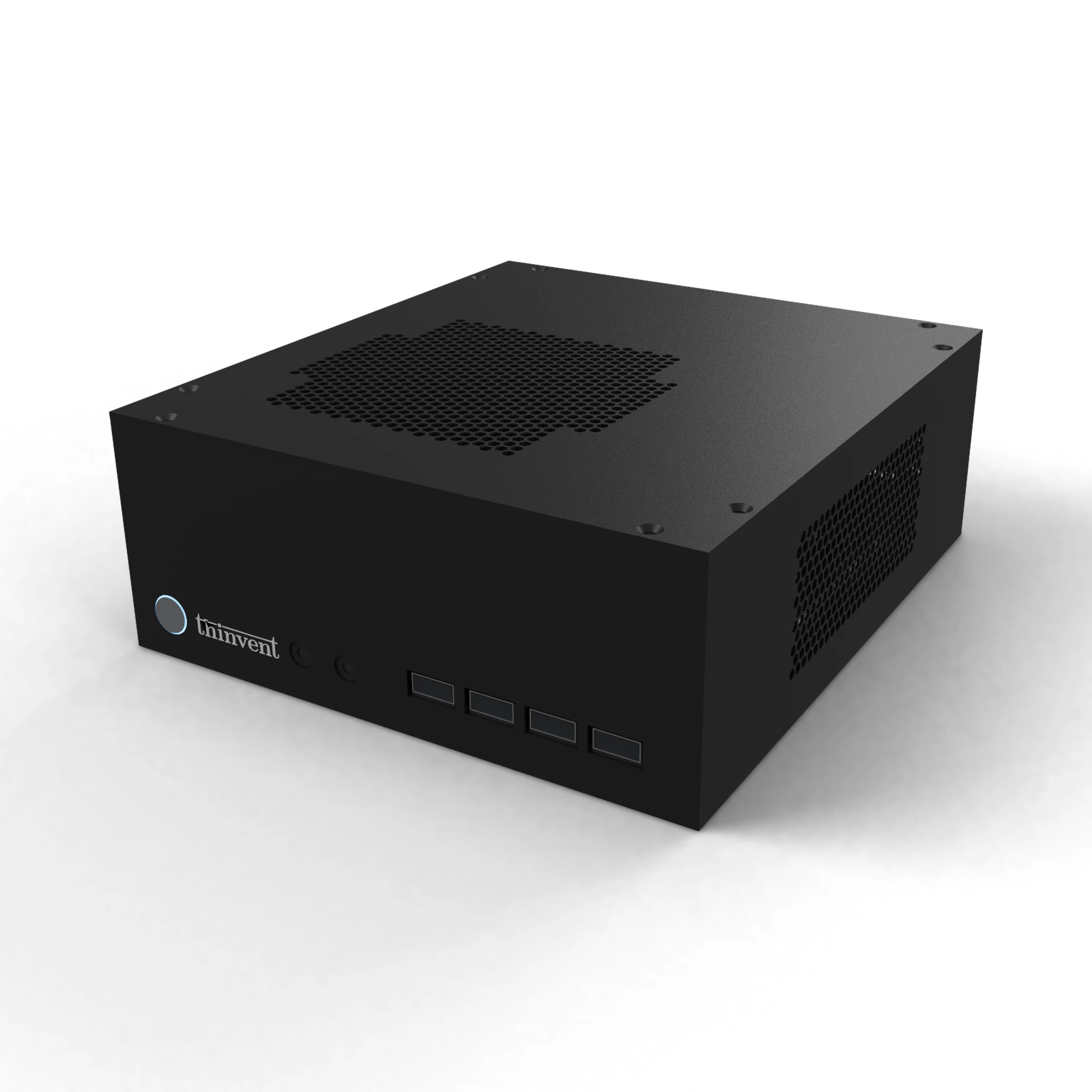
What Are Compact Desktop Computers?
Compact desktop computers, also known as mini PCs or small form factor (SFF) PCs, are powerful computing devices designed to occupy minimal desk space. They offer the full functionality of a traditional desktop tower but in a significantly smaller footprint, often no larger than a book. These systems are ideal for modern workspaces, home offices, living room entertainment setups, and educational environments where space efficiency, low noise, and energy savings are priorities. By eliminating bulky components, they provide a clean, minimalist aesthetic without compromising on essential computing power.
Key Specifications and Technical Advantages
The core appeal of compact desktops lies in their balanced specifications tailored for efficiency. They typically feature modern, low-power processors from Intel (like Core i3/i5, N-series) or ARM (Cortex series), which generate less heat, enabling fanless or quiet fan designs. Memory configurations range from 2GB to 16GB of RAM, and storage options include fast eMMC or SSDs from 16GB to 512GB. Connectivity is robust, with standard HDMI outputs for displays, USB ports for peripherals, and often built-in dual-band Wi-Fi. Their power adapters are small (e.g., 5V-12V), leading to significantly lower energy consumption compared to standard desktops, which translates to reduced operational costs.
Ideal Use Cases and Applications
These versatile computers are perfect for a wide array of tasks. In office environments, they excel as primary workstations for productivity software, web browsing, email, and video conferencing, and are also deployed as digital signage players or thin clients for virtual desktops. For home use, they serve as compact media centers for streaming, light gaming, home server hubs, or as a family's secondary computer for homework and internet access. Their fanless and rugged designs make them suitable for industrial and embedded applications like kiosks, point-of-sale systems, and control panels, where reliability in varying temperatures and conditions is crucial.
Comparison of Common Compact Desktop Types
| Feature | ARM-Based Thin Clients (e.g., Micro 5/6) | Intel Entry-Level (e.g., N100 Series) | Intel Performance (e.g., Core i3/i5) |
|---|---|---|---|
| Best For | Basic computing, web apps, thin client, digital signage | Everyday productivity, home office, light media | Demanding office apps, multitasking, business software |
| Processor | ARM Cortex (4-core, up to 2.0 GHz) | Intel N100 (4-core, up to 3.4 GHz) | Intel Core i3/i5 (6-12 cores, up to 5.0 GHz) |
| Typical RAM | 2GB - 4GB | 4GB - 8GB | 8GB - 16GB+ |
| Typical Storage | 16GB - 64GB eMMC | 128GB SSD | 256GB - 512GB+ SSD |
| Power & Cooling | Very low power, often fanless | Low power, efficient cooling | Higher performance, active/passive cooling |
| OS Support | Thinux™ Linux, Embedded OS | Linux, Windows IoT, Ubuntu | Windows 11 Pro, Ubuntu, Linux |
Thinvent's Range of Compact Desktop Solutions
Thinvent offers a comprehensive portfolio of compact desktop computers designed to meet diverse needs. For lightweight, energy-efficient tasks, the Micro Series (like the Micro 5 Wifi and Micro 6 Pro) with ARM processors provide excellent value for digital signage and basic office work. The Treo Mini PC and IPC1, powered by the efficient Intel N100 processor, offer a great balance for everyday home and office use. For more demanding professional environments, the Aero Mini PC and Industrial PC (IPC) series feature powerful Intel Core i3, i5, and 12th/14th Gen processors with higher RAM and SSD options, capable of handling intensive business applications, multimedia editing, and robust multitasking. All Thinvent systems are built with industrial-grade reliability, offering flexible operating system choices including Thinux™ Embedded Linux, Ubuntu, and Windows, ensuring a perfect fit for any compact computing requirement worldwide.