What is a Desktop AI Supercomputer?
A desktop AI supercomputer is a compact yet powerful computing system designed to handle artificial intelligence workloads, including machine learning model training, inference, and data processing, directly on a local machine. Unlike traditional servers or cloud-based solutions, these systems bring high-performance computing (HPC) capabilities to the desktop, enabling researchers, developers, and engineers to run complex AI algorithms with minimal latency. Key features typically include multi-core processors (often with 10 or more cores), ample RAM (16GB or higher), fast SSD storage, and support for parallel processing. The goal is to deliver supercomputer-level performance in a form factor that fits on a desk, eliminating the need for large data center infrastructure.
Key Specifications and Technical Details
High-performance desktop AI supercomputing solutions require specific hardware configurations to handle demanding tasks. Essential specifications include:
-
Processor: Multi-core CPUs, such as Intel® Core™ i5 or i7 series (12th generation or newer), with high clock speeds (up to 5.0 GHz) and large cache (12 MB or more) for efficient parallel processing.
-
Memory: At least 16GB of RAM (DDR4 or DDR5) to manage large datasets and multi-threaded AI workloads.
-
Storage: Fast SSDs (256GB or higher) for quick data access and model loading.
-
Connectivity: Multiple USB ports, HDMI for display, and Ethernet for network integration, along with support for external GPUs if needed.
These systems often use fanless cooling for silent operation, making them suitable for office environments while maintaining reliability during extended AI training sessions.
Use Cases and Applications
Desktop AI supercomputers are ideal for various applications:
-
Machine Learning Development: Training and testing models locally before deploying to the cloud.
-
Data Science: Analyzing large datasets for insights in fields like finance, healthcare, and marketing.
-
Edge AI: Running inference on local devices for real-time decision-making in IoT or industrial settings.
-
Research: Simulating complex systems in academic or scientific environments.
For example, a developer might use a desktop AI supercomputer to train a neural network for image recognition, while a researcher could run genomic sequencing algorithms without relying on remote servers.
Comparison Table: Desktop AI Supercomputer vs. Standard Desktop
| Feature | Desktop AI Supercomputer | Standard Desktop |
|---|---|---|
| Processor | 10+ cores, up to 5.0 GHz | 4-6 cores, up to 3.5 GHz |
| RAM | 16GB-64GB | 4GB-16GB |
| Storage | 512GB+ SSD | 128GB-256GB HDD/SSD |
| Cooling | Advanced fanless or liquid | Basic fan |
| Use Case | AI training, simulation | Office work, browsing |
Thinvent's Products Featuring Desktop AI Supercomputing
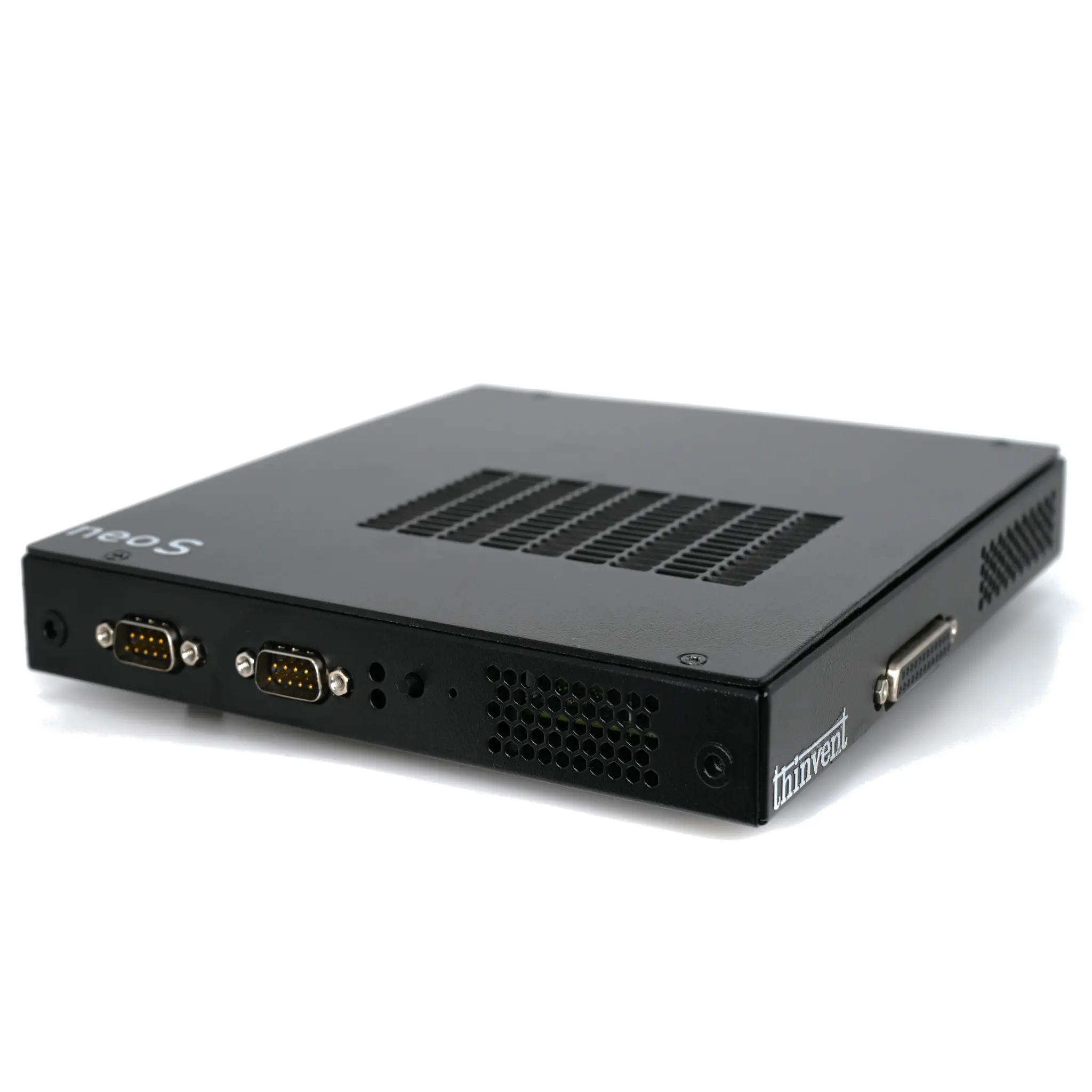
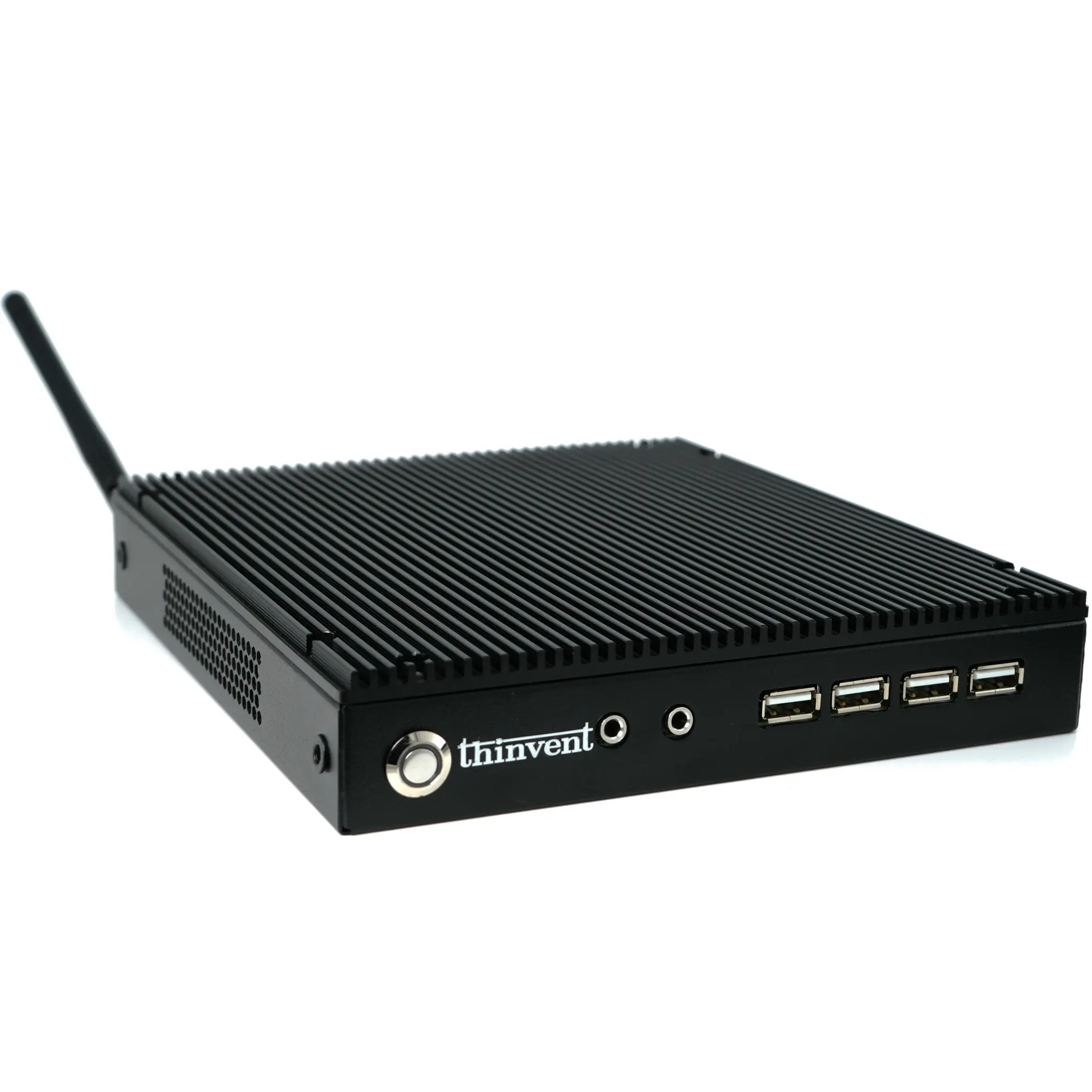
Thinvent offers a range of high-performance desktop systems suitable for AI supercomputing. Our Industrial PC IPC5 with an Intel® Core™ i5-1240P processor (12 cores, up to 4.4 GHz) and 16GB RAM provides robust capabilities for AI workloads. The Aero Mini PC series features Intel® Core™ i3 and i5 processors (up to 14th generation) with up to 10 cores and 5.0 GHz speeds, ideal for compact AI setups. These systems are built with reliability and silent operation in mind, making them perfect for desktop AI supercomputing environments.