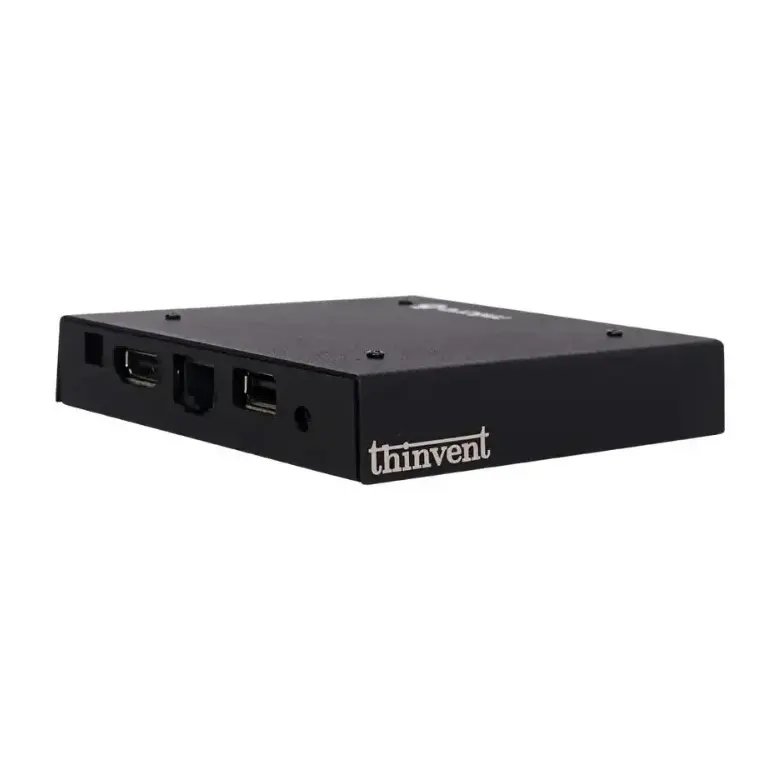
Understanding Desktop and Laptop Computers
Desktop and laptop computers are the two primary form factors for personal and professional computing, each offering distinct advantages. Desktops, typically consisting of a separate tower, monitor, keyboard, and mouse, are known for their superior performance, easier upgradability, and better cooling for demanding tasks. Laptops integrate all components into a single, portable unit with a built-in screen and battery, prioritizing mobility and space-saving design. For industrial and commercial applications, these traditional concepts evolve into robust, fanless Mini PCs, All-in-One workstations, and ruggedized laptops built for reliability in challenging environments.
Key Specifications and Technical Details
When selecting a computer, core specifications determine its capability. The processor (CPU) is the brain, with models like Intel's N-series (e.g., N100) offering efficient, fanless operation for basic tasks, while Core i3/i5/i7 provide higher performance. Memory (RAM), such as 8GB or 16GB, affects multitasking speed, and storage (SSD), like 128GB or 256GB, dictates how much data and software can be stored. Critical connectivity includes multiple USB ports (including USB 3.2 and USB-C), HDMI outputs for external displays, and Gigabit Ethernet for fast, stable network connections. Industrial versions emphasize wide operating temperature ranges, shock/vibration resistance, and long-term component availability.
Use Cases and Applications
-
General Office & Productivity: For word processing, spreadsheets, and web browsing, an efficient Intel N-series processor with 8GB RAM is sufficient.
-
Digital Signage & Kiosks: Fanless Mini PCs are ideal, offering silent, reliable 24/7 operation in public spaces.
-
Industrial Automation & Control: Ruggedized desktops and panels with wide temperature tolerance and multiple I/O ports run HMI and SCADA software.
-
Thin Client & VDI: Devices with lower local storage run virtual desktops, centralizing management and security.
-
Field Service & Mobile Workforces: Rugged laptops or compact Mini PCs paired with portable monitors provide computing power on the go.
Comparison: Desktop vs. Laptop Form Factors
| Feature | Traditional Desktop | Traditional Laptop | Industrial Mini PC / All-in-One |
|---|---|---|---|
| Performance | Highest, better cooling | Good, limited by thermal design | Ranges from efficient to high-performance |
| Upgradability | Excellent, modular | Limited, often soldered | Moderate to good, depends on form factor |
| Portability | Not portable | Highly portable | Mini PCs are highly portable; All-in-Ones are fixed |
| Durability | Standard | Standard | Designed for harsh environments (vibration, dust, temp) |
| Space Required | Most | Least | Mini PC: Very little; All-in-One: Integrated |
| Typical Power Use | Higher | Lower (on battery) | Often optimized for low power, fanless operation |
| Best For | Fixed workstations, gaming, servers | Mobile professionals, students | Digital signage, factory floors, kiosks, space-constrained offices |
Thinvent's Desktop and Laptop Solutions
Thinvent specializes in industrial-grade computing solutions that bridge the gap between traditional desktops/laptops and the demands of commercial environments. Our product range includes ultra-compact Mini PCs that deliver desktop-level performance in a fanless, rugged chassis perfect for embedded applications. For fixed workstations, our All-in-One PCs integrate a vibrant display with a powerful computing unit, saving space and reducing cable clutter. While we focus on fixed and panel-mounted solutions, our compact form factors offer the portability of a laptop when paired with a mobile display, ideal for technicians and field applications. All Thinvent systems are built with quality components, support multiple operating systems, and are designed for reliable, long-term operation in diverse global settings.