Understanding RAM Expansion: Does It Work?
Yes, RAM expansion absolutely works, but the effectiveness depends on your system's architecture and what you mean by "expansion." In traditional desktop and industrial PCs, RAM expansion refers to adding or replacing physical memory modules (DIMMs/SODIMMs) in available slots. This is a proven, reliable method to boost system performance, especially when running multiple applications, virtual machines, or memory-intensive tasks like data processing, video editing, or industrial automation software.
For systems with soldered (onboard) RAM, such as many thin clients and mini PCs, "expansion" may mean using the maximum supported memory configuration at purchase, since these modules cannot be upgraded later. Some systems also support virtual memory expansion via SSD swap space, but this is significantly slower than physical RAM. The key takeaway: physical RAM expansion works excellently when hardware slots are available, while soldered RAM requires choosing the right configuration upfront.
Key Specifications and Technical Details
When considering RAM expansion, focus on these factors:
-
Memory Type and Speed: DDR4 and DDR5 are common. Ensure your system supports the RAM type (e.g., DDR4-3200) for compatibility.
-
Maximum Capacity: Check the motherboard or system specifications for the maximum RAM supported (e.g., 16GB, 32GB, or 64GB).
-
Slots Available: Systems may have 1 or 2 SODIMM slots. Using dual-channel configuration (two identical modules) can improve memory bandwidth by up to 15-20%.
-
Upgrade vs. Soldered: Some thin clients and mini PCs have onboard RAM (non-upgradeable), while industrial PCs often have accessible SODIMM slots.
Use Cases and Applications
RAM expansion is particularly beneficial for:
-
Industrial Automation: Running PLC programming software, HMI applications, or data logging tools that require stable memory allocation.
-
Virtualization: Hosting multiple virtual machines (e.g., with VMware or Hyper-V) where each VM needs dedicated RAM.
-
Multitasking: Opening dozens of browser tabs, office applications, and communication tools simultaneously without slowdowns.
-
Embedded Systems: Upgrading from 4GB to 8GB or 16GB can prevent out-of-memory errors in POS systems, digital signage, or kiosks.
Comparison: Onboard vs. Expandable RAM
| Feature | Onboard (Soldered) RAM | Expandable (SODIMM) RAM |
|---|---|---|
| Upgradeability | Not possible after purchase | User or technician upgradeable |
| Performance | Good for fixed workloads | Flexible for future needs |
| Cost at purchase | Often lower initial cost | May have higher base config cost |
| Best for | Thin clients, embedded devices | Industrial PCs, mini PCs, workstations |
| Example capacity | 2GB, 4GB | 4GB to 64GB |
Thinvent's Products Featuring RAM Expansion
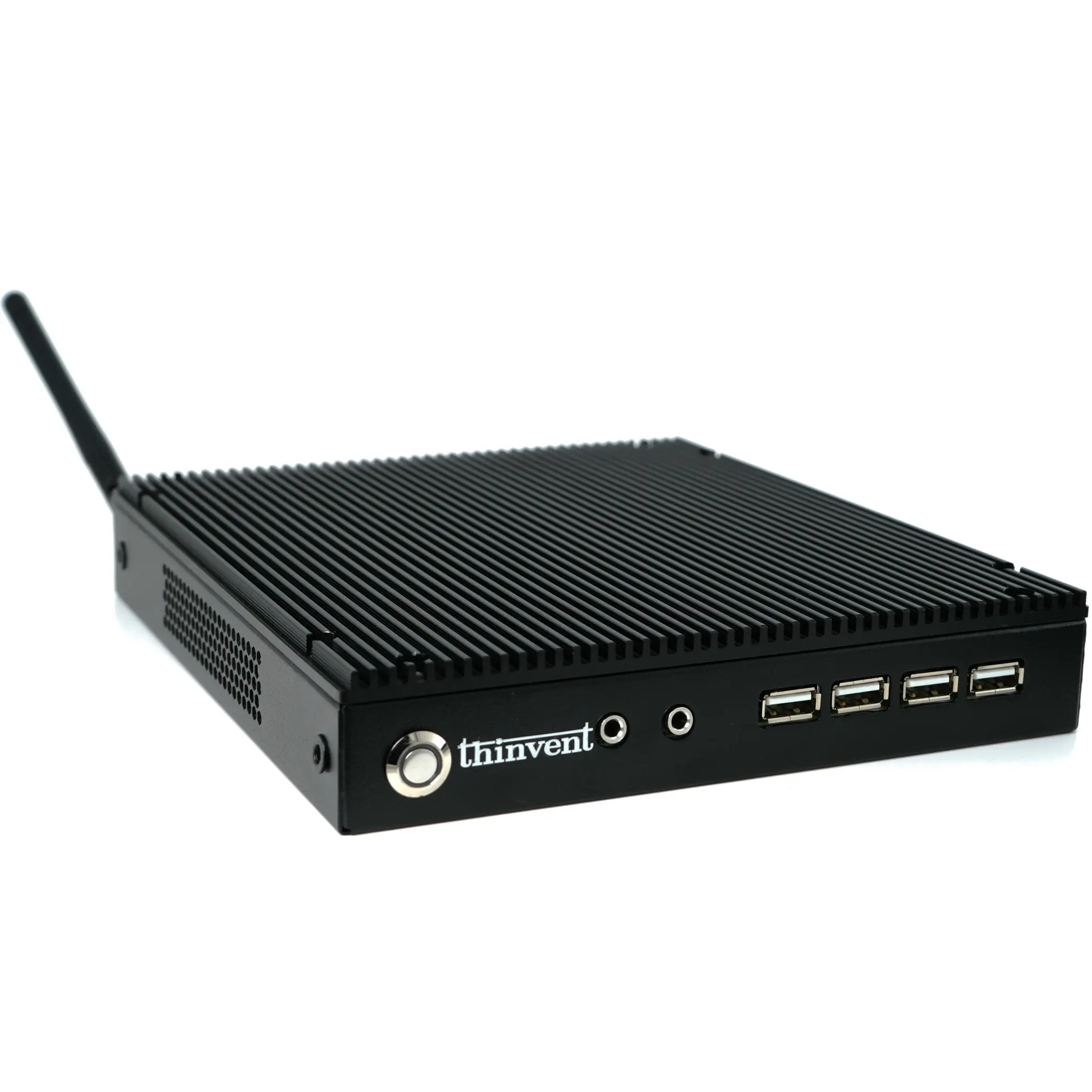
Thinvent offers a wide range of systems designed with upgradeability in mind. Our Industrial PC series (IPC1, IPC3, IPC5) and Aero/Treo Mini PCs feature accessible SODIMM slots, allowing you to start with 4GB, 8GB, or 16GB and expand later as your needs grow. For example, the Thinvent IPC5 with Intel Core i5-1240P supports up to 64GB DDR4 RAM, making it ideal for demanding industrial applications. Our Micro series thin clients feature onboard RAM for fixed, reliable performance in space-constrained environments. Explore Thinvent's lineup to find the perfect balance of expandability and performance for your project.