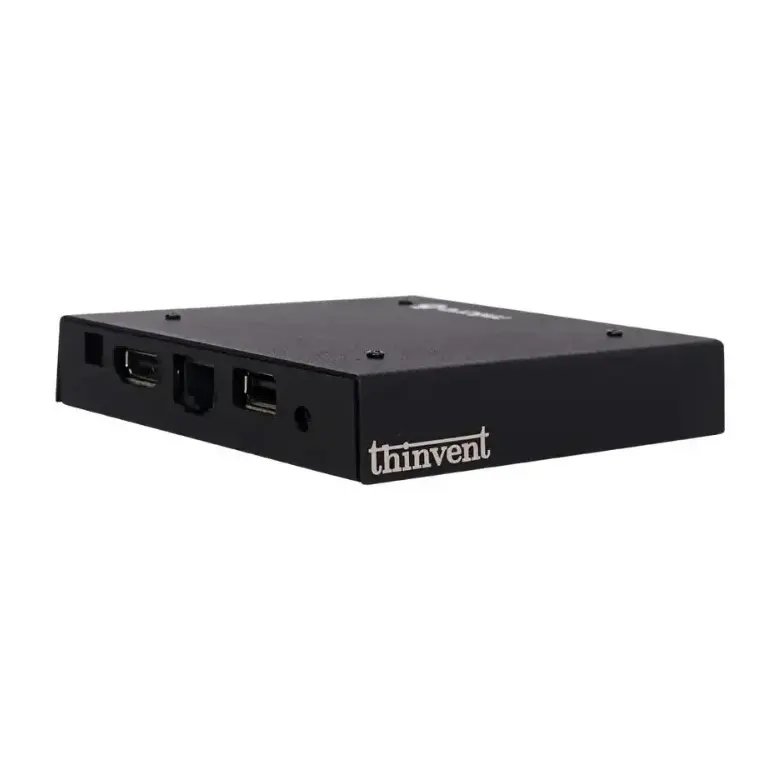
What Are Industrial PCs for Automation and Control?
Industrial PCs (IPCs) are specialized computing systems designed for reliable operation in demanding industrial environments. Unlike standard desktop computers, they are built to withstand extreme temperatures, dust, vibration, and continuous 24/7 operation. They form the computational backbone of modern automation and control systems, interfacing with PLCs (Programmable Logic Controllers), HMIs (Human-Machine Interfaces), and SCADA (Supervisory Control and Data Acquisition) software to monitor and manage industrial processes.
Key Specifications and Design Features
Industrial PCs for automation prioritize reliability, longevity, and stable performance. Key specifications include:
-
Rugged Construction: Often feature fanless, sealed designs with metal chassis for passive cooling, eliminating moving parts that can fail due to dust.
-
Wide Operating Temperature Range: Certified to operate reliably in temperatures from -20°C to 60°C or beyond.
-
Industrial-Grade Components: Use long-lifecycle motherboards, solid-state storage (eMMC, SSD), and industrial-grade power supplies to ensure stability.
-
Rich I/O Connectivity: Include multiple serial ports (RS-232/485), LAN ports, GPIO, and expansion slots for connecting to sensors, actuators, and legacy industrial equipment.
-
Extended Power Input Range: Support wide voltage inputs (e.g., 9-36V DC) to handle power fluctuations common in factories.
Applications and Use Cases
These robust computers are deployed across various sectors for critical control tasks:
-
Factory Automation: Machine control, robotic cell management, and production line monitoring.
-
Process Control: Supervising chemical, pharmaceutical, or water treatment plants via SCADA systems.
-
Building Automation: Managing HVAC, lighting, security, and access control systems.
-
Digital Signage & Kiosks: Driving interactive displays in public spaces, retail, and transportation hubs.
-
Edge Computing: Processing data from IoT sensors locally in manufacturing for predictive maintenance and real-time analytics.
Comparison of Common IPC Processor Platforms
| Feature | ARM-Based Low-Power IPCs | Intel x86-Based Performance IPCs |
|---|---|---|
| Typical Use | Thin clients, lightweight HMIs, kiosks, edge gateways | Data-intensive SCADA, machine vision, complex control logic |
| Power & Heat | Very low power consumption, fanless design | Higher performance, may require active cooling in high-end models |
| OS Support | Embedded Linux (Thinux™, Ubuntu) | Windows IoT, Linux, real-time OS variants |
| I/O & Expansion | Standard ports (HDMI, USB, Ethernet) | Greater expansion via PCIe, more LAN/serial ports |
| Example Specs | 4-core ARM, 2-4GB RAM, 16-64GB eMMC | Intel Core i3/i5/N-series, 8-16GB+ RAM, 256GB+ SSD |
Thinvent's Industrial PCs for Automation
Thinvent offers a comprehensive range of industrial computing solutions engineered for automation and control environments. Our portfolio includes fanless, rugged systems designed for 24/7 reliability.
-
Thinvent Micro Series: Featuring ARM Cortex processors, these ultra-compact and energy-efficient devices are ideal for space-constrained deployments as thin clients, lightweight HMIs, or edge nodes running Thinux™ Embedded Linux.
-
Thinvent Treo & IPC Series: Powered by Intel processors like the efficient N100 or the powerful Core i3/i5 series, these mini PCs and industrial computers balance performance with rugged fanless designs. They are suited for more demanding control applications, data acquisition, and running full-scale operating systems like Windows 11 IoT or Ubuntu Linux.
-
Thinvent Aero Series: Combining a compact form factor with high-performance Intel Core processors (including the latest generations), the Aero series is built for advanced automation tasks, edge analytics, and digital signage where powerful computing in a robust package is required.
All Thinvent industrial PCs are built with industrial-grade components, support wide operating temperatures, and offer the connectivity needed for seamless integration into automation networks.