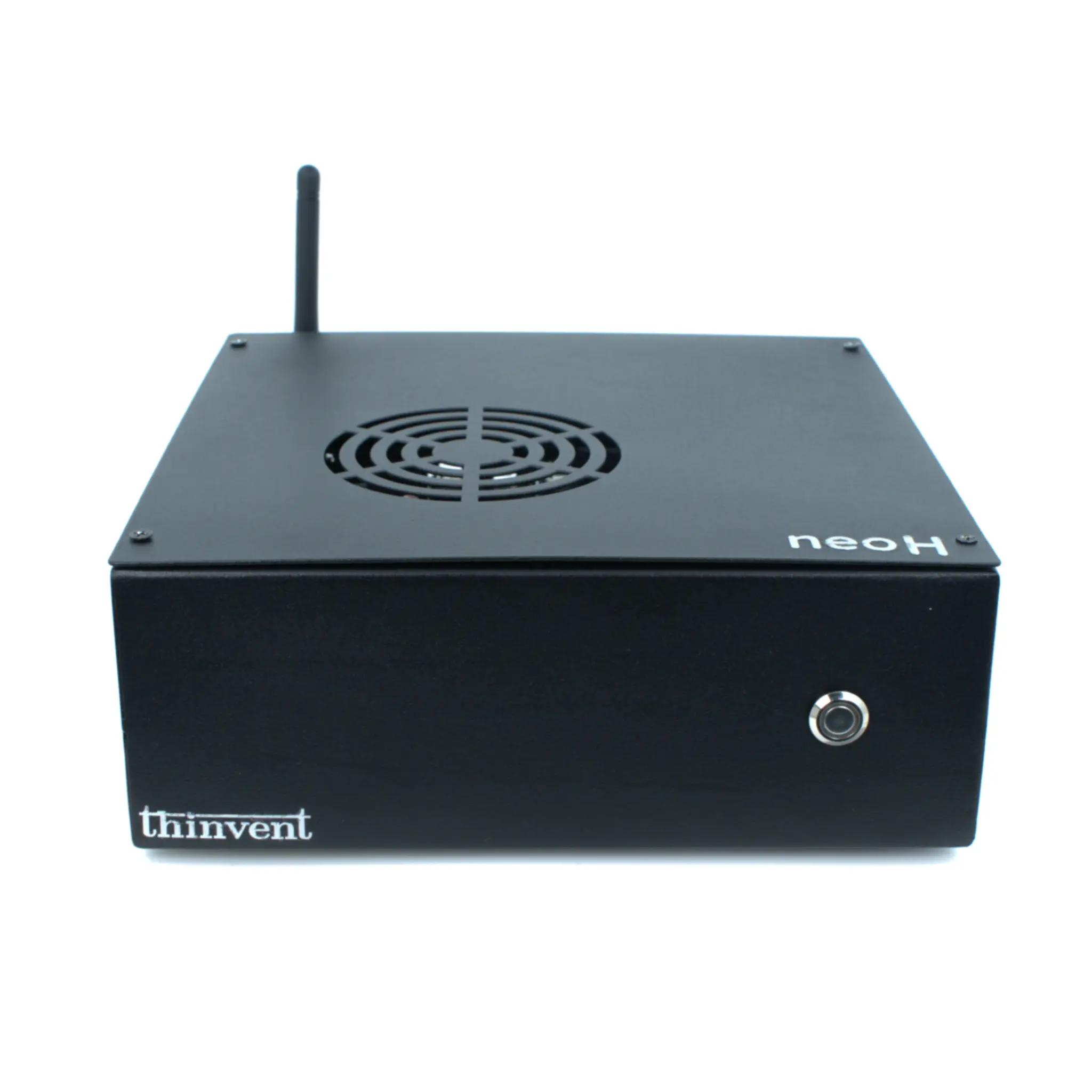
What are Compact Fanless Mini PCs?
Compact Fanless Mini PCs are small-form-factor computers designed for industrial and embedded applications where reliability, space constraints, and harsh environments are primary concerns. By eliminating moving parts like fans, these systems achieve silent operation, reduced mechanical failure points, and enhanced resistance to dust and particulate ingress. This makes them ideal for 24/7 operation in settings where maintenance access is difficult or where noise and vibration must be minimized.
Key Specifications and Technical Advantages
The core advantages of these systems stem from their fanless thermal design and robust construction. They typically feature efficient, low-power processors from ARM or Intel that generate minimal heat, allowing passive cooling through heatsinks and chassis design. Common specifications include onboard eMMC or SSD storage, DDR4 RAM, and a range of I/O ports like HDMI. Power consumption is low, often utilizing 5V or 12V DC adapters. The absence of fans not only increases reliability but also allows for completely sealed enclosures, meeting higher ingress protection standards for challenging environments.
Primary Use Cases and Applications
These PCs are deployed across diverse industrial sectors. Key applications include:
-
Digital Signage & Kiosks: Reliable, silent operation for public displays and interactive terminals.
-
Industrial Automation: As controllers for PLCs, HMIs (Human-Machine Interfaces), and monitoring systems on the factory floor.
-
Thin Client & VDI: Lightweight endpoints for accessing virtualized desktop environments in offices, call centers, and healthcare.
-
Edge Computing: Processing data locally in IoT networks, retail environments, and smart city infrastructure.
-
Embedded Systems: Integrated into medical devices, transportation systems, and telecommunications equipment where space is limited.
Comparison of Processor Platforms
The choice between ARM and Intel architectures depends on the performance and software requirements.
| Feature | ARM-Based Mini PCs (e.g., Cortex A53/A55) | Intel-Based Mini PCs (e.g., N100, Core i3/i5) |
|---|---|---|
| Power Profile | Very low power, often 5V operation. | Low to moderate power, typically 12V operation. |
| Performance | Optimized for efficiency; ideal for lightweight OS, thin clients, and basic computing. | Higher computational power; suitable for more demanding applications, Windows OS, and local processing. |
| Thermal Design | Extremely low heat output, enabling ultra-compact fanless designs. | Efficient modern chips allow for robust fanless cooling in small form factors. |
| Typical Use | Embedded Linux, kiosks, single-purpose appliances, digital signage. | Industrial PCs, edge servers, automation controllers, versatile workstations. |
| Software Ecosystem | Primarily Linux/Android-based environments. | Broad compatibility with Windows, Linux, and industrial software stacks. |
Thinvent's Range of Compact Fanless Solutions
Thinvent offers a comprehensive portfolio of compact fanless mini PCs tailored for industrial resilience. Our Micro Series leverages ARM architecture for maximum efficiency in thin client and embedded roles, featuring our Thinux™ OS. For more demanding computational tasks, our Treo, IPC, and Aero Series utilize Intel processors from the efficient N100 up to powerful Core i5 models. These systems support various operating systems, including Windows IoT, Ubuntu Linux, and Thinux™, and are built for continuous operation in demanding conditions. Whether you need an ultra-efficient endpoint or a capable industrial controller, Thinvent's fanless design ensures durability and silent performance for your critical applications.