What Are Embedded Computers Used For?
Embedded computers are specialized computing systems designed to perform dedicated functions within larger mechanical or electrical systems. Unlike general-purpose PCs, they are optimized for reliability, low power consumption, and long-term operation in challenging conditions. Common uses include industrial automation, process control, data acquisition, digital signage, medical devices, transportation systems, and IoT gateways. Their compact, fanless designs and wide temperature tolerance make them ideal for deployment in factories, warehouses, outdoor installations, and other harsh environments where dust, vibration, moisture, and extreme temperatures are present.
Key Specifications for Rugged Embedded Computers
Rugged embedded computers built for harsh environments feature several critical specifications. They typically use fanless cooling to eliminate moving parts that can fail due to dust or mechanical stress. Wide operating temperature ranges (e.g., -20°C to 70°C or wider) ensure functionality in extreme heat or cold. Shock and vibration resistance is achieved through robust enclosures and solid-state storage. Processors range from low-power ARM Cortex-A series (e.g., Cortex-A53, A55) for energy-efficient IoT applications, to Intel Core i3/i5 (e.g., i3-1215U, i5-1240P) for higher-performance industrial control and edge computing. Memory and storage often use soldered RAM and eMMC or SSD to withstand physical stress.
Use Cases and Applications
Rugged embedded computers are deployed in diverse sectors. In manufacturing, they run SCADA systems and PLC controllers on factory floors with dust and EMI. Transportation applications include in-vehicle computing for fleet management, telematics, and infotainment, where vibration and temperature swings are common. Outdoor digital signage and kiosks require weather-resistant, always-on operation. Medical devices rely on embedded systems for patient monitoring and diagnostic equipment with strict reliability standards. Energy and utilities use them for remote monitoring of pipelines, solar farms, and substations. The table below summarizes typical use cases and corresponding hardware requirements:
| Use Case | Typical Processor | Memory | Storage | Key Requirement |
|---|---|---|---|---|
| Industrial Automation | Intel Core i5/i3 | 8–16 GB | 128–512 GB SSD | Fanless, wide temp |
| IoT Gateway | ARM Cortex-A53/A55 | 2–4 GB | 16–64 GB eMMC | Low power, compact |
| In-Vehicle Computing | Intel N100 or i3 | 4–8 GB | 128–256 GB SSD | Vibration resistant |
| Digital Signage | Intel N100 or i3 | 4–8 GB | 128–256 GB SSD | 24/7 reliability |
Thinvent’s Rugged Embedded Industrial Computers
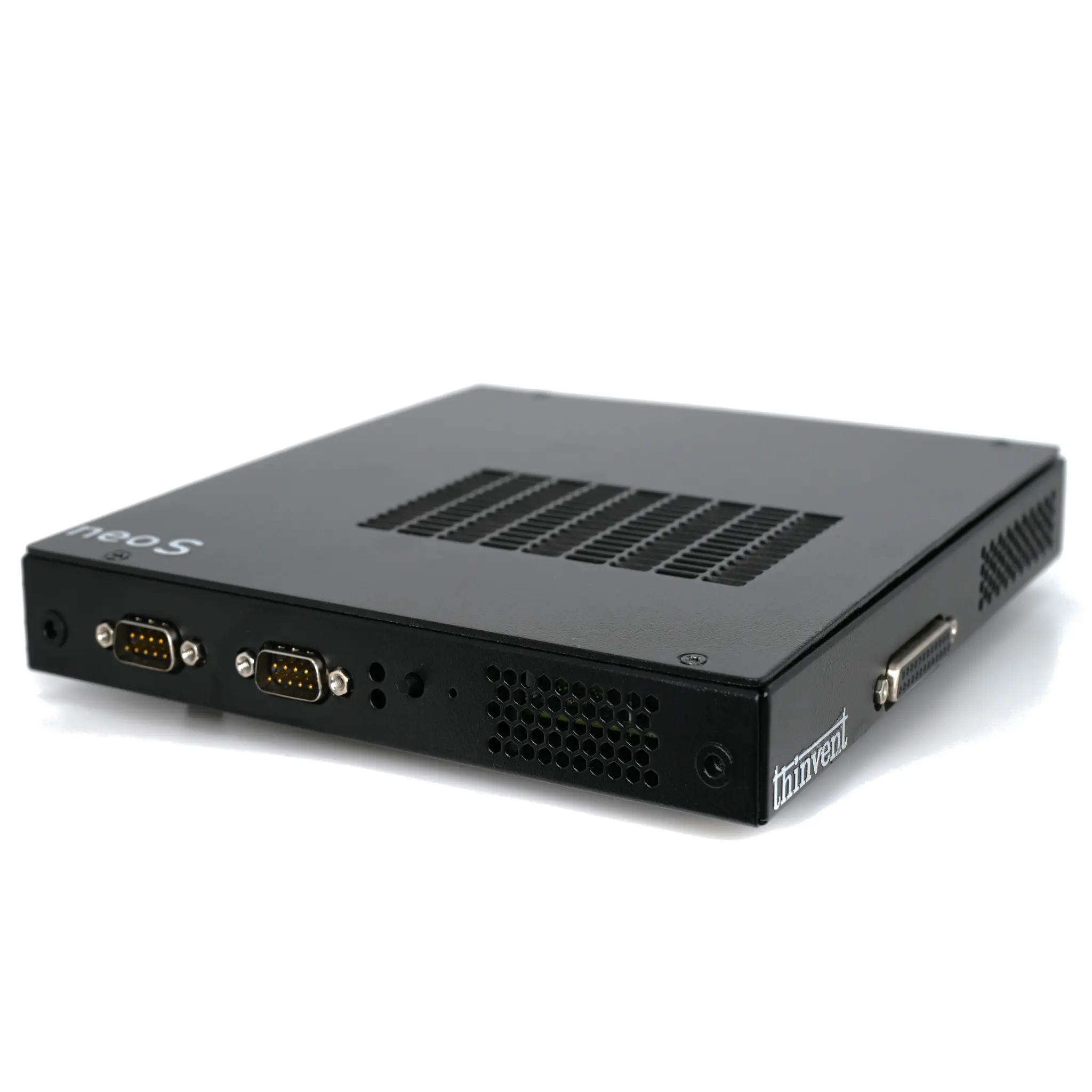
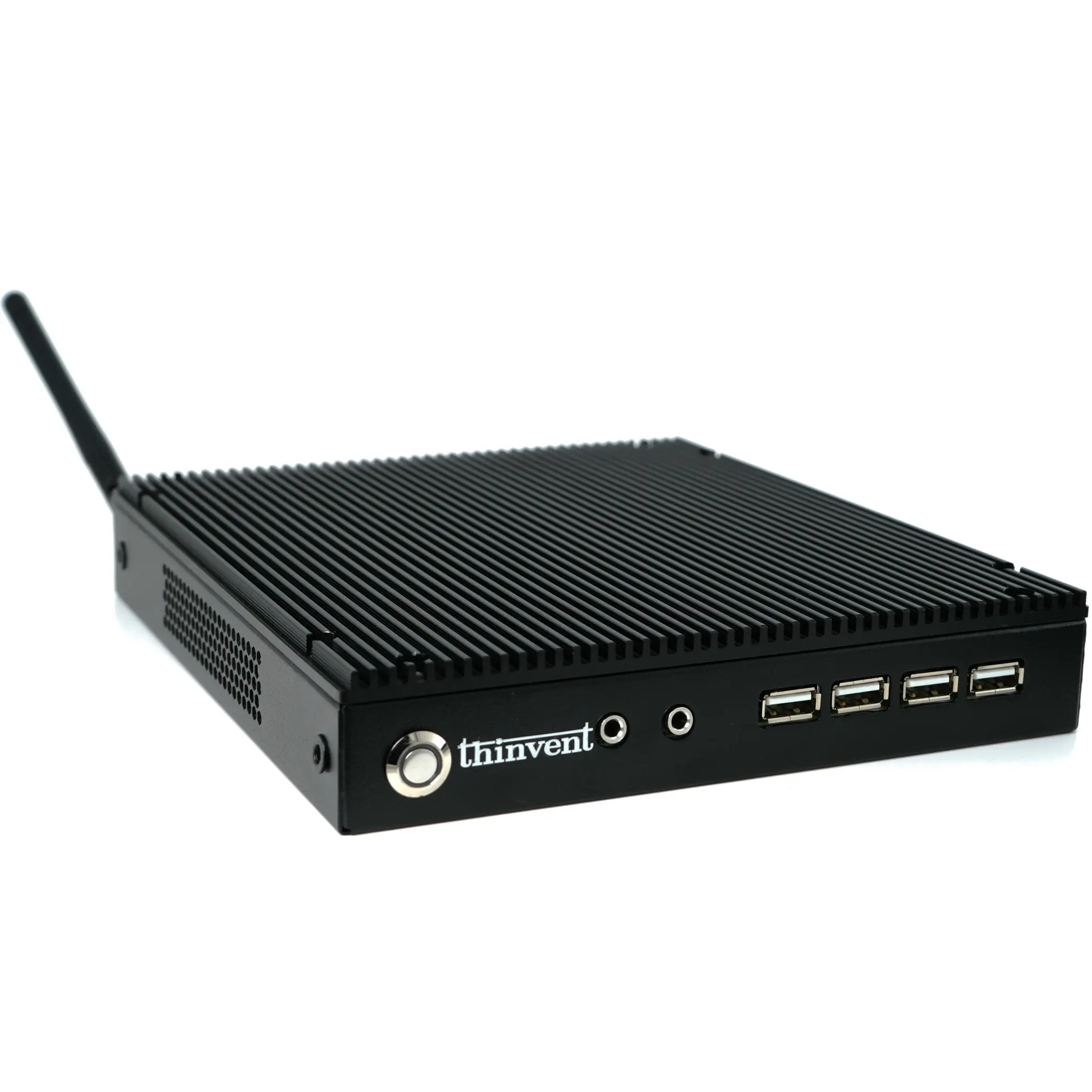
Thinvent offers a comprehensive range of rugged industrial embedded computers designed for harsh environments. Our Industrial PC series (IPC1, IPC3, IPC5) features Intel processors from N100 to Core i5-1240P, with fanless designs, wide temperature support, and robust enclosures for factory automation and edge computing. For energy-sensitive deployments, our Micro series with ARM Cortex-A53/A55 processors provides ultra-low power consumption and compact form factors ideal for IoT gateways and remote monitoring. All Thinvent embedded systems are built with industrial-grade components, support multiple I/O options (USB, HDMI, Ethernet), and are validated for 24/7 continuous operation in demanding conditions.