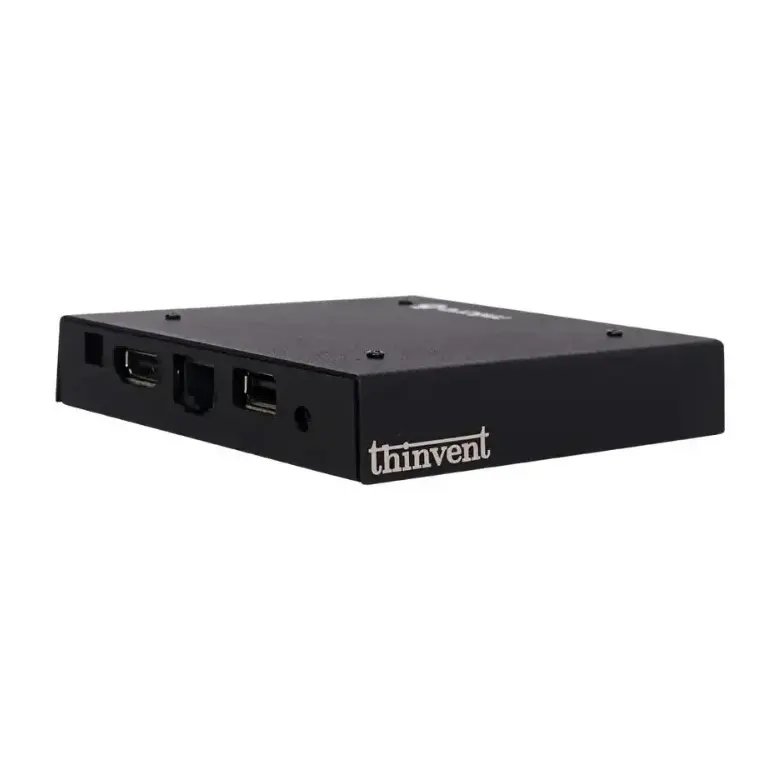
Embedded computers are specialized, compact computing systems designed to perform dedicated functions within larger mechanical or electronic systems. In the context of the Internet of Things (IoT), they serve as the intelligent edge nodes, responsible for data acquisition, local processing, control, and secure communication. Unlike standard desktop PCs, these systems are built for reliability, long-term operation, and deployment in diverse, often harsh environments.
Key Specifications for IoT Embedded Systems
For IoT applications, the ideal embedded computer prioritizes efficiency, connectivity, and durability over raw performance. Key technical specifications include:
-
Fanless, Rugged Design: A sealed, fanless chassis prevents dust ingress and eliminates moving parts, ensuring silent, maintenance-free operation in industrial settings.
-
Low-Power Processors: Energy-efficient CPUs, such as Intel's N-series (e.g., N100), provide ample compute for edge analytics and control tasks while minimizing heat and power consumption.
-
Wide Operating Temperature: Capable of functioning in extreme temperatures, typically from -20°C to 70°C, is crucial for outdoor or unregulated environments.
-
Rich I/O and Connectivity: Multiple Ethernet ports (for network segmentation or device daisy-chaining), USB ports, serial COM ports (RS-232/485), and support for wireless modules (Wi-Fi, 4G/5G) are essential for interfacing with sensors, actuators, and gateways.
-
Long-Term Availability: Industrial-grade components and a commitment to long product lifecycles ensure system stability and supply chain security for decade-long deployments.
Applications and Use Cases
Embedded computers are the backbone of modern industrial automation and smart infrastructure. Common applications include:
-
Industrial Automation: Machine vision, PLC supervision, robotic control, and HMI (Human-Machine Interface) systems on the factory floor.
-
Digital Signage & Kiosks: Driving interactive displays, wayfinding systems, and self-service terminals in retail, transportation, and public venues.
-
Smart City Infrastructure: Managing traffic control systems, environmental monitoring sensors, and public safety networks.
-
Edge Computing Gateways: Aggregating, processing, and filtering data from multiple sensors locally before sending only relevant insights to the cloud, reducing latency and bandwidth costs.
Comparison: Embedded PC vs. Consumer Mini PC
| Feature | Industrial Embedded Computer | Consumer Mini PC |
|---|---|---|
| Design | Fanless, rugged metal chassis, wide temperature range | Often includes cooling fans, plastic construction |
| Reliability | 24/7 operation, high MTBF (Mean Time Between Failures) | Designed for intermittent, office-environment use |
| I/O & Expansion | Rich industrial I/O (COM, GPIO, dual LAN), often with expansion slots | Standard consumer ports (USB, HDMI, audio) |
| Power Supply | Wide-range DC input (e.g., 9-36V DC) for vehicle/industrial power | Standard AC adapter |
| Operating System | Support for embedded OS (Windows IoT, Linux LTS) and long-term driver support | Standard Windows/consumer Linux |
Thinvent's Embedded Computing Solutions for IoT
Thinvent offers a comprehensive range of robust embedded computers engineered for demanding IoT and edge computing environments. Our product lines, such as the Aero Mini PC series, exemplify the core principles of industrial computing. They feature efficient, fanless designs with low-power Intel processors, ample memory and storage configurations, and versatile operating system support including Windows 11 IoT, Ubuntu Linux, and our proprietary Thinux™ Embedded Linux. Built for 24/7 reliability, these systems provide the perfect hardware foundation for deploying scalable, secure, and intelligent IoT solutions across manufacturing, logistics, smart buildings, and beyond.