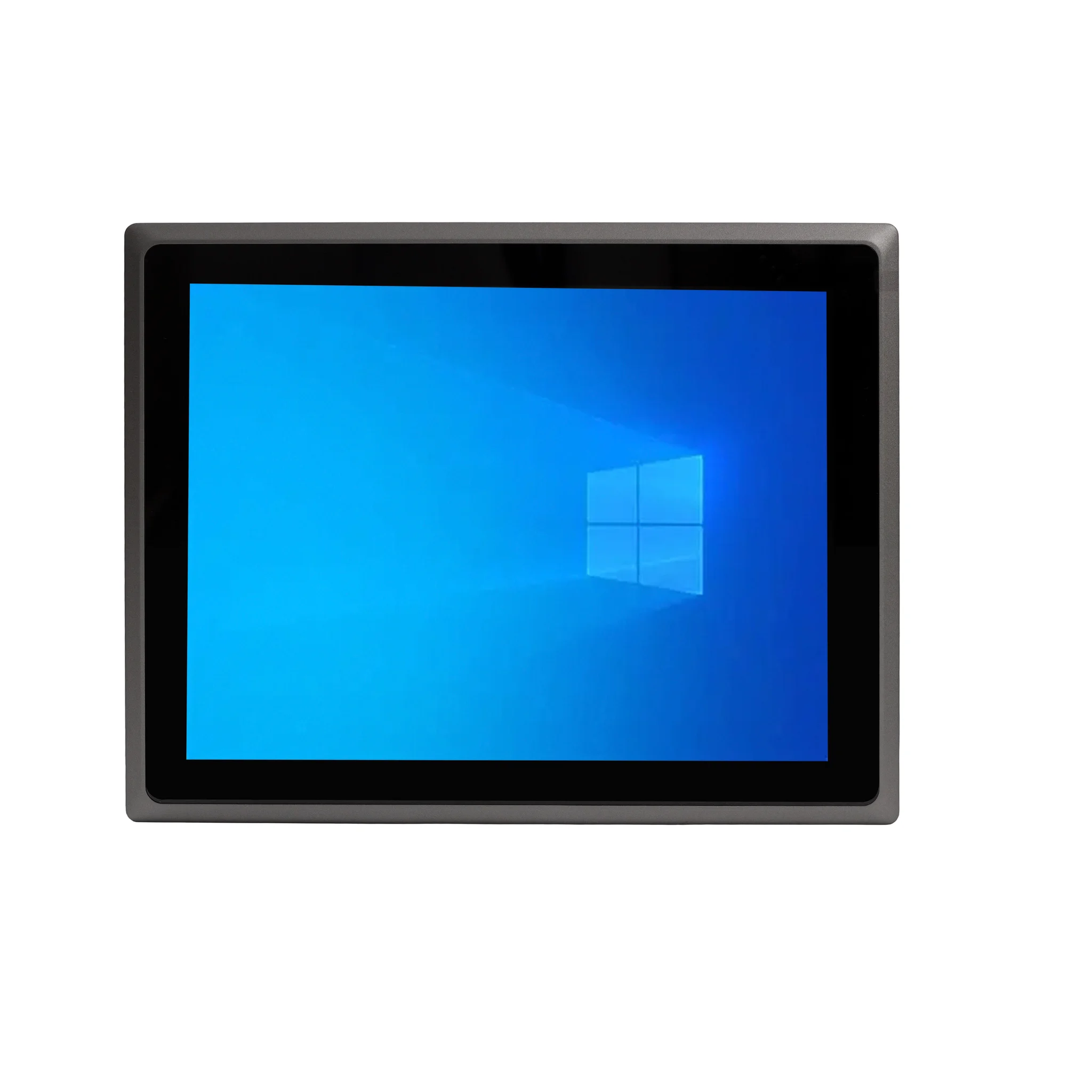
What Are Industrial Embedded Systems?
Industrial embedded systems are specialized computing platforms designed to perform dedicated functions within larger industrial equipment or environments. Unlike general-purpose computers, they are built for reliability, long-term operation, and resilience in harsh conditions such as extreme temperatures, dust, vibration, and electromagnetic interference. These systems often feature fanless designs for silent operation and use low-power, efficient processors to ensure stability and longevity.
Key Specifications and Technical Details
Modern industrial embedded systems, like the examples provided, are compact yet powerful. A typical configuration includes an efficient Intel processor (e.g., the 12th Gen N100 with 4 cores and up to 3.4 GHz), ample DDR4 RAM (16GB), and solid-state storage (128GB SSD). They operate on low DC power (e.g., 12V) and are offered with a variety of operating systems tailored for industrial use, including Windows IoT, Windows Pro, DOS, and embedded Linux distributions like Ubuntu or Thinux™. A critical feature is the absence of moving parts like fans, which minimizes failure points and allows for deployment in dusty or sensitive environments.
Common Applications and Use Cases
These systems are the backbone of automation and control across numerous sectors.
-
Factory Automation & Process Control: Acting as Programmable Logic Controller (PLC) hosts, Human-Machine Interface (HMI) terminals, or data acquisition units on the factory floor.
-
Digital Signage & Kiosks: Driving interactive displays, wayfinding systems, and self-service terminals in retail, transportation hubs, and public venues.
-
Edge Computing & IoT Gateways: Collecting, processing, and transmitting data from sensors and machines at the network edge, reducing latency and cloud dependency.
-
Thin Client & VDI Solutions: Serving as durable endpoints for virtual desktop infrastructure in offices, call centers, and industrial settings.
-
Machine Vision & Inspection: Powering camera systems for quality control, robotic guidance, and automated optical inspection (AOI) in manufacturing.
Comparison of Common Industrial Embedded System Types
| Feature/Aspect | Box PC / Mini PC | Panel PC | Rugged Industrial PC | Embedded SBC (Single Board Computer) |
|---|---|---|---|---|
| Form Factor | Compact, enclosed box | Display and computer integrated into one unit | Reinforced enclosure, often fanless | Very small, board-level component |
| Typical Use | General automation, edge server, kiosk controller | HMI, operator station, interactive kiosk | Harsh environments (outdoor, factory floor) | Custom integrated solutions, prototyping |
| Deployment | Mounted near equipment, in cabinets, or behind displays | Mounted on machinery or walls | Directly on vehicles, outdoor enclosures | Integrated into custom machinery or enclosures |
| Key Advantage | Flexibility, good performance-to-size ratio | Space-saving, integrated display | Extreme durability, wide temperature range | Cost-effective for high-volume, custom designs |
Thinvent's Industrial Embedded Systems
Thinvent offers a robust range of industrial-grade embedded computing solutions designed for demanding applications. Our Aero Mini PC series exemplifies this commitment, featuring the efficient Intel N100 processor in a compact, fanless chassis. Available with multiple operating system options—including Windows 11 IoT/Pro for seamless enterprise integration, and lightweight Linux distributions like Thinux™ and Ubuntu for specialized or secure deployments—these systems provide the flexibility needed for diverse industrial scenarios. Built for 24/7 operation with reliable solid-state components and low-power design, Thinvent's embedded PCs are ideal for powering digital signage, thin clients, factory automation, and edge computing nodes worldwide.