Understanding EMC Compliance in Industrial Computers
Electromagnetic Compatibility (EMC) compliance is critical for industrial computers used in testing environments. EMC ensures that a device does not emit excessive electromagnetic interference (EMI) that could disrupt other equipment, and that it can operate correctly in the presence of expected electromagnetic disturbances. For industrial PCs, compliance typically involves rigorous testing against standards like IEC 61000-6-2 (immunity for industrial environments) and IEC 61000-6-4 (emission limits for industrial environments). Key tests include electrostatic discharge (ESD), radiated and conducted emissions, and transient voltage surges.
Key Specifications for EMC-Compliant Industrial PCs
An EMC-compliant industrial computer must feature a well-shielded enclosure, proper grounding, and filtered power inputs. Typical specifications include:
-
Shielded chassis with minimal openings to contain emissions
-
Ferrite cores on external cables to suppress radiated noise
-
Isolated I/O ports to prevent ground loops
-
Wide input voltage range with EMI filtering (e.g., 12V to 24V DC)
-
Industrial-grade components rated for extended temperature ranges (-20°C to 60°C or wider)
Processors should be chosen for adequate performance without excessive power draw, as higher clock speeds can increase EMI. Fanless designs are preferred as they eliminate noise from cooling fans and reduce mechanical vibration that can affect testing accuracy.
Use Cases in Testing Environments
EMC-compliant industrial computers are essential for:
-
Automated test equipment (ATE): Controlling test sequences and collecting data from sensors in EMC test chambers
-
EMC pre-compliance testing: Running spectrum analyzers and signal generators to validate designs before formal certification
-
Production line testing: Ensuring manufactured products meet EMC standards before shipment
-
Laboratory automation: Managing environmental chambers, shakers, and data acquisition systems
These systems often require multiple expansion slots for GPIB, PXI, or USB test instruments, as well as real-time operating systems for deterministic control.
Comparison of Processor Options for EMC Testing PCs
| Processor | Cores/Threads | Max Frequency | Cache | Typical Use Case |
|---|---|---|---|---|
| Intel Core i5-1240P | 12/16 | 4.4 GHz | 12 MB | High-throughput ATE with multiple instruments |
| Intel Core i3-1215U | 6/8 | 4.4 GHz | 10 MB | Mid-range test controllers |
| Intel N100 | 4/4 | 3.4 GHz | 6 MB | Low-power data logging |
| ARM Cortex A55 | 4/4 | 1.9 GHz | 1 MB | Embedded monitoring with minimal EMI |
For most EMC testing applications, an Intel Core i3 or i5 is recommended due to their balance of performance and power efficiency. Fanless models with these processors are ideal for minimizing electromagnetic noise in sensitive test environments.
Thinvent's EMC-Compliant Industrial Computers
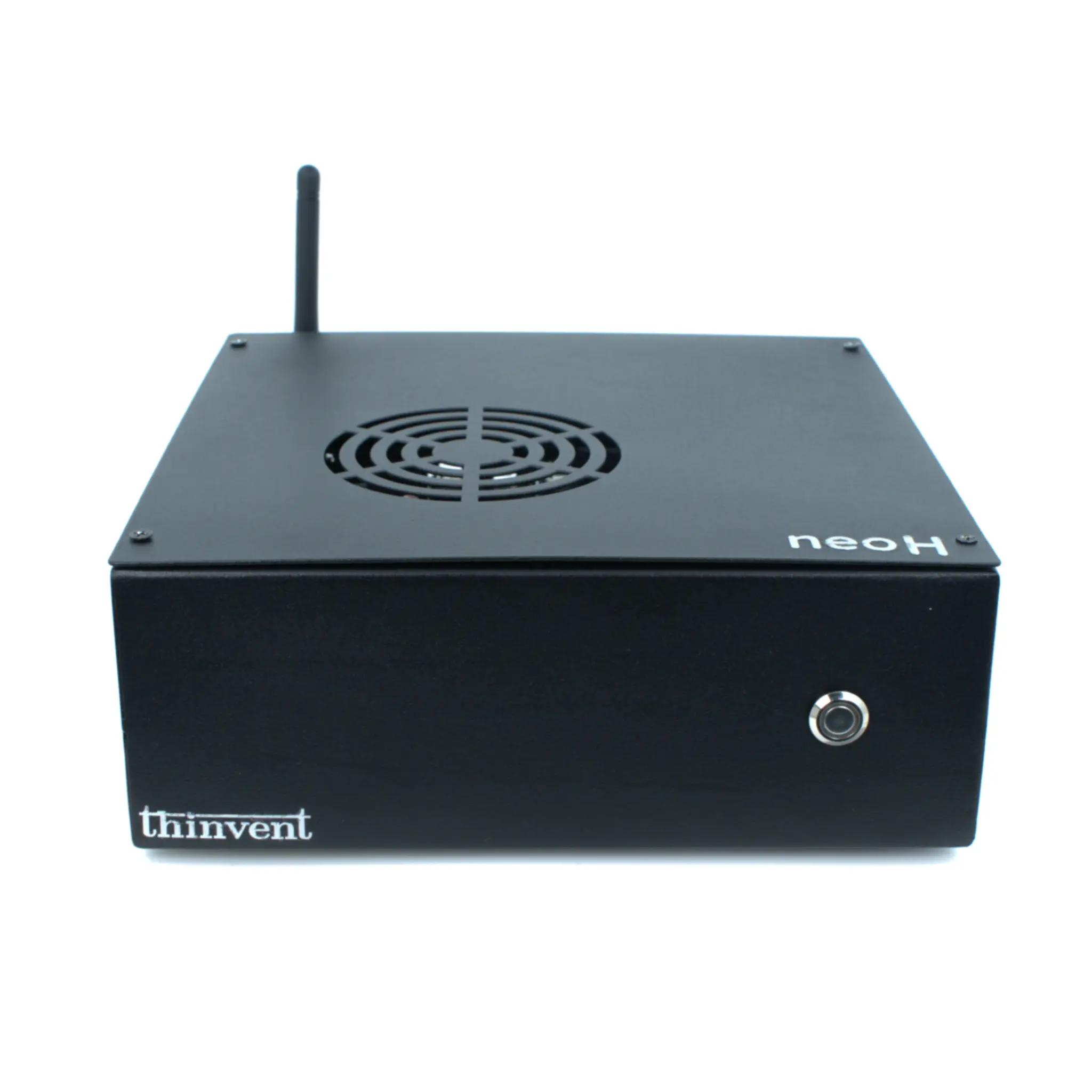
Thinvent offers a range of industrial PCs designed with EMC compliance in mind. Our IPC3 (Intel Core i3-1215U) and IPC5 (Intel Core i5-1240P) models feature shielded enclosures, industrial-grade power supplies, and optional filtered I/O ports. These systems undergo pre-compliance EMC testing to help you achieve certification faster. For embedded applications, our ARM-based thin clients provide ultra-low emission profiles suitable for non-critical monitoring. All Thinvent industrial PCs are built with robust construction and long-term availability, making them ideal for test equipment OEMs and system integrators.