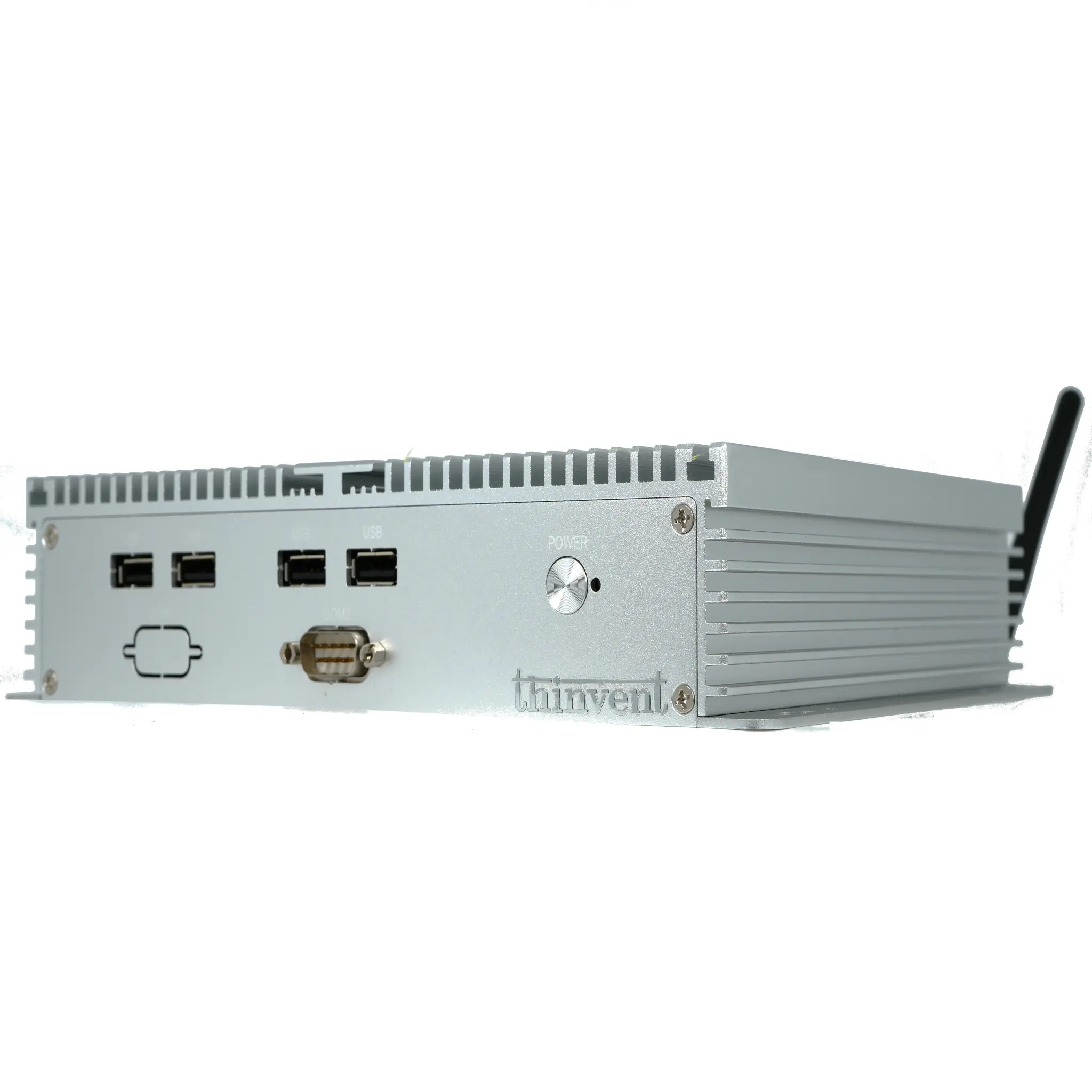
Getac - Rugged Industrial Computers For Harsh Environments

What Are Rugged Industrial Computers?

Rugged industrial computers are specialized computing systems engineered to operate reliably in extreme and demanding conditions where standard commercial PCs would fail. They are built to withstand environmental hazards such as dust, water, extreme temperatures, shock, and vibration. Unlike consumer-grade hardware, these systems prioritize durability, longevity, and consistent performance over raw computing power, making them essential for mission-critical operations in challenging settings.

Key Specifications & Design Features

The core of a rugged industrial computer lies in its robust construction and specialized components. Key specifications and design philosophies include:

  • Fanless Cooling: A critical feature for reliability. By eliminating moving fans, these systems prevent dust ingress and reduce points of failure, enabling silent, maintenance-free operation in dusty or dirty environments.

  • Wide Operating Temperature Range: Designed to function in extreme cold and heat, often from -20°C to 70°C, ensuring stability in unregulated environments like warehouses, factories, or outdoor installations.

  • Shock & Vibration Resistance: Components are secured, and casings are reinforced to endure the constant movement and impacts common in vehicles, manufacturing floors, and logistics hubs.

  • Ingress Protection (IP) Ratings: Sealed enclosures with IP ratings (e.g., IP65) protect against dust and water jets, making them suitable for wash-down areas or outdoor kiosks.

  • Extended Component Lifespan: Industrial-grade motherboards, storage, and memory are used, which are tested for longer lifecycles and stability compared to consumer parts.

Applications and Use Cases

Rugged industrial computers are deployed across numerous sectors where environmental toughness is non-negotiable:

  • Manufacturing & Factory Automation: On the shop floor for machine control, HMIs (Human-Machine Interfaces), and quality inspection systems exposed to particulates and vibration.

  • Transportation & Logistics: In-vehicle computing for fleet management, logistics, and public transit, enduring constant movement and temperature swings.

  • Outdoor & Digital Signage: Powering interactive kiosks, information displays, and advertising screens in all weather conditions.

  • Energy & Utilities: Monitoring and control systems in remote substations, oil rigs, and renewable energy sites with wide temperature variations.

  • Military & Defense: For command, control, and communications in field-deployable units requiring maximum durability.

Comparison: Rugged vs. Standard Industrial PCs

While both are designed for 24/7 operation, key differences exist:

Feature Rugged Industrial Computer Standard Industrial PC
Primary Design Goal Survive harsh physical environments (shock, dust, water, temp). Reliable, long-term operation in controlled industrial settings.
Cooling Method Almost exclusively fanless for sealed integrity. Often uses fans or passive heatsinks.
Enclosure Sealed, reinforced metal casing with high IP rating. Durable metal casing, but may not be fully sealed.
Operating Temperature Very wide range (e.g., -20°C to 70°C). Standard or extended range (e.g., 0°C to 50°C).
Typical Use Case Mounted on vehicles, outdoor kiosks, dirty factory floors. Inside control cabinets, server rooms, clean digital signage.

Thinvent's Rugged and Industrial Computing Solutions

Thinvent offers a comprehensive portfolio of compact and durable computing solutions built for demanding applications. Our product philosophy emphasizes fanless designs, robust construction, and flexible operating system support to ensure reliability.

For Extreme Efficiency & Simplicity: Our Micro series (Micro 5, Micro 6 Pro) utilizes powerful ARM processors. These ultra-compact, fanless devices are perfect for lightweight, embedded applications like digital signage, thin clients, and kiosks in space-constrained or dust-prone areas. They run on energy-efficient Thinux™ Embedded Linux.

For Balanced Industrial Performance: The Treo Mini PC and IPC1 series, powered by the Intel N100 processor, offer a great balance of x86 compatibility and fanless operation. They are ideal for edge computing, IoT gateways, and basic control systems requiring Windows or Ubuntu Linux in a rugged, compact form factor.

For High-Performance Industrial Workloads: Our IPC3, IPC5, and Aero series feature Intel Core i3, i5, and the latest Core Ultra processors. These systems deliver substantial computing power for complex automation, machine vision, and data processing tasks. Available with options for Windows or Linux, they are built for 24/7 reliability in industrial cabinets and controlled environments, with some models

ਉਤਪਾਦ

ਫਿਲਟਰ
Reset filters 64224
Loading filters...

Loading filters...