How to Choose a Compact Fanless Industrial Mini PC
Selecting the right compact fanless industrial mini PC requires careful consideration of several key factors to ensure it meets the demands of your specific application. These rugged, silent computers are designed for environments where reliability, space constraints, and resistance to dust and vibration are paramount. The core decision-making process revolves around performance needs, environmental durability, connectivity, and software compatibility.
Key Specifications and Technical Details
The primary components to evaluate are the processor, memory, storage, and I/O. For basic digital signage or kiosk applications, an energy-efficient ARM processor or Intel N-series CPU with 4-8GB RAM and eMMC storage is sufficient. For more demanding tasks like machine vision or edge computing, an Intel Core i3/i5 processor from the 12th generation or newer, paired with 8-16GB RAM and an SSD, is recommended. A true industrial-grade unit should feature a wide operating temperature range (often 0°C to 60°C), support for 24/7 operation, and a robust metal chassis. Essential connectivity includes multiple Gigabit Ethernet ports, USB 3.2, HDMI/DisplayPort outputs, and optional serial ports for legacy industrial equipment.
Ideal Use Cases and Applications
Compact fanless industrial mini PCs excel in harsh or space-limited environments. Common applications include:
-
Factory Automation: As a PLC controller or HMI station on the factory floor.
-
Digital Signage & Kiosks: Powering displays in retail, transportation hubs, and public spaces.
-
Edge Computing: Processing data from IoT sensors in smart agriculture, energy, or building management.
-
Thin Client & VDI: Providing a secure, low-maintenance endpoint for centralized computing.
-
Transportation: Used in-vehicle for fleet management, surveillance, or passenger information systems.
Comparison: ARM vs. Intel for Industrial Use
| Feature | ARM-Based Mini PC | Intel-Based Mini PC (N-Series / Core) |
|---|---|---|
| Best For | Ultra-low power, fixed-function tasks, lightweight OS. | Versatile performance, x86 software compatibility, demanding applications. |
| Power & Heat | Very low power consumption, minimal heat. | Low to moderate power; fanless designs manage heat via chassis. |
| Performance | Sufficient for basic display, web, and terminal services. | Scales from efficient (N-series) to powerful (Core i5) for complex workloads. |
| Software | Typically runs embedded Linux (e.g., Thinux™). | Supports Windows, Linux, and other x86-based industrial OSes. |
| Cost | Generally lower cost for entry-level models. | Higher cost, with a premium for increased performance and features. |
Thinvent's Range of Compact Fanless Industrial Solutions
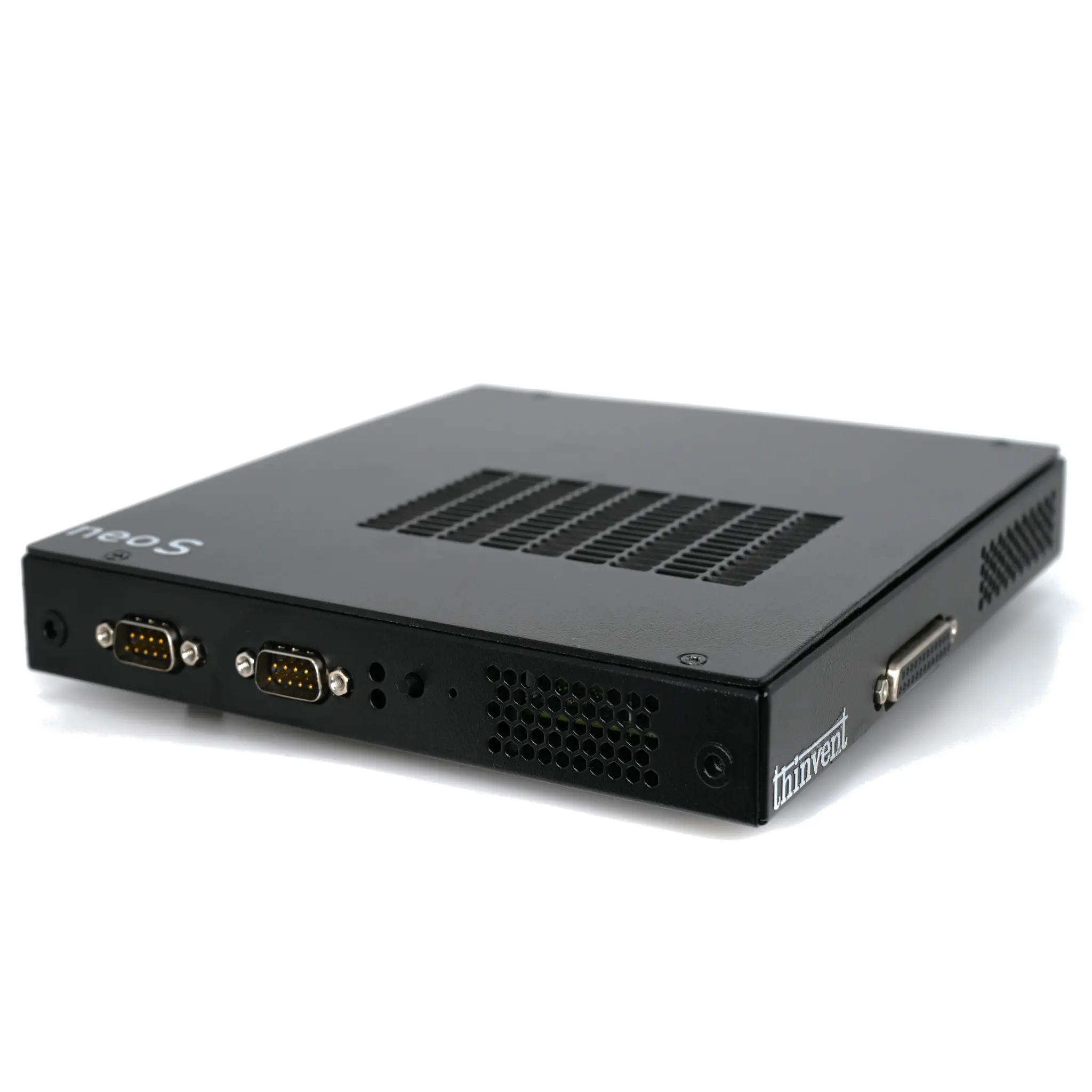
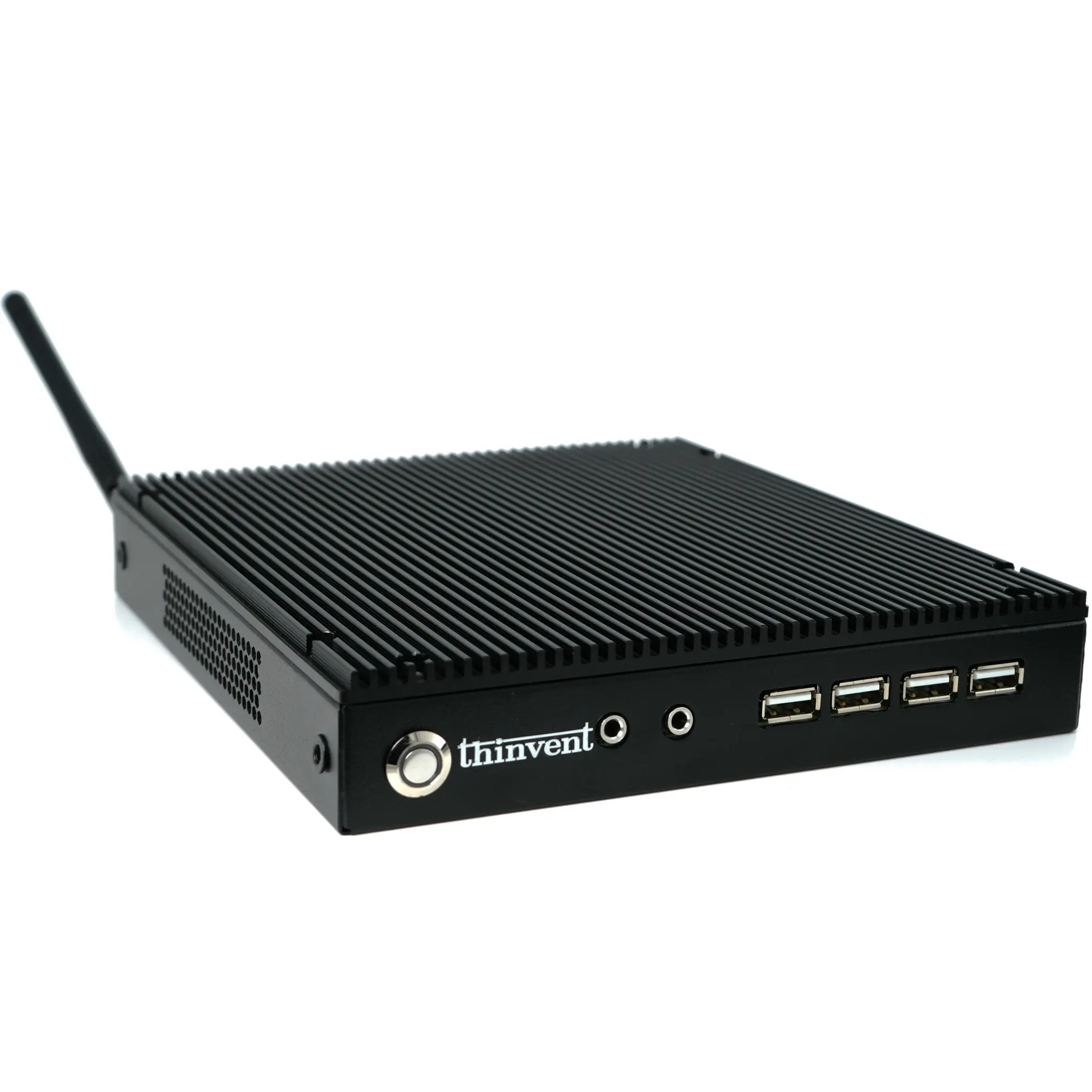
Thinvent offers a comprehensive portfolio of compact, fanless industrial mini PCs designed for reliability. Our lineup includes energy-efficient ARM-based models like the Micro series, perfect for lightweight embedded applications. For more versatile performance, our Intel-based platforms span from the efficient Intel Processor N100 in the Treo and IPC1 series to the powerful 12th Gen Intel Core i3/i5 processors in the Aero and IPC series. All Thinvent industrial PCs are built with durable metal enclosures, support wide temperature ranges, and are tested for 24/7 operation, making them ideal for automation, digital signage, and edge computing deployments worldwide.