What Makes a Mini PC Ideal for Portable Computing?
Portable computing demands a balance of performance, size, and power efficiency. Unlike traditional desktops or bulky laptops, a compact mini PC for portable computing is designed to be easily transported, often fitting in a backpack or even a pocket, while still providing sufficient processing power for tasks like office work, media consumption, light content creation, or as a travel-friendly workstation. The key differentiators are ultra-small form factors (often sub-1 liter), low power consumption (allowing for USB-C or small power adapters), and robust connectivity options.
Key Specifications for a Portable Mini PC
When selecting a mini PC for portable computing, consider these critical specifications:
-
Processor: Look for efficient yet capable CPUs. Intel N-series (like N100) offer excellent performance-per-watt for everyday tasks, while Intel Core i3/i5 (12th Gen or newer) provide more horsepower for multitasking and demanding applications. ARM-based processors (Cortex A53/A55) are ideal for ultra-low-power, fanless designs focused on basic computing and embedded roles.
-
Memory & Storage: 8GB RAM is the minimum for smooth multitasking, with 16GB recommended for more intensive use. For storage, a 256GB or larger SSD ensures fast boot times and ample space for applications and files.
-
Connectivity: Essential ports include HDMI for external displays, USB 3.2 for peripherals, and ideally USB-C for power delivery and data transfer. Dual-band WiFi and Bluetooth are crucial for wireless connectivity on the go.
-
Power Efficiency: A low-wattage processor and efficient power supply (e.g., 5V or 12V adapter) reduce heat and allow for compact, fanless designs that are silent and reliable.
Comparison: ARM vs. Intel for Portable Computing
| Feature | ARM Cortex A53/A55 (Ultra-Portable) | Intel N100 (Efficient Performance) | Intel Core i3/i5 (High Performance) |
|---|---|---|---|
| Performance | Basic office, web browsing, media playback | Office productivity, light multitasking | Heavy multitasking, content creation, light gaming |
| Power Consumption | Very Low (~5-10W) | Low (~6-15W) | Moderate (~15-28W) |
| Cooling | Fanless (silent) | Fanless or active (low noise) | Active cooling (fan) |
| Use Cases | Thin client, digital signage, travel companion | Home office, student PC, portable workstation | Mobile workstation, software development, media editing |
| Price | Budget-friendly | Affordable | Higher cost for performance |
Use Cases for a Portable Mini PC
-
Travel Workstation: Pair with a portable monitor and keyboard for a lightweight, powerful setup in hotels or co-working spaces.
-
Home Office: A compact PC that can be easily moved between rooms or taken on business trips.
-
Digital Signage & Kiosks: Small, fanless ARM-based mini PCs are perfect for 24/7 operation in tight spaces.
-
Educational Tool: A low-cost, portable computer for students to use at home or in the classroom.
-
Media Center: Connect to a TV for streaming, light gaming, or as a Plex server.
Thinvent's Portable Mini PC Solutions
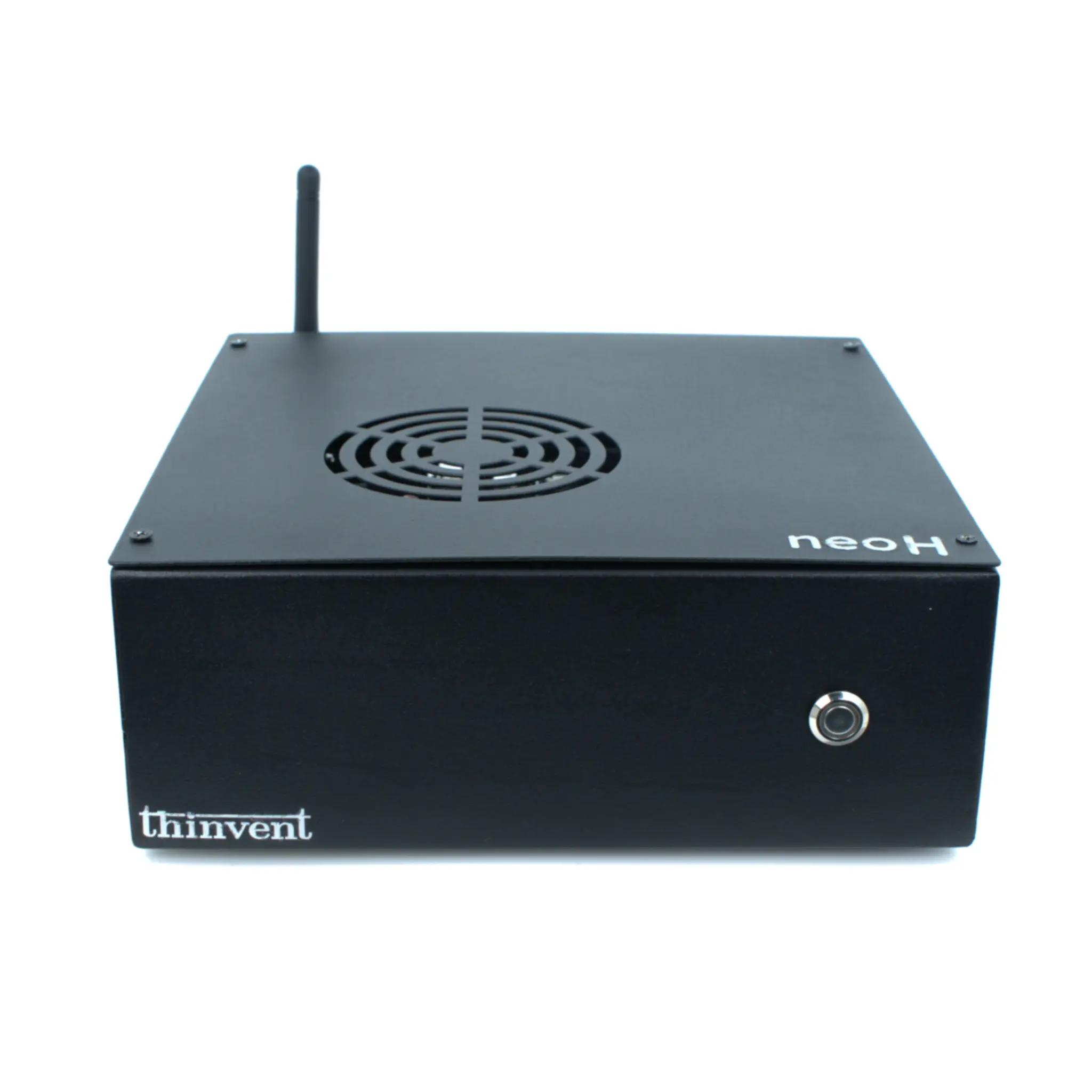
Thinvent offers a range of compact mini PCs tailored for portable computing. The Thinvent Treo Mini PC (Intel N100) and Thinvent Aero Mini PC (Intel Core i3/i5) provide excellent performance in a small footprint, ideal for mobile workstations. For ultra-low-power, fanless applications, the Thinvent Micro 6 Pro (ARM Cortex A55) is a silent, energy-efficient choice. All models feature robust build quality and essential connectivity for on-the-go productivity.