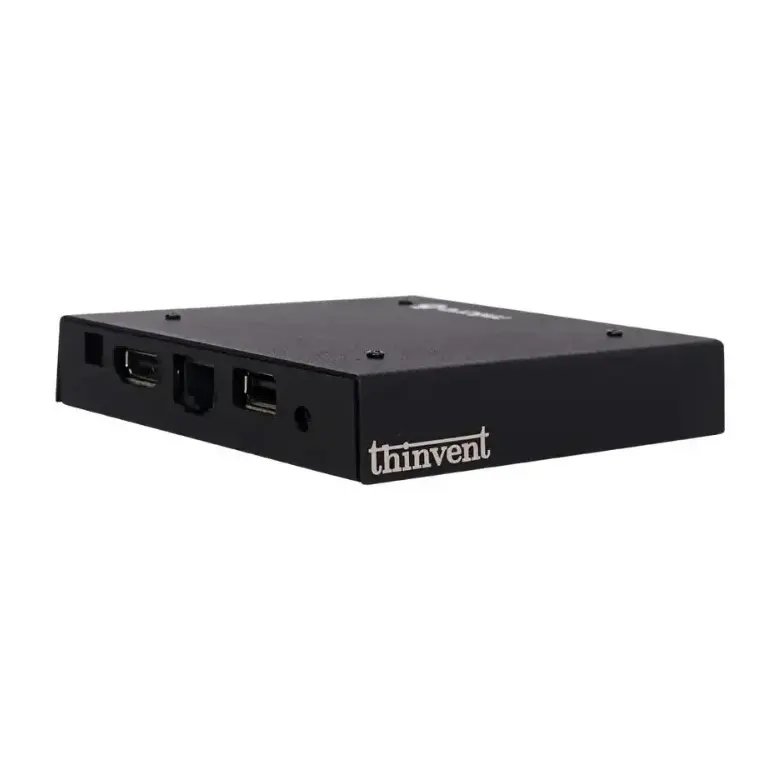
What Are Industrial Mini PCs?
Industrial Mini PCs are compact, robust computing systems designed for demanding business and automation environments. Unlike standard desktop computers, they are built to withstand harsh conditions such as wide temperature ranges, dust, vibration, and continuous 24/7 operation. They offer a perfect blend of small form factor, energy efficiency, and reliable performance, making them ideal for space-constrained and mission-critical applications.
Key Specifications and Technical Advantages
These systems are defined by their durable construction and specialized components. Common features include fanless designs for silent, maintenance-free operation, wide-range DC power input (e.g., 9V-36V) for industrial power stability, and support for multiple operating systems like Windows IoT, Linux, and embedded OS. They often feature rich I/O connectivity including multiple COM (RS-232/485) ports, LAN ports, USB ports, and display outputs (HDMI, DP, VGA) to interface with machinery, HMIs, and sensors. Processors range from power-efficient ARM cores (like Cortex A55) for basic tasks to high-performance Intel Core i5/i3 and N-series CPUs for data-intensive automation.
Primary Use Cases and Applications
Industrial Mini PCs are the backbone of modern automation and business infrastructure. Key applications include:
-
Factory Automation & Process Control: Acting as a controller or gateway for PLCs, SCADA systems, and production line monitoring.
-
Digital Signage & Kiosks: Driving interactive displays in retail, hospitality, and public spaces with reliable, always-on performance.
-
Thin Client & VDI Solutions: Providing secure, centralized access to virtual desktops and cloud applications in offices and call centers.
-
Edge Computing & IoT Gateways: Collecting, processing, and transmitting data from sensors and equipment at the network edge.
-
Machine Vision & Inspection: Powering camera systems for quality control and automated optical inspection (AOI).
Comparison of Common Industrial Mini PC Platforms
| Feature | ARM-Based Mini PCs (e.g., Cortex A53/A55) | Intel x86-Based Mini PCs (e.g., N100, Core i3/i5) |
|---|---|---|
| Core Architecture | ARM, RISC | x86-64, CISC |
| Power Consumption | Very Low (5-10W) | Low to Moderate (6-28W TDP) |
| Performance Profile | Optimized for efficiency, basic computing, and I/O tasks | Higher compute power for complex applications and multitasking |
| Typical OS Support | Embedded Linux (Thinux™), Android | Windows, Linux, Ubuntu |
| Ideal For | Thin clients, digital signage, simple IoT gateways, kiosks | Industrial automation, edge servers, machine vision, advanced VDI |
| Thermal Design | Fanless, completely silent | Often fanless for low-power CPUs; active cooling for higher TDP |
Thinvent's Range of Industrial Mini PCs
Thinvent offers a comprehensive portfolio of Industrial Mini PCs engineered for reliability across diverse sectors. Our Micro Series features ultra-compact, ARM-based systems like the Micro 5 and Micro 6 Pro, perfect for lightweight, fanless operations such as thin client deployments and digital signage. For more demanding computational tasks, the Treo Mini PC and IPC Series (IPC1, IPC3, IPC5) leverage efficient Intel processors (N100, Core i3/i3, Core i5) to handle factory automation, edge computing, and control systems. The high-performance Aero Mini PC line, with Intel Core 5 120U and Core i3 processors, is designed for intensive applications like machine vision and advanced industrial software. All Thinvent systems are built with industrial-grade components, support flexible OS options, and are designed for seamless integration into your business and automation workflows.