What are Hard and Soft Computing Solutions?
In industrial automation and embedded systems, "hard" and "soft" computing refer to two complementary approaches to processing and control. Hard computing relies on precise, deterministic models and algorithms, typically executed on powerful, reliable hardware like Intel-based industrial PCs. It is used for tasks requiring exact solutions, high performance, and real-time determinism. Soft computing, in contrast, is inspired by the human mind's ability to reason with uncertainty and approximation. It encompasses techniques like neural networks, fuzzy logic, and genetic algorithms, often running on efficient, low-power hardware like ARM-based systems. Together, they form a complete ecosystem where hard computing handles core control and data acquisition, while soft computing manages adaptive learning, pattern recognition, and optimization.
Key Specifications and Hardware Platforms
The hardware foundation dictates the type of computing solution. For Hard Computing tasks, systems require high-performance processors, ample memory, and robust storage. For Soft Computing and edge AI inference, the focus shifts to power efficiency, thermal design, and cost-effectiveness.
| Computing Type | Typical Processor | Core Use Case | Key Hardware Traits |
|---|---|---|---|
| Hard Computing | Intel Core i5/i3, Intel 120U | Deterministic Control, PLCs, HMI, Data Logging | High clock speed (up to 5.0 GHz), multi-core (6-12 cores), large cache (10-12 MB), DDR4 RAM, SSD storage. |
| Soft Computing | ARM Cortex A55/A53, Intel N100 | Edge Inference, Digital Signage, Thin Clients, IoT Gateways | Power-efficient cores, fanless cooling, onboard eMMC storage, low TDP, compact form factors. |
Applications and Use Cases
-
Industrial Automation & Control (Hard Computing): Programmable Logic Controller (PLC) systems, Human-Machine Interface (HMI) stations, and machine vision inspection systems demand the deterministic performance of Intel Core-based Industrial PCs (IPCs).
-
Edge AI & IoT Gateways (Soft Computing): ARM-based mini PCs and Intel N100 systems are ideal for running lightweight AI models for predictive maintenance, sensor data aggregation, and protocol conversion at the network edge.
-
Digital Signage & Kiosks: Both computing types are used. ARM thin clients are perfect for content playback and remote management, while Intel-based systems handle interactive, multimedia-rich applications.
-
Virtual Desktop Infrastructure (VDI): ARM-based thin clients, with their low power draw and embedded OS, provide secure, cost-effective endpoints for accessing cloud or server-hosted desktops.
Thinvent's Range of Hard and Soft Computing Solutions
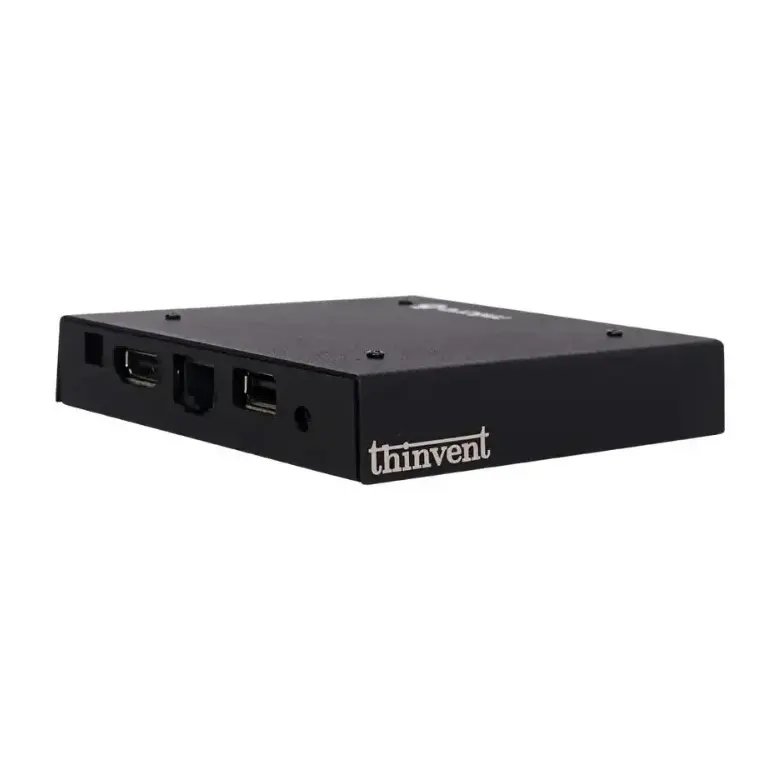
Thinvent offers a comprehensive portfolio of industrial-grade hardware to power both hard and soft computing applications worldwide. Our Industrial PC (IPC) series, featuring Intel Core i5, i3, and 120U processors, delivers the robust performance required for mission-critical hard computing tasks. For soft computing, edge workloads, and space-constrained environments, our Micro series of ARM-based thin clients and the Treo/Aero series of Intel N100 & Core-based mini PCs provide reliable, fanless operation. All Thinvent systems are built for 24/7 durability, supporting a variety of operating systems like Windows IoT, Ubuntu Linux, and our own Thinux™ embedded platform, offering a scalable solution for any industrial or commercial deployment.