What Makes a Great Home Server?
A home server is the backbone of a modern smart home, handling tasks like file storage, media streaming, home automation, and even running lightweight virtual machines. For a compact and efficient home server, key factors include low power consumption, silent operation (fanless designs are ideal), sufficient processing power for concurrent tasks, and expandability for storage. The best solutions balance performance with energy efficiency to run 24/7 without driving up electricity bills or generating noise.
Key Specifications to Consider
When selecting a home server, prioritize processors that offer a strong performance-per-watt ratio. Intel's N-series (like the N100) and low-power Core i3/i5 processors are excellent choices, providing adequate multi-core performance for tasks like Plex media transcoding, Docker containers, or Nextcloud file syncing. ARM-based solutions, such as those using Cortex A53 or A55 processors, are ultra-efficient and perfect for lightweight services like Pi-hole ad blocking or basic file sharing. Memory (RAM) of at least 4GB is recommended, with 8GB or more for heavier workloads like running multiple containers. Storage should be SSD-based for fast boot and app loading, with options to add external drives for bulk storage.
Use Cases and Applications
Common home server applications include:
-
Media Streaming: Run Plex or Jellyfin to serve movies and music to devices around your home.
-
File Storage & Backup: Use Nextcloud or Samba to centralize files and automate backups from PCs and phones.
-
Home Automation: Host Home Assistant or OpenHAB to control smart lights, sensors, and thermostats.
-
Ad Blocking & DNS: Deploy Pi-hole on an ultra-low-power device to block ads network-wide.
-
Development & Learning: Set up a local Git server, test websites, or experiment with Linux without risking your main PC.
For most home users, a mini PC with an Intel N100 or an ARM-based thin client provides the perfect balance of size (often palm-sized), silence (fanless), and capability.
Comparison Table: Home Server Options
| Feature | Entry-Level (ARM) | Mid-Range (Intel N100) | Performance (Intel i3/i5) |
|---|---|---|---|
| Processor | Cortex A53/A55 (4 cores) | Intel N100 (4 cores) | Intel i3-1215U / i5-1240P |
| RAM | 2-4GB | 4-8GB | 8-16GB |
| Storage | 16-64GB eMMC | 128GB+ SSD | 256GB+ SSD |
| Power Consumption | ~5W | ~10W | ~15-25W |
| Best For | Single-service (Pi-hole, basic file share) | Multi-service (Plex, Docker, Nextcloud) | Heavy workloads (transcoding, VMs) |
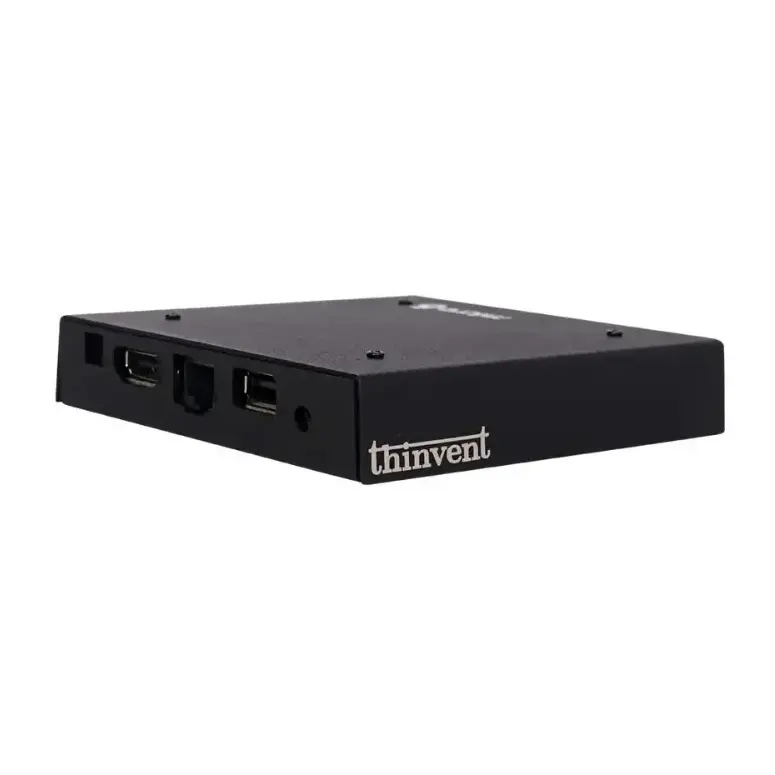
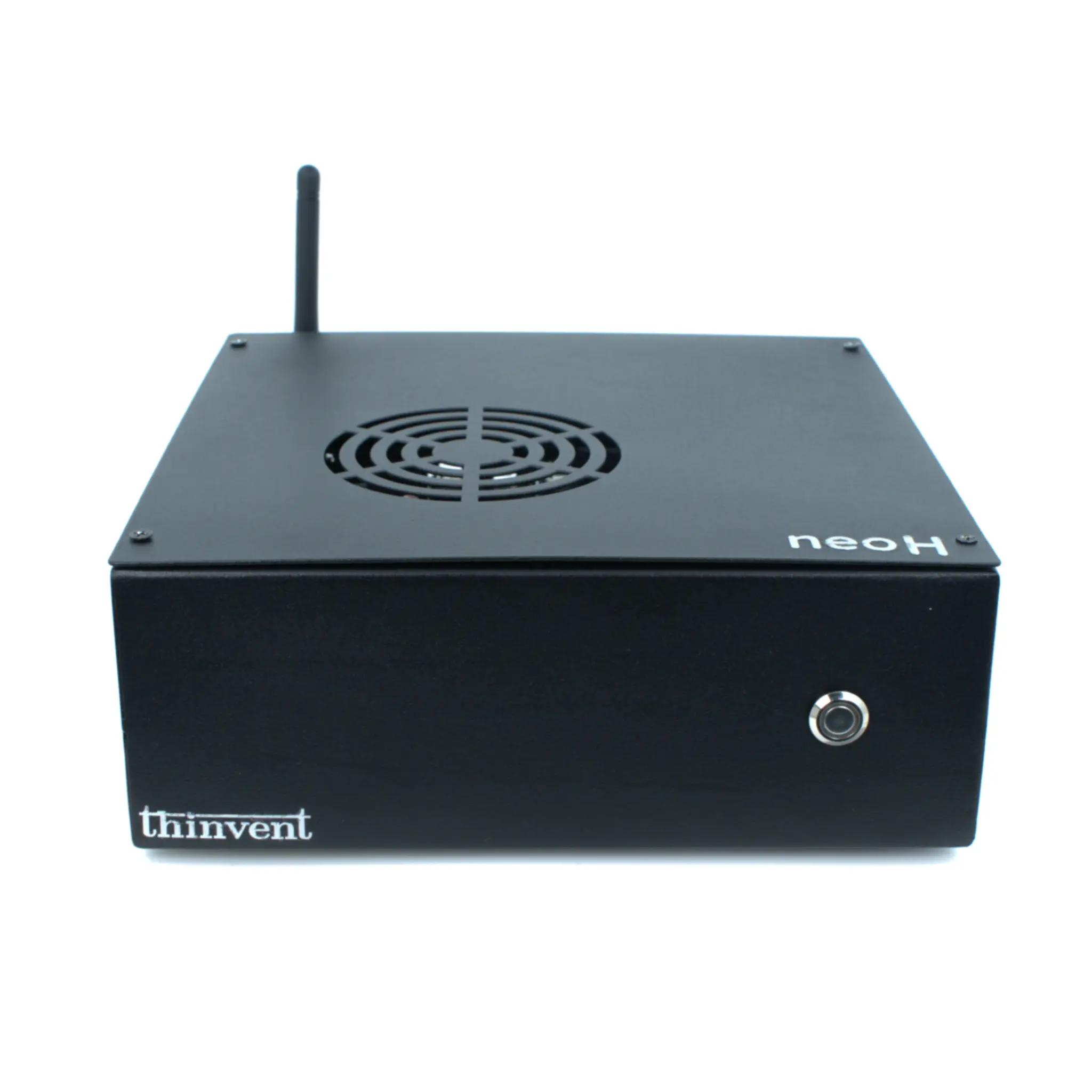
Thinvent's Home Server Products
Thinvent offers a range of compact, efficient devices ideal for home servers. The Micro series (ARM Cortex A53/A55) is perfect for ultra-low-power, always-on tasks like ad blocking or simple file sharing, consuming as little as 5W. The Treo Mini PC with an Intel N100 processor steps up performance for running Docker containers, media servers, or home automation platforms, all in a silent, fanless chassis. For users needing more power, the Aero Mini PC with Intel Core i3/i5 processors can handle Plex transcoding, multiple VMs, or development environments while still maintaining a small footprint. All Thinvent home server solutions are designed for 24/7 reliability, low noise, and easy setup with Linux or Windows options.