Understanding Compact Desktop Computers
The query references a specific HP Slim Desktop model, which represents a category of space-saving, low-profile desktop computers designed for general office and business use. These systems prioritize a small physical footprint, energy efficiency, and sufficient performance for everyday computing tasks. A typical compact desktop, like the one mentioned, would be built around a modern, low-power processor, include integrated graphics, and offer a selection of standard connectivity ports like USB, HDMI, and Ethernet. They are ideal for environments where desk space is limited but reliable computing is required.
Key Specifications and Technical Details
Modern compact desktops, including industrial-grade alternatives, share several core specifications. They often feature efficient Intel processors from series like Celeron or the Intel Processor N-series (e.g., N95, N100), which provide a balance of performance and low thermal design power (TDP). Common configurations include 4 to 8 GB of DDR4 RAM, SSD storage from 128GB to 512GB for fast boot times, and fanless cooling for silent, maintenance-free operation. Connectivity typically includes Gigabit Ethernet, multiple USB ports (including USB 3.2), and HDMI outputs for dual displays. Their compact form factor is made possible by highly integrated motherboards and external power adapters.
Use Cases and Applications
These systems are versatile and deployed across numerous sectors. In office settings, they serve as efficient workstations for productivity software, web browsing, and communication tools. In industrial and commercial environments, their fanless, rugged design makes them perfect for digital signage, kiosks, point-of-sale (POS) systems, and light control applications. Their small size allows for mounting behind monitors or in confined spaces, while their reliability ensures continuous operation in 24/7 scenarios. They are also excellent for thin client setups and as compact servers for lightweight network services.
Comparison: Consumer Slim Desktop vs. Industrial Mini PC
| Feature | Consumer Slim Desktop (e.g., HP S01) | Industrial Mini PC (e.g., Thinvent Aero) |
|---|---|---|
| Primary Design | Cost-effective, office productivity | Rugged, reliability-focused for harsh environments |
| Cooling System | Often uses small fans | Typically fanless for silent operation & no dust ingress |
| Build Quality | Standard commercial components | Industrial-grade components for wider temperature ranges |
| Operational Life | Standard 3-5 year lifecycle | Designed for longer lifespan (5+ years) in 24/7 use |
| Typical Use Case | General office work, home computing | Digital signage, kiosks, industrial automation, embedded systems |
| OS Flexibility | Usually pre-installed Windows | Options for Windows, Linux, or no OS for customization |
Thinvent's Compact Industrial Computing Solutions
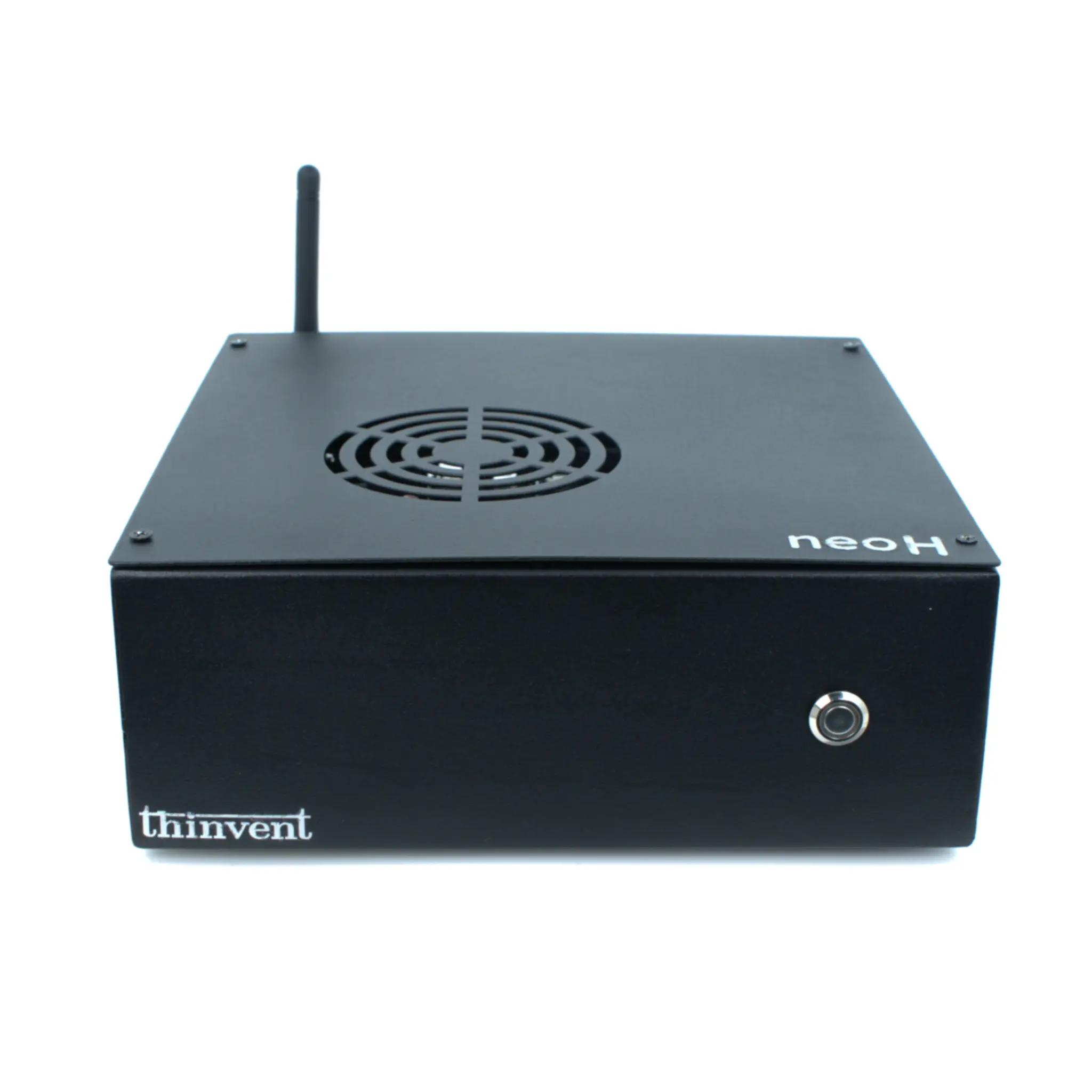
Thinvent specializes in robust, fanless mini PCs that offer the space-saving benefits of a slim desktop with the durability required for industrial and commercial applications. Our Aero series, for example, features the efficient Intel Processor N100, up to 16GB of RAM, and SSD storage in a completely silent, fanless chassis. This design eliminates moving parts, reducing failure points and allowing deployment in dusty or volatile environments. Thinvent provides a range of compact computing solutions with various processor options, memory configurations, and operating system choices, giving businesses worldwide the flexibility to deploy reliable computing power exactly where it's needed.