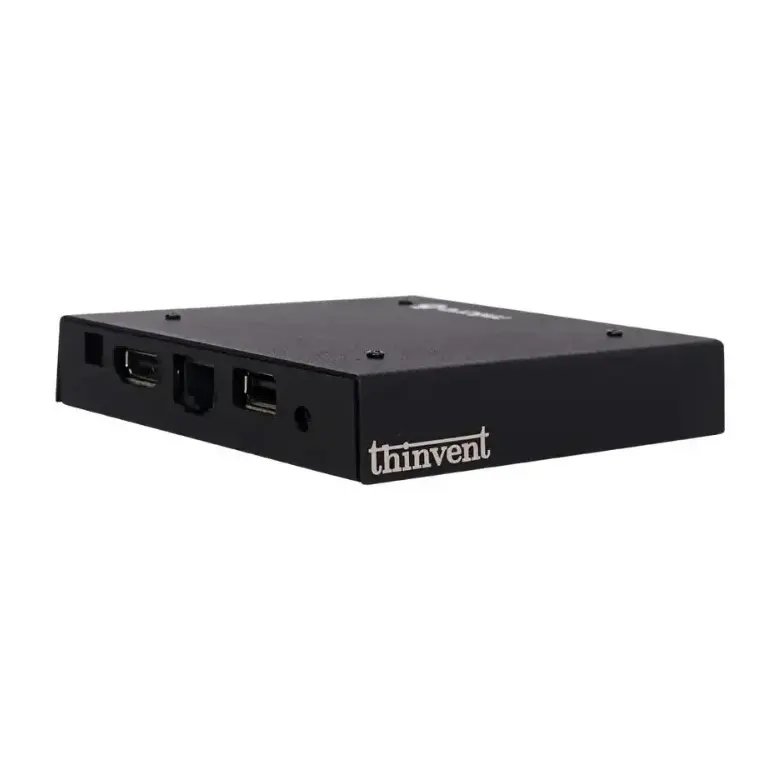
Industrial Computers Built for Continuous Operation
Industrial computers are purpose-built systems designed to run reliably in environments where a standard office PC would struggle — factory floors, kiosks, control cabinets, warehouses and outdoor enclosures. Unlike consumer desktops, they are engineered around long-term component availability, wide-temperature tolerance, vibration resistance, and mounting flexibility such as DIN rail or wall brackets. The goal is simple: a machine that keeps running through heat, dust, and 24/7 duty cycles without needing someone to reboot it every week.
Key Specifications to Evaluate
When comparing industrial PCs, a handful of specifications determine whether the unit suits your workload:
| Specification | What to Look For | Why It Matters |
|---|---|---|
| Processor | Intel Celeron, N-series, Core i3/i5 | Balance of performance per watt and sustained throughput |
| Cores | 4 to 12 | Multi-tasking, VM hosting, multi-display control |
| Memory | 4 GB to 64 GB DDR4 | Headroom for SCADA, HMI, and database software |
| Storage | 128 GB to 1 TB SSD | Fast boot, shock resistance versus spinning disks |
| Cooling | Fanless heatsink chassis | No dust ingress, no moving parts to fail |
| Networking | Dual Gigabit Ethernet | Network segmentation between control and IT networks |
| Serial I/O | RS-232 / RS-485 DB9 ports | Legacy PLCs, scales, meters, and industrial sensors |
| Operating System | Windows 11 Pro/IoT, Ubuntu Linux, FreeDOS | Licensing, long-term support, and application compatibility |
Fanless designs are especially important in dusty or humid plants, because a fan pulls contaminants into the chassis and becomes the first component to fail. A properly engineered aluminium or steel heatsink enclosure removes that failure point entirely and also reduces maintenance intervals.
Where These Systems Are Deployed
Typical applications include production-line HMI terminals, machine vision controllers, building automation gateways, digital signage players, thin-client endpoints for VDI, and edge gateways that pre-process sensor data before sending it to the cloud. Units with multiple serial ports are commonly used to bridge older RS-232 equipment to modern Ethernet and MQTT-based systems. Systems with dual HDMI outputs suit control rooms and point-of-sale displays, while compact mini PC form factors fit into space-constrained cabinets and behind monitors.
Choosing Between Fanless, Mini PC and Thin Client
A fanless industrial PC is the right choice when the machine must survive temperature swings, vibration, or airborne dust. A mini PC is better suited to office, retail, and light commercial roles where space is tight but conditions are controlled. A thin client makes sense when the heavy computation happens on a central server and endpoints only need to render a session — this simplifies management and improves security because no data is stored locally. Matching the form factor to the environment is more important than chasing the highest benchmark score.
Thinvent's Industrial Computing Range
Thinvent manufactures industrial computers, mini PCs, thin clients and all-in-one PCs for customers worldwide, with configurations spanning Intel Celeron and N-series processors through Core i3 and i5 options, up to 64 GB of memory and 1 TB of SSD storage. Our fanless industrial PCs are offered with single or dual Gigabit Ethernet, single or dual HDMI, USB 3.2 Gen 2 and USB-C connectivity, and optional quad DB9 serial configurations for legacy equipment integration. Buyers can select Windows 11 Pro, Windows 11 IoT, Ubuntu Linux 24.04 LTS, Thinux™ Embedded Linux, or a no-OS configuration, making it straightforward to standardise on the software stack your deployment already uses.