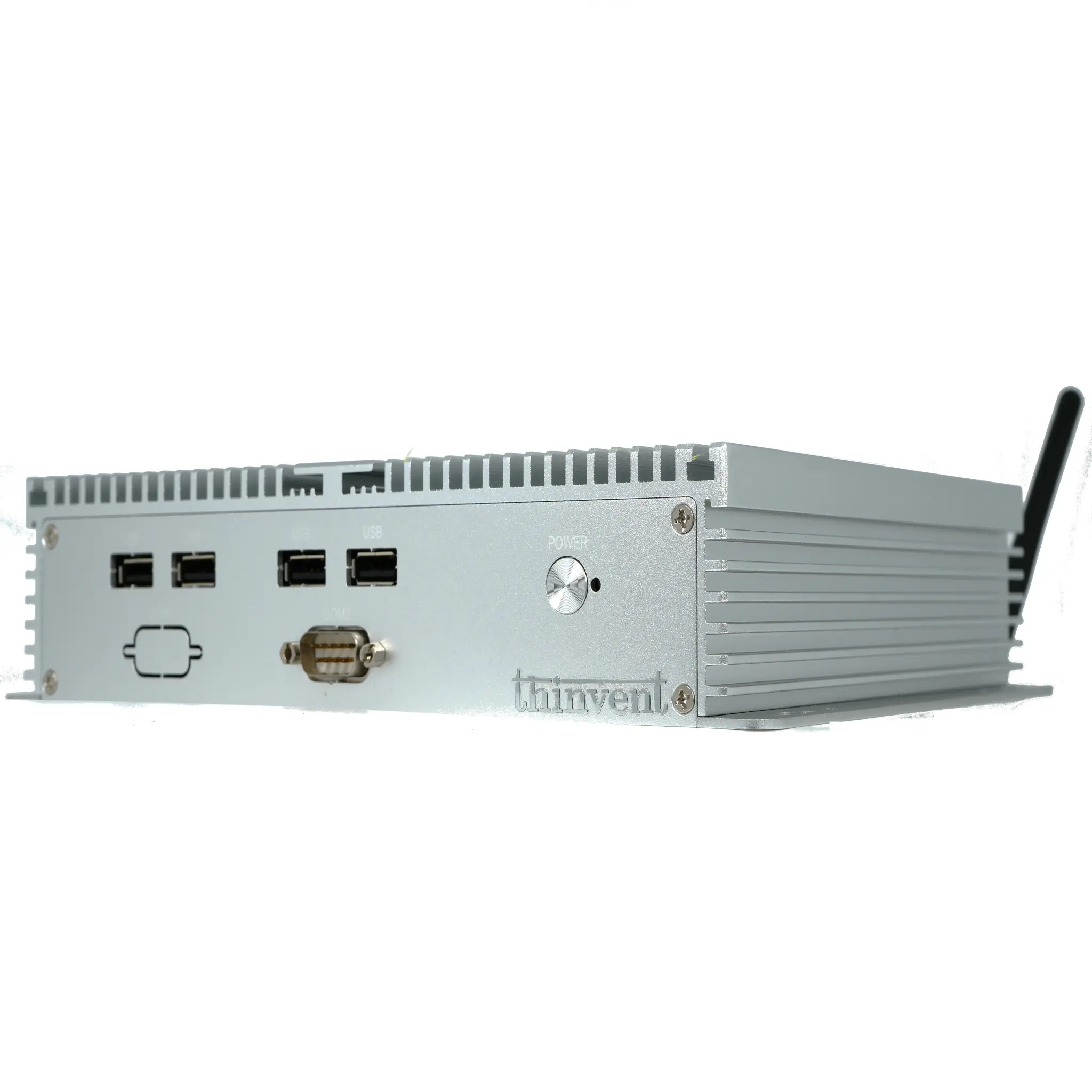
What Are Industrial PCs for Automation?
An industrial PC (IPC) is a ruggedized computer designed for reliable operation in harsh industrial environments like factories, warehouses, and automation lines. Unlike standard desktop PCs, these systems are built to withstand extreme temperatures, dust, vibration, and continuous 24/7 operation. They are the central computing units in automation and control systems, interfacing directly with PLCs, HMIs, sensors, and actuators to manage complex industrial processes.
Key Specifications and Technical Details
Industrial PCs for automation prioritize reliability, connectivity, and deterministic performance. Key specifications include:
-
Rugged Design: Fanless, sealed chassis for dust and particulate resistance, wide operating temperature ranges (often -20°C to 60°C), and vibration/shock resistance.
-
Industrial-Grade Components: Long-lifecycle motherboards and solid-state storage to ensure system availability and reduce maintenance downtime.
-
Rich I/O Connectivity: Multiple Ethernet ports (often with TSN support), serial ports (RS-232/485), USB ports, and expansion slots for fieldbus cards (PROFIBUS, EtherCAT, etc.) to connect to a wide array of industrial machinery.
-
Deterministic Performance: Processors and chipsets that support real-time operating systems (RTOS) or real-time extensions for Windows/Linux, ensuring precise timing for control tasks.
Use Cases and Applications
These PCs are integral to modern industrial automation, serving as:
-
Machine Controllers: Directly replacing or supplementing traditional PLCs for more complex computational tasks.
-
HMI (Human-Machine Interface) Stations: Powering operator panels and touchscreen displays for monitoring and control.
-
Edge Computing Gateways: Collecting, processing, and analyzing data from factory floor devices before sending it to the cloud.
-
Vision Inspection Systems: Hosting software for camera-based quality control and robotic guidance.
-
Test and Measurement Racks: Controlling automated test equipment in manufacturing lines.
Comparison: Industrial PC vs. Standard Office PC
| Feature | Industrial PC | Standard Office PC |
|---|---|---|
| Operating Temperature | Wide range (e.g., -20°C to 60°C) | Narrow range (typically 5°C to 35°C) |
| Durability | Fanless, sealed against dust/vibration | Active cooling, vents, not sealed |
| Component Lifecycle | Long-term availability (5-10+ years) | Short lifecycle, frequent refreshes |
| I/O Connectivity | Industrial ports (COM, DIO, fieldbus) | Consumer ports (USB, HDMI, audio) |
| Reliability & Uptime | Designed for 24/7 operation, high MTBF | Designed for intermittent use |
| Real-Time Performance | Often supports real-time OS/kernels | Standard, non-deterministic OS |
Thinvent Industrial PCs for Automation
Thinvent offers a robust range of industrial-grade computing solutions engineered for demanding automation environments. Our product lines include compact Industrial PCs and versatile Mini PCs built with fanless, rugged aluminum chassis that excel in harsh conditions. They are powered by efficient Intel processors, from the entry-level N-Series to powerful Core i-Series, providing the necessary balance of performance and low power consumption. With support for multiple operating systems—including Windows IoT, Linux distributions, and real-time kernels—and a wealth of standard I/O, Thinvent PCs are ready to serve as the reliable brain of your control system, HMI station, or edge computing node.