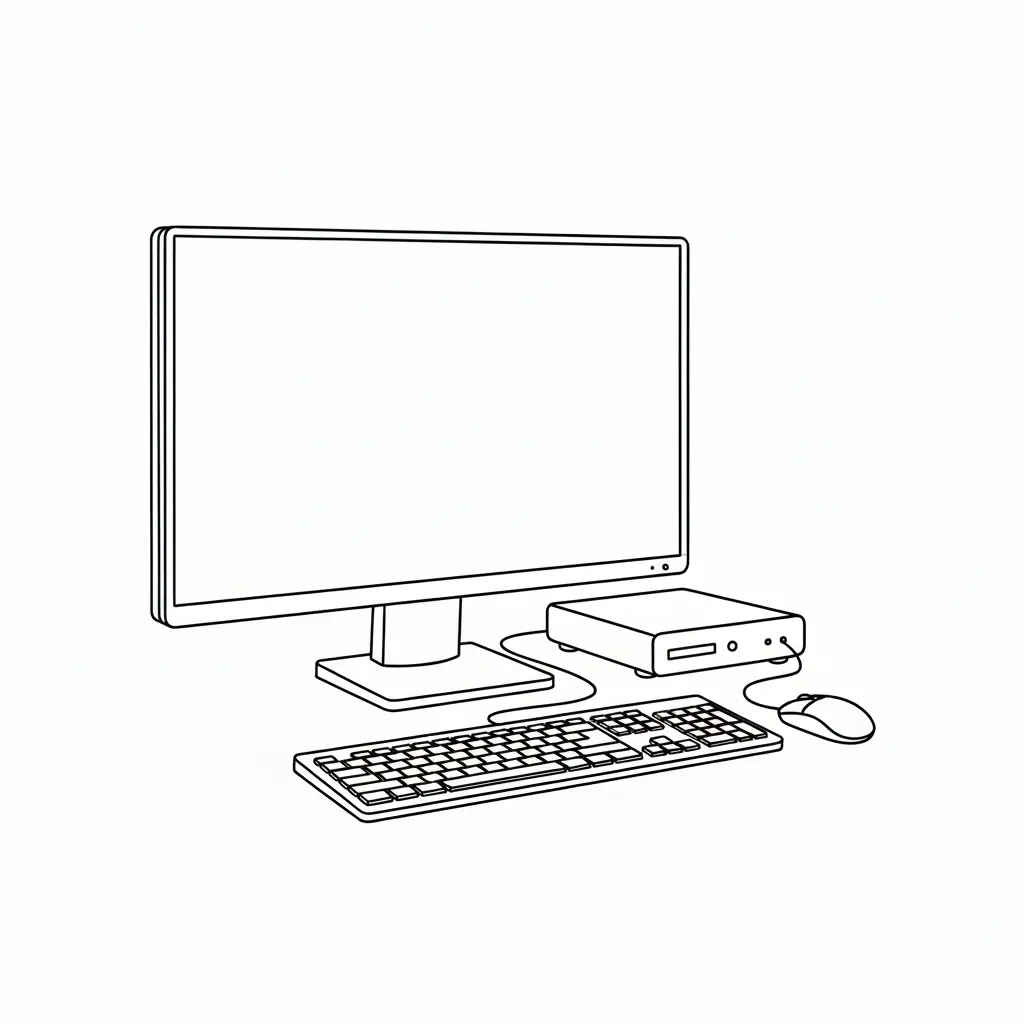
The NComputing L300 is an Ethernet-based virtual desktop access device designed for use with vSpace Pro and vSpace Server, offering low-cost, low-maintenance endpoint computing with multimedia and USB 2.0 peripheral support. For buyers who want a self-contained local computer rather than a virtual desktop endpoint, the closest Thinvent alternative is the Thinvent Treo Mini PC range, which runs on Intel and AMD processors with up to 64 GB of RAM and up to 2 TB of SSD storage.
L300 NComputing vs Thinvent Treo Mini PC
| NComputing L300 | Thinvent Treo Mini PC, Intel Core i5-1240P | Thinvent Treo Mini PC, AMD Ryzen 5 7430U | |
|---|---|---|---|
| Device type | Ethernet virtual desktop access device | Mini PC | Mini PC |
| Processor | Not stated | Intel Core i5-1240P | AMD Ryzen 5 7430U |
| Cores/Threads | Not stated | 12 cores | 6 cores |
| RAM | Not stated | Up to 64 GB | Up to 64 GB |
| Storage | Not stated | Up to 2 TB SSD | Up to 2 TB SSD |
| Form Factor | Not stated | Mini PC | Mini PC |
| Networking | Ethernet | Dual LAN (Wi-Fi 5 option) | Dual LAN (Wi-Fi 5 option) |
Key differences
-
Thinvent Treo Mini PCs run a full local processor, with options from Intel Celeron N5095A up to Intel Core Ultra 5 125U and AMD Ryzen 5 7430U, rather than relying on a remote virtual desktop.
-
Thinvent Treo Mini PC configurations offer up to 64 GB of RAM and up to 2 TB of SSD storage, giving more room for local applications and data.
-
Dual LAN is available on the Thinvent Treo Mini PC models with Intel Core i5-1240P and Intel Core Ultra 5 125U.
-
Wi-Fi 5 (802.11ac), dual band, is available on selected Thinvent Treo Mini PC models.
-
The L300 is built around access to a virtual desktop from a central server, which suits centrally managed environments where users connect to hosted desktops.
Which one should you choose?
Choose the NComputing L300 if your deployment is built around vSpace virtual desktops and you want a low-maintenance endpoint that connects to a central server. Choose a Thinvent Treo Mini PC if you need a compact, self-contained computer with local processing power, larger memory and storage options, and flexible networking.