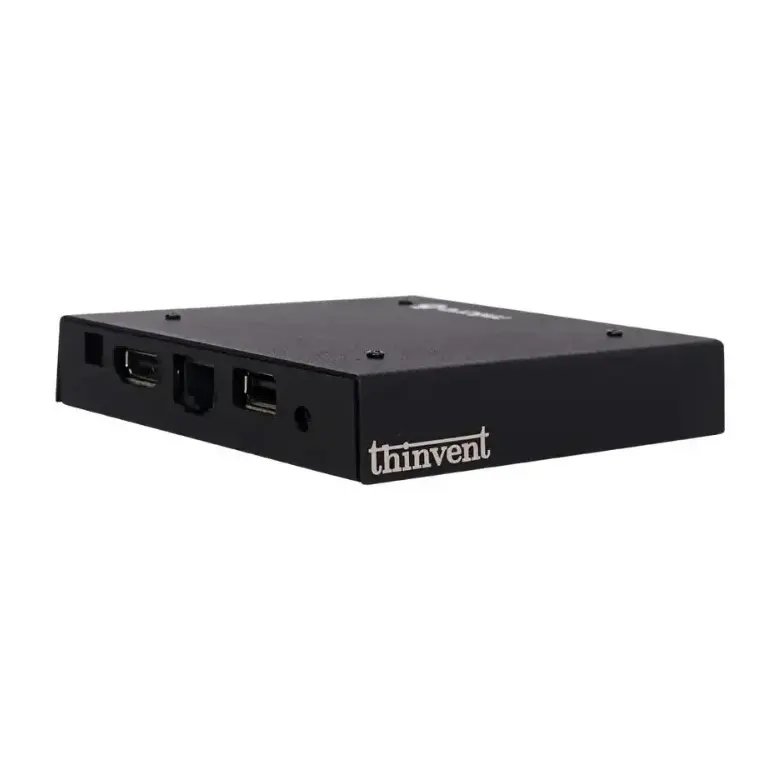
What Are Fanless Industrial Computers?
Fanless industrial computers are specialized computing systems designed to operate without any moving mechanical parts, such as fans or spinning hard drives. Instead of active cooling, they utilize passive cooling techniques like advanced heat sinks, heat pipes, and thermally conductive chassis to dissipate heat. This design is fundamental for creating robust, silent, and maintenance-free systems ideal for challenging environments where reliability is paramount.
Key Specifications and Technical Advantages
The core of a fanless system is its low-power, thermally efficient processor. Modern Intel processors, such as the N-series (e.g., N100, N95) and certain U-series CPUs, are engineered with a low Thermal Design Power (TDP), typically between 6W and 15W. This allows them to operate within safe temperature ranges using only passive cooling. Key specifications include:
-
Processor: Intel Celeron, Intel Processor N-series, or Intel Core i3/i5 U-series.
-
Memory: Typically 4GB to 16GB of soldered or SODIMM RAM for stability.
-
Storage: Reliable solid-state drives (SSD) like M.2 or mSATA, with capacities from 128GB to 1TB.
-
Connectivity: Multiple Gigabit Ethernet ports, USB 3.2, HDMI/DisplayPort outputs, and optional wireless modules.
-
Construction: Rugged, all-metal chassis that acts as a giant heat sink, often with IP-rated protection against dust and moisture.
Applications and Use Cases
The absence of fans makes these computers exceptionally reliable for applications where dust, debris, vibration, or extreme temperatures are concerns. Common use cases include:
-
Industrial Automation: PLCs, HMIs, and machine vision systems on factory floors.
-
Digital Signage & Kiosks: Silent operation in retail, hospitality, and public transportation hubs.
-
Thin Clients & VDI: Centralized computing endpoints in offices, call centers, and healthcare.
-
Edge Computing & IoT Gateways: Data processing in remote or outdoor locations like telecommunications cabinets, agricultural sites, and energy grids.
-
Medical and Laboratory Equipment: Where silent operation and contamination-free environments are critical.
Comparison: Fanless vs. Traditional Fan-Cooled PCs
| Feature | Fanless Industrial PC | Traditional Fan-Cooled PC |
|---|---|---|
| Cooling Method | Passive (heat sinks) | Active (fans) |
| Noise Level | Silent (0 dB) | Audible fan noise |
| Dust & Debris | Highly resistant (sealed design) | Vulnerable (air intakes) |
| Mechanical Failure | No moving parts to fail | Fans and HDDs can fail |
| Maintenance | Virtually maintenance-free | Requires periodic cleaning |
| Operating Temp Range | Wider (often -20°C to 60°C+) | Narrower (standard office temps) |
| Typical Use Case | Harsh, sensitive, or silent environments | General office/desktop computing |
Thinvent's Range of Fanless Solutions
Thinvent specializes in high-performance, reliable fanless computing solutions built for global industrial applications. Our product portfolio includes compact Fanless Mini PCs and rugged Industrial PCs that leverage the latest energy-efficient Intel processors. Systems like our Aero series are engineered with robust aluminum chassis for optimal heat dissipation, supporting a wide range of operating systems including Windows, Linux, and custom embedded platforms. Whether for a digital signage network, a factory automation project, or a secure edge computing node, Thinvent's fanless computers deliver the durability, silence, and continuous operation required for mission-critical tasks worldwide.