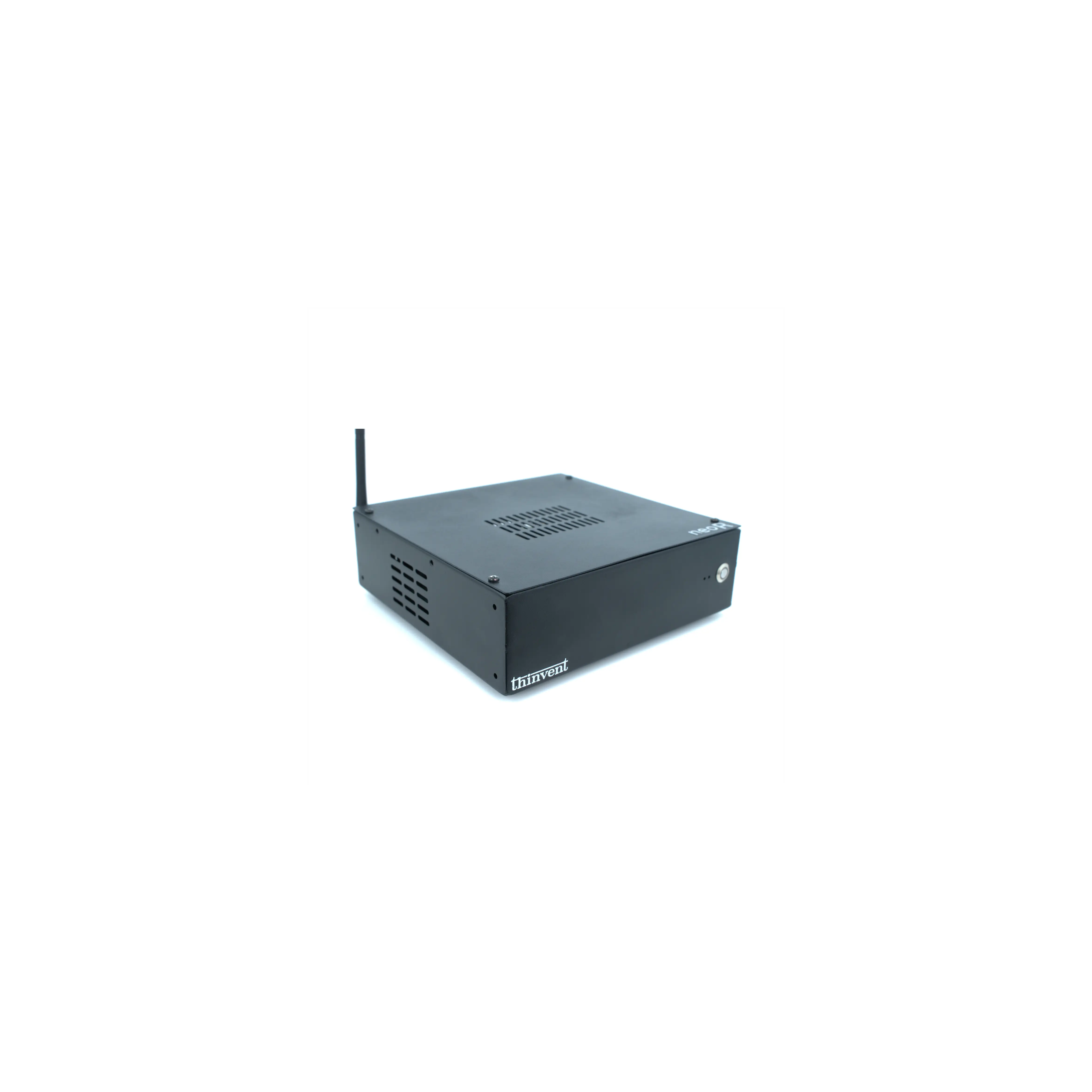
Industrial Computers Built for the Marine Environment
Marine and shipboard computing is one of the most demanding environments for any computer. Vessels combine vibration from engines and hull movement, wide ambient temperature swings, salt-laden humid air, unstable or generator-fed power, and continuous 24/7 duty cycles. Standard office PCs and consumer mini PCs are not designed for these conditions. A marine-grade industrial computer addresses them through fanless passive cooling, wide-range DC power input, protected I/O, and a chassis that tolerates shock and vibration.
What Makes a Computer "Marine Ready"
The key design choices are:
-
Fanless, sealed cooling – No fans means no intake vents pulling in salty, oily or dust-laden air, and no moving part to fail from vibration. Heat is conducted to the chassis instead.
-
Wide DC input with protection – Onboard power is rarely clean. Systems that accept a DC range with surge, reverse-polarity and transient protection survive generator switching and brownouts far better than fixed 19V adapters.
-
Shock and vibration tolerance – Industrial chassis with solid-state storage (SSD, no spinning disk) and secure connectors handle constant engine vibration and hull movement.
-
Wide operating temperature – Bridge, engine room and deck enclosures can be hot or cold. Industrial boards are rated well beyond commercial 0–35 °C ranges.
-
Rich legacy I/O – Marine systems frequently integrate with NMEA and serial-based navigation, autopilot, radar, AIS and engine monitoring equipment over RS-232/RS-485 serial ports.
Typical Marine and Shipboard Applications
| Application | What the computer does | Typical requirement |
|---|---|---|
| Bridge / navigation console | Chart plotting, ECDIS-adjacent display, radar and AIS feeds | Fanless, multi-display, serial I/O |
| Vessel monitoring (VMS) | Engine, fuel, bilge and tank sensor aggregation | Wide DC input, RS-485, 24/7 uptime |
| Fleet telematics & tracking | GPS, AIS, GSM/4G data logging and reporting | Compact, low power, SSD storage |
| Onboard CCTV & access control | Video capture and recording | Multi-core CPU, large SSD, dual Ethernet |
| Crew and passenger terminals | Kiosk, ticketing, check-in, entertainment | All-in-One or thin client, low maintenance |
| Shipyard & dry-dock systems | Diagnostic and test stations | Rugged chassis, legacy serial ports |
Choosing the Right Configuration
For most marine control and monitoring tasks, a 6-core Intel® Core™ i3 processor such as the i3-1215U with 16 GB DDR4 RAM and a 1 TB SSD provides ample headroom for multi-application consoles, sensor aggregation and data logging. Quad DB9 serial configurations are valuable where multiple NMEA or RS-232 devices must connect directly without external converters. Dual Gigabit Ethernet supports segregated navigation and management networks. For lighter kiosk or terminal roles, fanless mini PCs and thin clients with lower-power processors reduce heat output further, while All-in-One units simplify bridge and crew-area installations where a single integrated display is preferred.
Thinvent Products Suited to Marine Deployments
Thinvent manufactures fanless industrial computers, mini PCs, thin clients and all-in-one PCs designed for continuous operation in harsh environments. The Thinvent® Industrial PC IPC3, built around the Intel® Core™ i3-1215U (6 cores, up to 4.4 GHz, 10 MB cache) with 16 GB DDR4 RAM and 1 TB SSD, is available with quad DB9 serial ports for direct connection of navigation and monitoring equipment, and with Windows 11 Pro, Windows 11 IoT, DOS or Thinux™ Embedded Linux depending on your software stack. Thinvent's fanless architecture, solid-state storage and industrial-grade construction make its range a practical foundation for bridge consoles, vessel monitoring systems, fleet telematics and onboard terminals.