What Are Industrial Microcomputers?
Industrial microcomputers, often referred to as micro PCs or compact industrial PCs, are small-form-factor computing systems designed for reliability and performance in demanding environments. Unlike consumer-grade mini PCs, these systems are built with industrial-grade components, feature fanless cooling for silent and dust-resistant operation, and are engineered for 24/7 operation in applications ranging from digital signage and kiosks to factory automation and edge computing. They provide a complete computing solution in a minimal footprint, balancing processing power with energy efficiency.
Key Specifications and Technical Details
A typical industrial microcomputer is characterized by its robust construction and specialized features. Core specifications include low-power, high-efficiency processors from Intel's N-series or Celeron series, which generate minimal heat, enabling reliable fanless operation. Systems commonly offer 4GB to 16GB of soldered or socketed DDR4 RAM for stability, and fast SSD storage from 128GB to 1TB. Connectivity is a critical strength, with standard features including multiple Gigabit Ethernet ports for network redundancy, USB 3.2 ports for peripherals, HDMI/DisplayPort outputs, and often wide-range DC power input (9-36V) for compatibility with industrial power supplies. Their operating temperature range typically spans from -20°C to 70°C, ensuring functionality in harsh conditions.
Applications and Use Cases
The compact size and rugged design of industrial microcomputers make them ideal for space-constrained and challenging installations. Common applications include:
-
Digital Signage & Kiosks: Driving displays in retail, hospitality, and public transportation.
-
Factory Automation & IoT Gateways: Collecting and processing data from sensors and PLCs on the factory floor.
-
Thin Client & VDI: Providing a secure, manageable endpoint for virtual desktop infrastructure.
-
Embedded Systems: Serving as the brain for medical devices, gaming machines, or interactive terminals.
-
Edge Computing: Performing data processing and analytics locally before sending to the cloud, reducing latency and bandwidth.
Comparison of Common Microcomputer Form Factors
| Feature | Mini PC / Microcomputer | Thin Client | Industrial Panel PC |
|---|---|---|---|
| Primary Use | General-purpose embedded computing | Accessing virtual desktops (VDI) | Human-Machine Interface (HMI) with integrated display |
| Processing Power | Moderate to High (local apps) | Low to Moderate (network-dependent) | Moderate (optimized for display control) |
| Typical OS | Windows IoT, Linux, Windows Pro | Thin OS, Linux, Windows IoT | Windows IoT, Linux |
| Key Advantage | Versatility, standalone operation | Security, centralized management, low cost | All-in-one design, NEMA-rated touchscreens |
| Ideal For | Digital signage, edge servers, kiosks | Call centers, offices, secure environments | Factory floors, control rooms, clean rooms |
Thinvent Microcomputers with Industrial Reliability
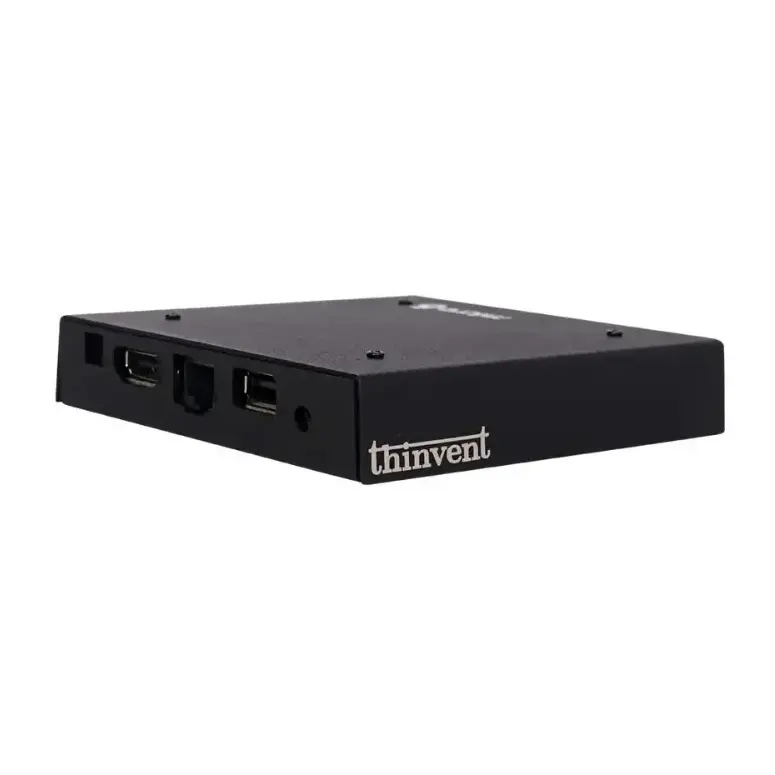
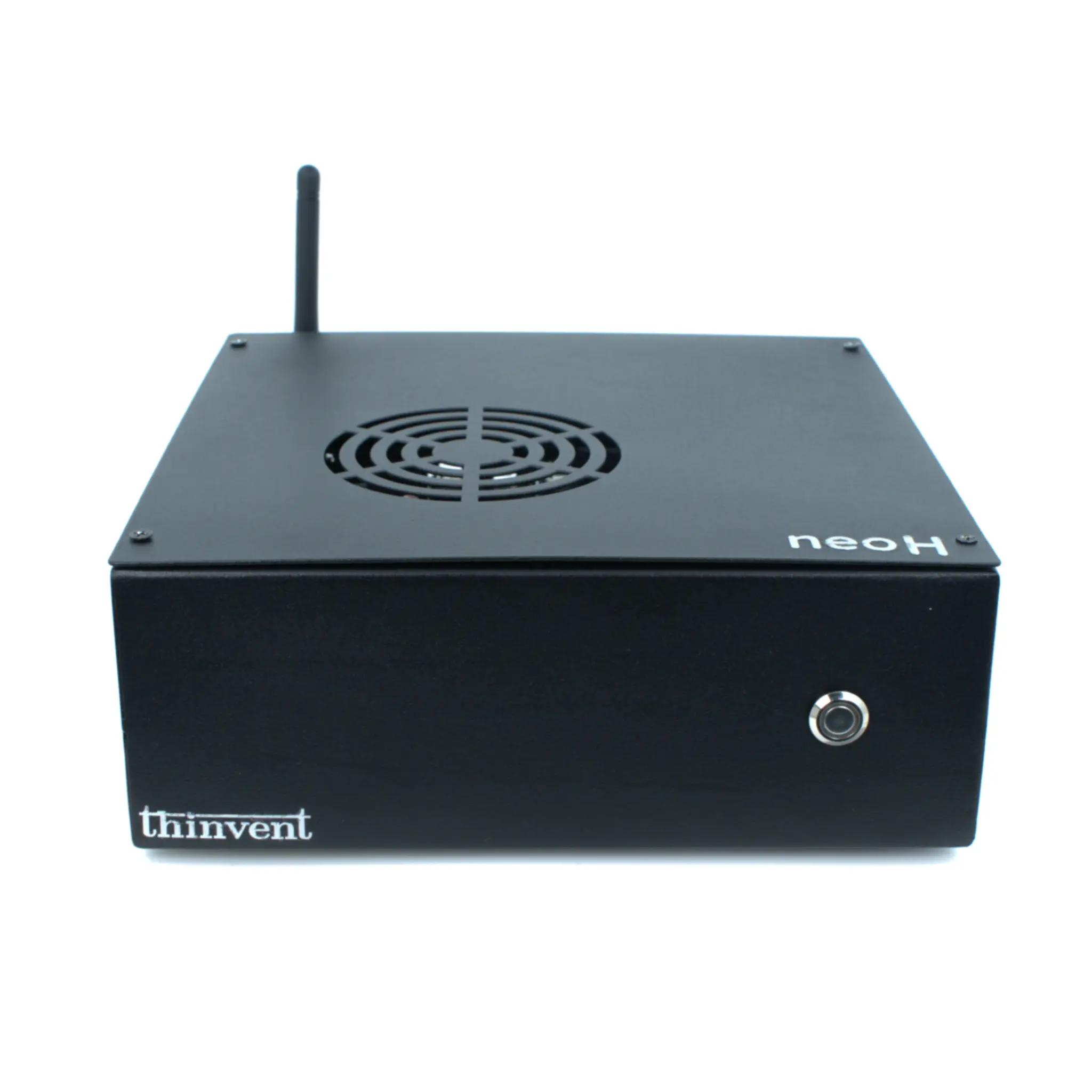
Thinvent offers a comprehensive range of industrial microcomputers engineered for durability and continuous operation. Our Aero series, exemplified by the models on this page, features efficient Intel N-series processors in a fanless aluminum chassis for optimal thermal management. These systems are pre-configured with robust memory and storage options and support a variety of operating systems, including Windows 11 IoT/Pro, Ubuntu Linux, and our proprietary Thinux™ embedded platform, providing flexibility for any project requirement. Built to withstand vibrations, wide temperature ranges, and unstable power inputs, Thinvent microcomputers deliver dependable performance for global industrial and commercial deployments.