What Does "Military Grade Display" Actually Mean?
The term "military grade" is widely used in the display market, but it is not a single formal specification. In practice, it usually refers to displays built to survive conditions far beyond a typical office environment: extended temperature ranges, shock and vibration, dust and moisture ingress, and long-term continuous operation. Buyers evaluating displays for defence, field, or harsh industrial use typically look for a combination of ruggedised hardware, wide-temperature components, and standards-based testing rather than a single label.
It is worth being precise here. Formal military standards such as MIL-STD-810 (environmental testing) and MIL-STD-461 (electromagnetic compatibility) define test methods, not a product grade, and a display is only "military grade" if a specific unit has actually been qualified to those methods. For most industrial and field deployments, the practical equivalent is an industrial-grade panel PC or display rated for wide temperature operation, high shock and vibration tolerance, and IP-rated sealing against dust and water.
Key Specifications to Evaluate
When comparing rugged displays and panel computers, these are the parameters that matter most:
| Specification | Typical Office Display | Rugged / Industrial Display |
|---|---|---|
| Operating temperature | 0°C to 40°C | -20°C to 60°C or wider |
| Shock / vibration | Minimal | Tested to IEC / MIL-STD methods |
| Ingress protection | None | IP54 to IP65 front panel |
| Brightness | 250–300 nits | 400–1000+ nits for sunlight readability |
| Mounting | Desk stand | VESA, panel mount, rack mount |
| Duty cycle | Intermittent | 24/7 continuous |
| Touch | Optional | Resistive or projected capacitive, glove-friendly |
Brightness and contrast matter enormously outdoors: a 250-nit panel becomes unreadable in direct sunlight, while a 700–1000 nit panel with anti-glare treatment remains usable. Touch technology also matters — resistive touch works with gloves and styluses, which is often essential in field and industrial settings, while capacitive touch offers better multi-touch but can struggle with heavy gloves.
Where Rugged Displays Are Used
Rugged and wide-temperature displays are deployed wherever equipment must keep running outside a climate-controlled room. Common applications include defence and field command posts, vehicle-mounted systems, factory floors and process control rooms, oil and gas installations, mining and heavy equipment cabs, transport and logistics yards, and outdoor kiosks. In many of these settings the display is driven by an industrial computer or panel PC that must meet the same environmental requirements, so the computer and the display are specified together.
Choosing the Right Platform
Rather than sourcing a display and a computer separately, many integrators use an all-in-one panel PC that combines the screen, touch interface and computing hardware in a single sealed enclosure. This reduces cabling, simplifies mounting, and means only one unit needs to meet the temperature, shock and ingress requirements. The computing side should be matched to the workload: fanless designs avoid drawing dust into the chassis, wide-temperature components avoid thermal shutdown, and generous I/O (serial, Ethernet, USB) supports the sensors and controllers typically found in field installations.
Thinvent Products for Demanding Deployments
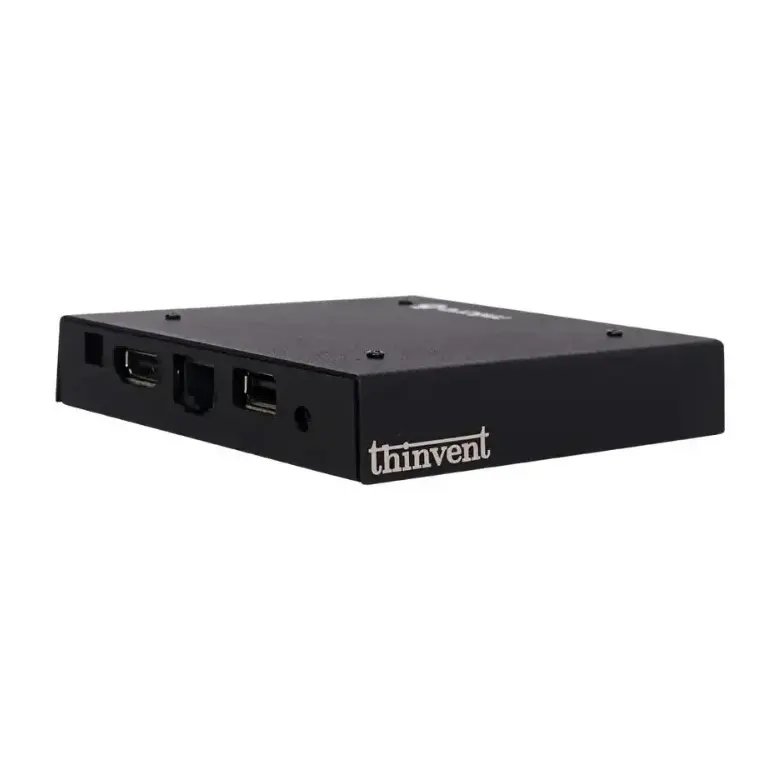
Thinvent manufactures industrial computers, mini PCs, thin clients and all-in-one PCs designed for continuous operation in tough environments. Our industrial PC range, including the IPC3 series with Intel® Core™ i3-1215U processors, 16GB DDR4 memory and up to 1TB SSD storage, is built for fanless, dust-tolerant operation with extensive serial and Ethernet connectivity. These systems pair with our all-in-one and panel-mount offerings to form complete, ruggedised computing and display solutions for factory floors, vehicles, and field deployments. Contact Thinvent to discuss the configuration, temperature range and mounting options that match your project.